CM Sukhu joins candle march against Jantar Mantar lathi-charge
Synopsis
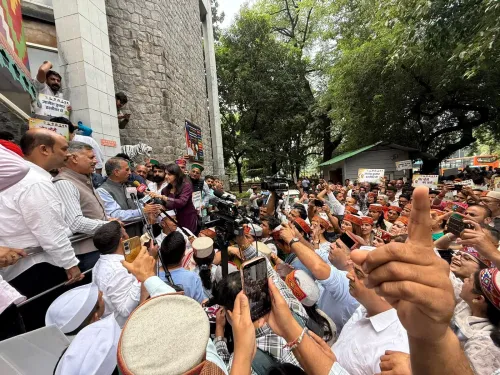
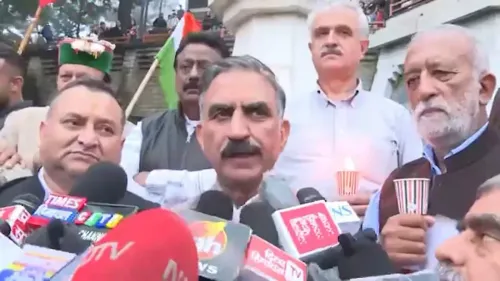
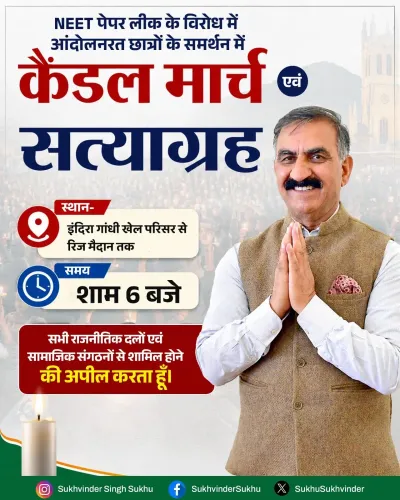
Himachal Pradesh Chief Minister Sukhvinder Singh Sukhu joined a candle march and satyagraha at Jantar Mantar on 25 July 2026 to protest a lathi-charge on students, demanding impartial action against the police personnel responsible and calling it the collective demand of all of Himachal Pradesh.
Key Takeaways
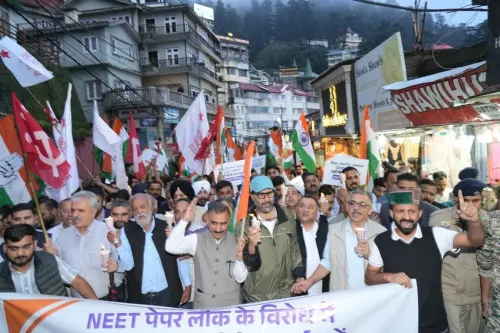
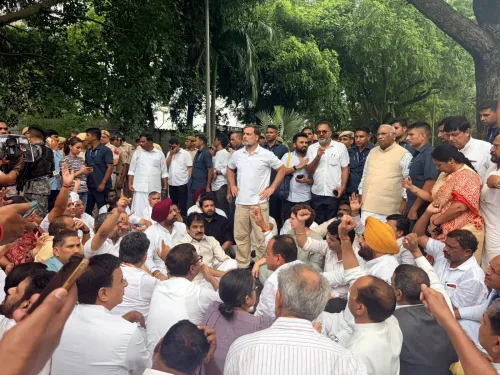
CM Sukhvinder Singh Sukhu participated in a candle march and satyagraha at Jantar Mantar, New Delhi on 25 July 2026 .
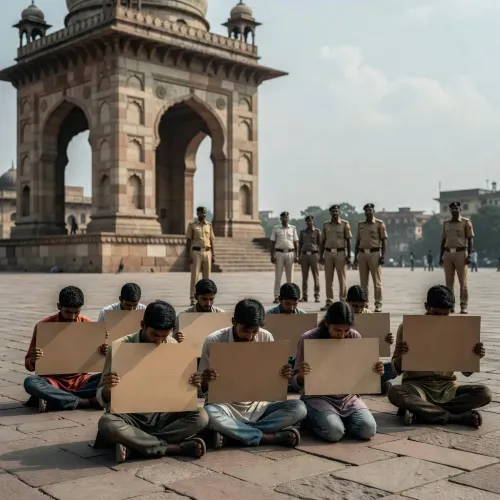
The protest was against what Sukhu described as a 'barbaric lathi-charge and repressive action' against students at Jantar Mantar.
Sukhu demanded 'impartial and strict action' against the police personnel responsible for the crackdown.
He framed the struggle as one for democratic rights, freedom of expression, and justice.
He called the demand for police accountability the 'collective demand of all of Himachal Pradesh.' The move follows a consistent Indian National Congress pattern of opposing perceived police excess during student protests in the national capital.
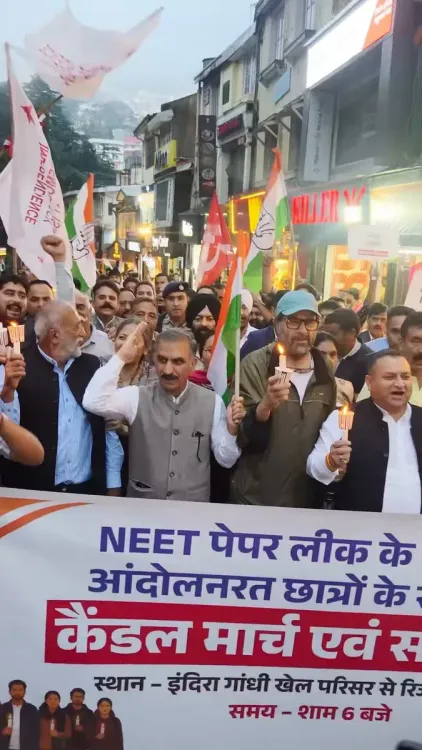
Himachal Pradesh Chief Minister Sukhvinder Singh Sukhu on Saturday, 25 July 2026, participated in a candle march and satyagraha to protest what he called a 'barbaric lathi-charge' and 'repressive action' against students at Jantar Mantar in New Delhi. Sukhu demanded strict and impartial action against the police personnel responsible, calling it the 'collective demand of all of Himachal Pradesh.'
Context
In a post on X, CM Sukhu wrote — 'जंतर-मंतर पर विद्यार्थियों के साथ हुए बर्बरतापूर्ण लाठीचार्ज और दमनात्मक कार्रवाई के विरोध में कैंडल मार्च एवं सत्याग्रह किया' ['I participated in a candle march and satyagraha against the barbaric lathi-charge and repressive action against students at Jantar Mantar']. He described the struggle as one for the protection of 'democratic rights, freedom of expression, and the voice of justice.'
Jantar Mantar, a historic site in central Delhi, has long served as a focal point for student-led protests and civil society demonstrations. The venue has repeatedly witnessed gatherings by groups seeking to draw national attention to grievances against central government policy or police conduct.
Policy Backdrop
The Indian National Congress, which governs Himachal Pradesh and sits in opposition at the national level, has maintained a consistent position of defending freedom of expression and demanding accountability for law-enforcement conduct during demonstrations. As far back as 2019–2020, Congress leaders — including state units — publicly condemned police action during student-led protests at Jantar Mantar and other sites across the country.
Opposition-ruled states have repeatedly seen their chief ministers issue solidarity statements in support of Delhi-based protests, a pattern that reflects the broader centre-state political friction between Congress-led governments and the central administration. CM Sukhu's participation in a physical candle march, rather than a statement alone, marks a more direct form of engagement with the protest.
Stakeholders and Impact
The immediate stakeholders are the student protesters who were subjected to the police action at Jantar Mantar, along with opposition parties who have rallied around the demand for accountability. CM Sukhu framed the issue not merely as a student concern but as a matter of democratic rights and free expression for all citizens.
By describing the demand for action against erring police personnel as the 'collective demand of all of Himachal Pradesh,' Sukhu sought to give the protest a state-level political weight, potentially pressuring central authorities to respond. Civil liberties groups and youth organisations are among those watching the government's response closely.
What's Next
Attention will now turn to whether the central government or Delhi Police — which operates under the Union Home Ministry — initiates any formal inquiry into the lathi-charge. CM Sukhu's demand for 'impartial and strict action' against the responsible police personnel is likely to be echoed in the upcoming Himachal Pradesh assembly session and potentially raised during the next parliamentary sitting by Congress members. The episode could intensify the opposition's broader campaign on civil liberties ahead of any forthcoming electoral cycle.
Point of View
Designed to maximise visibility and moral authority. The move fits a well-established opposition playbook of using state-level leadership to amplify national civil-liberties flashpoints, particularly those involving students and police conduct. By invoking 'the collective demand of all of Himachal Pradesh,' Sukhu attempts to convert a Delhi protest into a state-level mandate, adding institutional pressure on the central government. The episode underscores how centre-state political friction increasingly plays out through symbolic solidarity actions on the streets of the national capital.
NationPress
25 Oct 2026
Frequently Asked Questions
Why did CM Sukhu join the Jantar Mantar protest?
CM Sukhu joined a candle march and satyagraha at Jantar Mantar on 25 July 2026 to protest a lathi-charge and what he called repressive action against students, demanding accountability for the police personnel involved.
What happened to students at Jantar Mantar in July 2026?
According to CM Sukhu's post, students at Jantar Mantar in New Delhi were subjected to a lathi-charge and repressive police action, which triggered widespread protests and a candle march in which the Himachal Pradesh Chief Minister participated.
What did CM Sukhu demand after the Jantar Mantar lathi-charge?
CM Sukhu demanded impartial and strict action against the police personnel responsible for the lathi-charge on students, describing it as the collective demand of all of Himachal Pradesh.
What is Jantar Mantar and why is it used for protests?
Jantar Mantar is a historic site in central Delhi that is a designated protest zone and has long been used by students, civil society groups, and political parties to hold demonstrations and draw national attention to their demands.
Has Congress opposed police action on student protesters before?
Yes. The Indian National Congress, including its state units, has consistently opposed police action against student protesters, including during demonstrations at Jantar Mantar and other sites in 2019–2020, making this part of a broader pattern for the party.