CM Sukhu Prays at Jakhu Temple, Flags Ayodhya Donation Theft
Synopsis
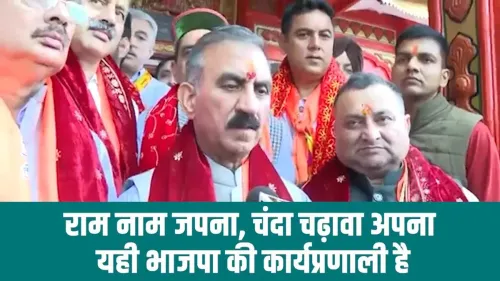
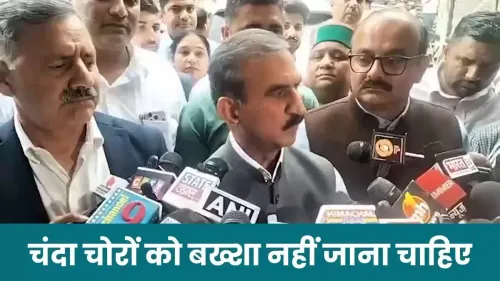
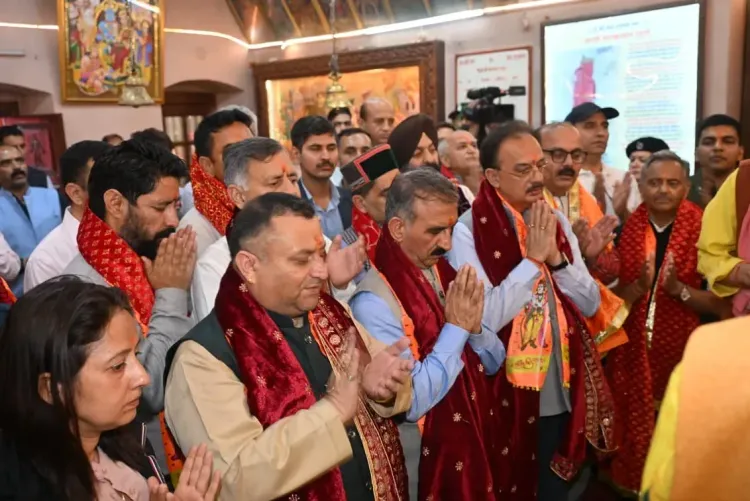
Himachal Pradesh CM Sukhvinder Singh Sukhu offered prayers at Shimla's Jakhu Temple on 7 July 2026 and publicly invoked Lord Hanuman to protect devotees' faith, referencing a reported theft of donations at the Ayodhya Ram Temple as a source of pain for Ram devotees across the country.
Key Takeaways
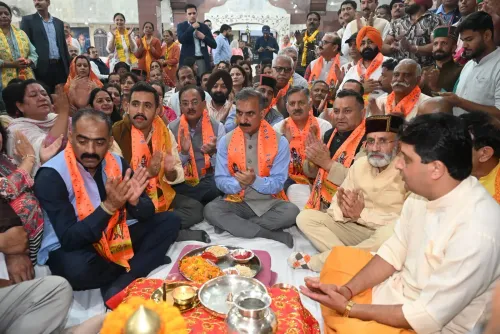
CM Sukhvinder Singh Sukhu performed ritual worship at Jakhu Temple, Shimla on 7 July 2026 .
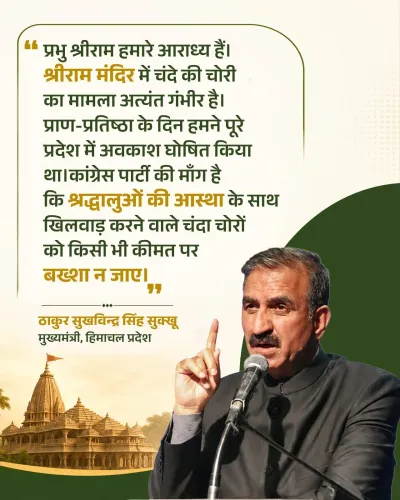
He cited a reported theft of donations at the Shri Ram Temple, Ayodhya as having 'caused pain to many Ram devotees.' His post opened with a verse from the Ramcharitmanas praising Lord Hanuman's wisdom and devotion to Lord Ram.
He appealed to Lord Hanuman to protect the faith and trust of devotees, drawing parallels with Hanuman's mythological acts of service.
The Ayodhya Ram Temple was consecrated on 22 January 2024 and has since been a focal point of national religious and political discourse.
Himachal Pradesh Chief Minister Sukhvinder Singh Sukhu visited the historic Jakhu Temple in Shimla on Tuesday, 7 July 2026, offering prayers and raising concern over a reported theft of donations at the Shri Ram Temple in Ayodhya, calling it a source of pain for countless devotees.
Context
Posting from the hilltop Hanuman shrine, CM Sukhu opened with a verse from the Ramcharitmanas — 'Vidyavan guni ati chatur, Ram kaaj karibe ko aatur' ('Learned, virtuous, and supremely clever, ever eager to serve Lord Ram') — invoking Lord Hanuman's qualities before describing his worship at the temple. He wrote that he performed 'vidhivat puja-archana' (ritual worship conducted with full rites) at the sacred site.
The Chief Minister then addressed the reported theft of donated funds at the Ayodhya Ram Temple, stating that the incident 'has caused pain to many Ram devotees.' He appealed directly to Lord Hanuman, asking the deity to protect the faith and trust of devotees just as he had protected Sita, carried her message to Ram, and brought the Sanjeevani herb to save Lakshmana.
Policy Backdrop
The Shri Ram Janmabhoomi Temple in Ayodhya was consecrated on 22 January 2024 after decades of legal and political developments, making it one of India's most prominent and emotionally charged religious sites. Since its opening, the temple has remained a recurring reference point in public discourse and political communication across party lines.
Jakhu Temple, perched atop Jakhu Hill in Shimla at roughly 2,455 metres above sea level, is one of Himachal Pradesh's most revered Hanuman shrines. Elected leaders visiting the temple and issuing public statements around religious occasions is a well-established practice in the state.
Stakeholders and Impact
The Chief Minister's post directly addresses Hindu devotees who hold both Hanuman and the Ayodhya temple in deep reverence. By framing the donation theft as a wound to collective faith, Sukhu positions the issue as a matter of religious sentiment rather than partisan politics.
Temple authorities at Ayodhya and state governments responsible for pilgrimage security are the institutional stakeholders implicated. The statement adds to public pressure on those responsible for safeguarding the sanctity and finances of the newly consecrated temple.
What's Next
The Ayodhya temple trust and relevant authorities are likely to face continued scrutiny over donation management and security protocols in the wake of public statements such as this one. CM Sukhu's appeal — framed as a prayer rather than a political demand — nonetheless signals that leaders across the spectrum are watching how the matter is handled, and that any lapse in protecting the temple's integrity will carry broad political and social consequences.
Point of View
Combined with a pointed reference to a security lapse at the Ayodhya temple — a site closely associated with the ruling BJP at the national level. By framing his concern as a devotee's prayer rather than a political attack, he occupies moral ground without inviting a direct partisan counter. The move reflects a broader pattern among opposition leaders of engaging with Hindu religious sentiment on its own terms. It also implicitly raises accountability questions about temple administration without naming any party or official.
NationPress
7 Jul 2026
Frequently Asked Questions
Why did CM Sukhu visit Jakhu Temple?
CM Sukhvinder Singh Sukhu visited Jakhu Temple in Shimla on 7 July 2026 to offer ritual prayers, and used the occasion to publicly invoke Lord Hanuman's blessings for the protection of devotees' faith.
What is the donation theft at Ayodhya Ram Temple?
CM Sukhu's post references a reported theft of donated funds at the Shri Ram Temple in Ayodhya , stating it has caused pain to Ram devotees; specific details of the incident are under investigation by the relevant authorities.
Where is Jakhu Temple located?
Jakhu Temple is a historic Hanuman shrine situated atop Jakhu Hill in Shimla, Himachal Pradesh , at an altitude of approximately 2,455 metres above sea level.
When was the Ayodhya Ram Temple consecrated?
The Shri Ram Janmabhoomi Temple in Ayodhya was formally consecrated on 22 January 2024 after decades of legal and political proceedings.
What did CM Sukhu say about Lord Hanuman and the Ayodhya theft?
CM Sukhu appealed to Lord Hanuman to protect the faith and trust of devotees, drawing on Hanuman's acts of rescuing Sita, carrying her message to Ram, and saving Lakshmana — asking that the same divine protection be extended to the sentiments of Ram devotees hurt by the reported theft.