CM Sukhu Pays Tribute to Rajendranath Lahiri on Birth Anniversary
Synopsis
Himachal Pradesh CM Sukhvinder Singh Sukhu on 29 June 2026 honoured revolutionary freedom fighter Rajendranath Lahiri on his birth anniversary, calling the Kakori Train Action hero an enduring inspiration for India's youth to remain devoted to national duty.
Key Takeaways
Himachal Pradesh CM Sukhvinder Singh Sukhu paid tribute to revolutionary Rajendranath Lahiri on his birth anniversary, 29 June 2026 .
Rajendranath Lahiri was born on 29 June 1901 and was a key organiser of the Kakori Train Action of 9 August 1925 .
Lahiri was a member of the Hindustan Republican Association (HRA) and was sentenced to death by a British colonial court.
He was hanged on 17 December 1927 at Gonda Jail , aged 26 , two days before his co-accused were executed.
CM Sukhu invoked Lahiri's patriotism and resolve as an inspiration for youth to remain duty-bound in the national interest.
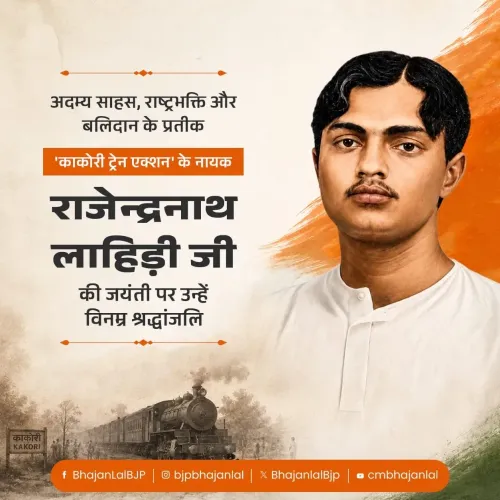
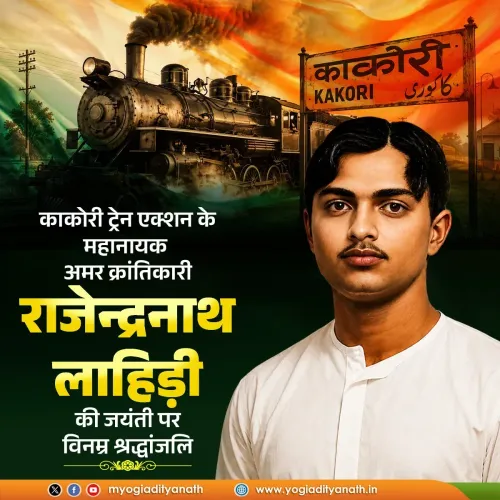
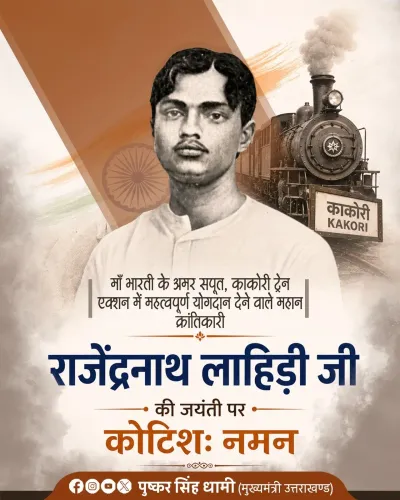
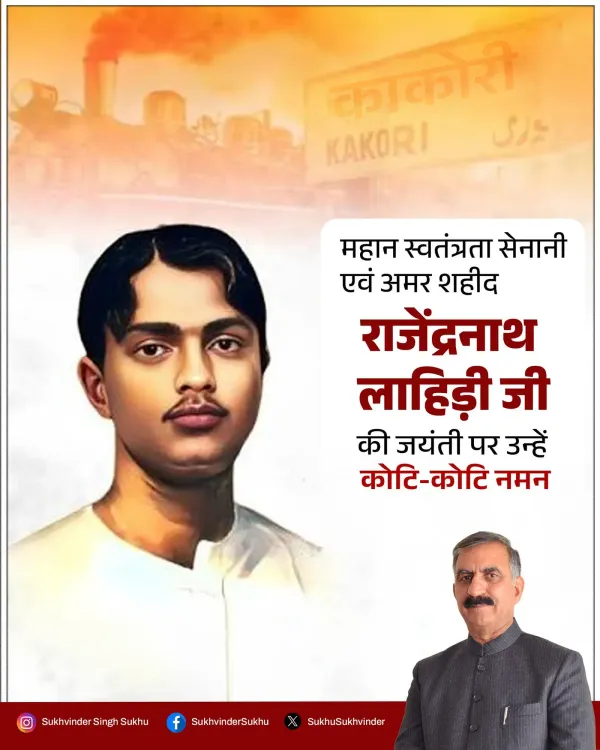
Himachal Pradesh Chief Minister Sukhvinder Singh Sukhu on Monday, 29 June 2026, paid tribute to revolutionary freedom fighter Rajendranath Lahiri on his birth anniversary, honouring the hero of the Kakori Train Action for his patriotism and unwavering resolve.
Posting on X in Hindi, Chief Minister Sukhu wrote: 'महान क्रांतिकारी एवं काकोरी ट्रेन एक्शन के नायक राजेंद्रनाथ लाहिड़ी जी की जयंती पर उन्हें सादर नमन।' — ['Respectful salutations to the great revolutionary and hero of the Kakori Train Action, Rajendranath Lahiri, on his birth anniversary.'] He added that Lahiri's patriotism and unbreakable determination would continue to inspire youth to remain devoted to their duty in the national interest.
Context
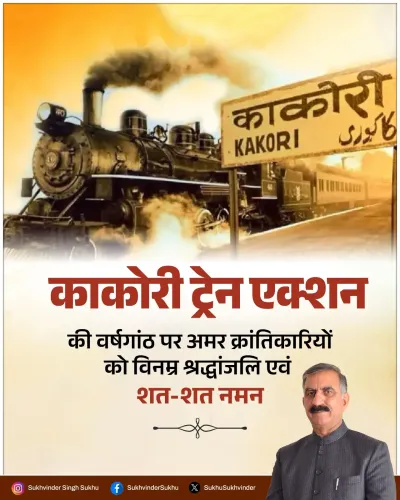
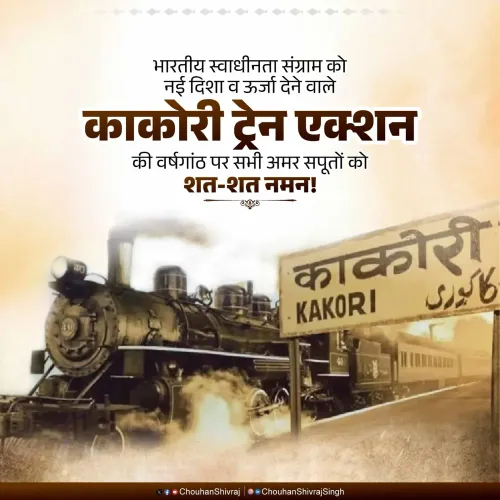
Rajendranath Lahiri was one of the principal organisers of the Kakori Train Action of 9 August 1925, a landmark act of armed resistance against British colonial rule. A group of revolutionaries associated with the Hindustan Republican Association (HRA) looted a train carrying British government treasury funds near Kakori in present-day Uttar Pradesh, aiming to finance the independence movement. The action became one of the most celebrated episodes of India's revolutionary freedom struggle.
Lahiri, born on 29 June 1901 in Pabna district (now in Bangladesh), was a young scholar and firebrand who joined the revolutionary movement in his early twenties. He was arrested in the aftermath of the Kakori case and, along with fellow revolutionaries Ram Prasad Bismil, Ashfaqullah Khan, and Thakur Roshan Singh, was sentenced to death by the British colonial court.
Policy Backdrop
Rajendranath Lahiri was hanged on 17 December 1927 at Gonda Jail — two days ahead of the scheduled date of his co-accused, an act widely seen as a deliberate attempt by colonial authorities to prevent a coordinated public response. He was 26 years old at the time of his execution, making him one of the youngest martyrs of the pre-independence revolutionary movement.
The Kakori Train Action galvanised a generation of Indian nationalists and is formally commemorated each year on 9 August, which also coincides with the anniversary of the Quit India Movement of 1942. The Indian government and various state administrations regularly observe birth and death anniversaries of revolutionary martyrs as part of broader efforts to keep the memory of the freedom struggle alive among younger generations.
Stakeholders and Impact
Chief Minister Sukhu's tribute reflects a continuing political tradition across party lines of publicly honouring revolutionary freedom fighters, particularly those who chose armed resistance over the constitutional path. For the Indian National Congress, invoking such figures carries historical resonance, as the party positions itself as the inheritor of the broader independence movement. Lahiri's legacy is especially significant in states like Uttar Pradesh, West Bengal, and Himachal Pradesh, where revolutionary history is woven into local political identity.
For Himachal Pradesh, such commemorations also align with the state government's emphasis on youth engagement and civic values. CM Sukhu's message specifically directed at youth — urging them to remain duty-bound in the national interest — underscores a recurring theme in his public communication around patriotism and public service.
What's Next
With 29 June marking Lahiri's birth anniversary, similar tributes are expected from political leaders and cultural organisations across the country throughout the day. The broader commemorative calendar around the Kakori Train Action centenary — observed in 2025 — has renewed public interest in the revolutionary chapter of India's freedom struggle, and such tributes are likely to continue gaining prominence in official discourse in the months ahead.
Point of View
Sukhu ties a colonial-era martyr to a contemporary governance message around civic duty, a framing that serves both commemorative and electoral purposes. The renewed salience of the Kakori centenary in 2025 has made such tributes more prominent in official political discourse. This pattern of invoking revolutionary martyrs on birth and death anniversaries is likely to intensify as the 2027 Uttar Pradesh assembly elections approach and parties compete over nationalist symbolism.
NationPress
27 Sept 2026
Frequently Asked Questions
Who was Rajendranath Lahiri?
Rajendranath Lahiri was an Indian revolutionary freedom fighter born on 29 June 1901, best known as one of the key organisers of the Kakori Train Action of 1925. He was a member of the Hindustan Republican Association and was executed by British colonial authorities on 17 December 1927 at Gonda Jail at the age of 26.
What was the Kakori Train Action?
The Kakori Train Action took place on 9 August 1925, when a group of revolutionaries associated with the Hindustan Republican Association looted a British government treasury train near Kakori in present-day Uttar Pradesh. The aim was to fund the armed independence movement, and the event became one of the most celebrated episodes of India's revolutionary freedom struggle.
Why did CM Sukhu post about Rajendranath Lahiri?
Himachal Pradesh Chief Minister Sukhvinder Singh Sukhu posted a tribute on X on 29 June 2026 to mark the birth anniversary of Rajendranath Lahiri. He honoured Lahiri's patriotism and resolve, and urged India's youth to remain devoted to their duty in the national interest.
When was Rajendranath Lahiri executed?
Rajendranath Lahiri was hanged on 17 December 1927 at Gonda Jail, two days before the scheduled execution of his co-accused in the Kakori case, including Ram Prasad Bismil, Ashfaqullah Khan, and Thakur Roshan Singh.
What is the significance of the Kakori Train Action centenary?
The centenary of the Kakori Train Action was observed in 2025, a hundred years after the 1925 event. The anniversary renewed public and political interest in the revolutionary chapter of India's freedom struggle, and tributes to its participants have become more prominent in official discourse since then.