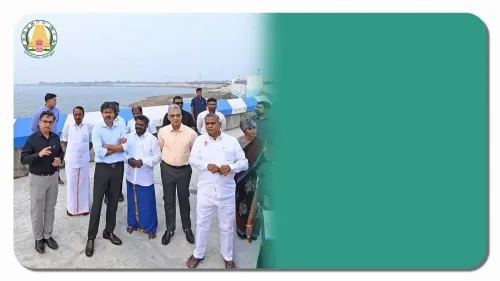
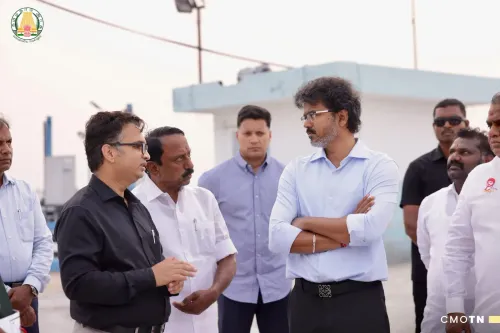
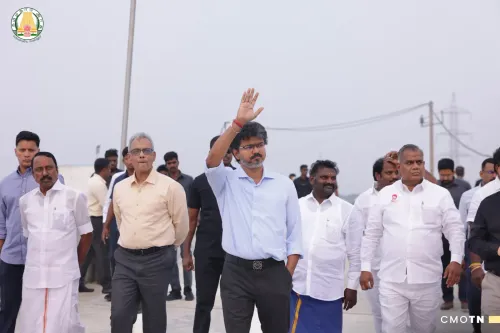
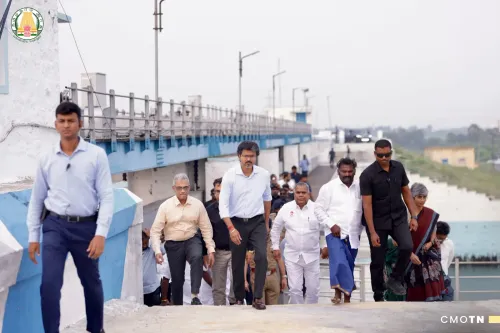
CM Vijay inspects Chembarambakkam Lake sluice gates, bund

Synopsis
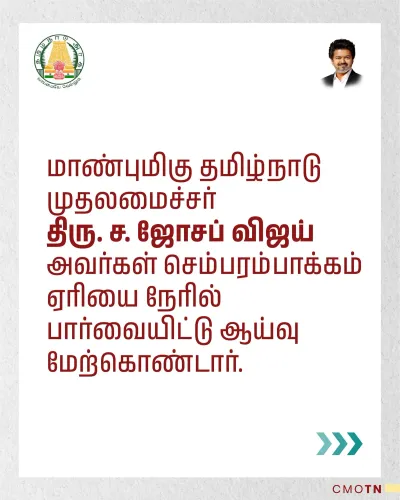
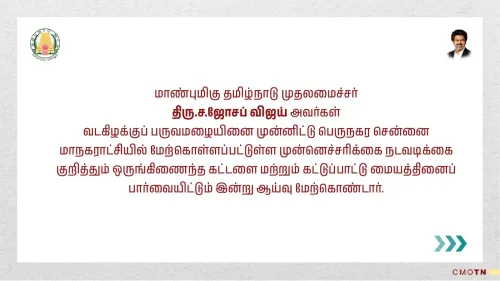
Chief Minister C. Joseph Vijay visited Chembarambakkam Lake in Kancheepuram on 26 October 2026 to personally inspect sluice gates, the intake tower, the surplus weir and bund — key structures governing Chennai's water supply and flood safety ahead of the northeast monsoon peak.
Key Takeaways
Joseph Vijay conducted an on-site inspection of Chembarambakkam Lake in Kancheepuram District on 26 October 2026 .
The inspection covered four critical structures: sluice gates, intake tower, surplus weir, and bund areas .
Chembarambakkam is a primary drinking water source for the Chennai metropolitan area .
The visit follows a protocol of senior-level reservoir reviews intensified after the 2015 Chennai floods .
The inspection falls at the onset of Tamil Nadu's northeast monsoon season , which peaks between October and December.
Outcomes may include fast-tracked maintenance, desilting orders, or structural repair directives from the Chief Minister.
With the northeast monsoon bearing down on Tamil Nadu, Chief Minister C. Joseph Vijay made a hands-on visit to one of Chennai's most critical water lifelines on Monday, 26 October 2026 — walking the bund, examining the intake tower, and checking every sluice gate at Chembarambakkam Lake in Kancheepuram District himself.
The Chief Minister's Office confirmed the inspection covered the lake's sluice gates, intake tower, surplus weir, and bund areas — the four structural components that together determine how safely the reservoir absorbs heavy rainfall and releases water downstream toward the city.
Why Chembarambakkam demands top-level attention
Chembarambakkam is no ordinary reservoir. It is one of the primary drinking water sources for the Chennai metropolitan area, supplying millions of residents while also sitting upstream of low-lying urban zones that have flooded catastrophically in the past. When the lake fills faster than its outlets can handle, the consequences reach all the way into city neighbourhoods.
That lesson was burned into institutional memory after the 2015 Chennai floods, when controlled releases from Chembarambakkam became a flashpoint in the public debate over reservoir management. Since then, Tamil Nadu governments have institutionalised senior-level on-site reviews of major reservoir infrastructure — precisely the kind of inspection CM Vijay carried out today.
Sluice gates, weirs, and what an inspection actually checks
A reservoir inspection of this scope is more than a photo opportunity. Sluice gates control the rate at which water is released; if they seize or corrode, operators lose the ability to manage outflow during a surge. The intake tower governs how water is drawn for treatment and supply to the city. The surplus weir is the last line of defence — it allows excess water to spill safely when the lake approaches full capacity. The bund, the earthen embankment holding the entire volume, must be checked for seepage, erosion, or settlement.
Each of these components failing — even partially — carries disproportionate risk during a high-rainfall event. An in-person review by the Chief Minister signals that flood-season readiness has been elevated to political priority, not left solely to departmental routine.
Ahead of the 2026-27 monsoon cycle
Tamil Nadu's northeast monsoon typically peaks between October and December, making late October the last realistic window to identify and fast-track any urgent structural repairs before sustained rainfall sets in. Any maintenance gaps flagged during today's inspection — desilting requirements, gate servicing, bund reinforcement — will now carry the Chief Minister's direct mandate to act quickly.
For Chennai's water managers and the millions of residents who depend on Chembarambakkam for their taps as well as their flood safety, the next few weeks of rainfall data will show whether today's ground-level scrutiny translates into measurable monsoon preparedness.
Point of View
Not just a technocratic one — especially given the shadow the 2015 Chennai floods continue to cast on how Tamil Nadu governments communicate reservoir decisions. The inspection also reflects a broader pattern across Indian states of using high-visibility site visits to pre-empt criticism in the event of flood damage, effectively putting the executive on record as having done due diligence. For Chennai, where unplanned urban expansion has steadily reduced natural drainage capacity, the stakes of getting reservoir operations right have only grown. Whether today's visit results in concrete action orders — or remains a demonstration of intent — will be the real measure of its significance.
NationPress
26 Oct 2026
Frequently Asked Questions
Why did CM Vijay visit Chembarambakkam Lake?
CM C. Joseph Vijay inspected Chembarambakkam Lake on 26 October 2026 to personally assess the condition of its sluice gates, intake tower, surplus weir and bund ahead of the northeast monsoon season, which is the peak flood-risk period for Chennai.
What is Chembarambakkam Lake and why is it important for Chennai?
Chembarambakkam Lake is a major reservoir in Kancheepuram District and one of Chennai's primary sources of drinking water. It also plays a critical role in flood management, as uncontrolled releases from the lake can inundate low-lying areas of the city.
What happened during the 2015 Chennai floods and Chembarambakkam Lake?
During the devastating 2015 Chennai floods, emergency releases from Chembarambakkam Lake contributed to flooding in parts of the city, prompting Tamil Nadu authorities to strengthen protocols for regular structural inspections of major reservoirs.
What structures were inspected at Chembarambakkam Lake?
The Chief Minister inspected four key structures: the sluice gates that control water release, the intake tower that draws water for city supply, the surplus weir that handles overflow, and the earthen bund that holds the reservoir's volume.
When does Tamil Nadu's northeast monsoon arrive?
Tamil Nadu's northeast monsoon typically arrives in October and peaks between October and December, making late October a critical window for reservoir inspections and flood-preparedness measures.