CM Joseph Vijay meets Tamil Nadu govt employees' union at Secretariat
Synopsis
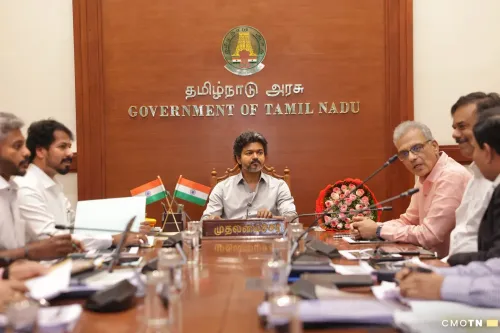
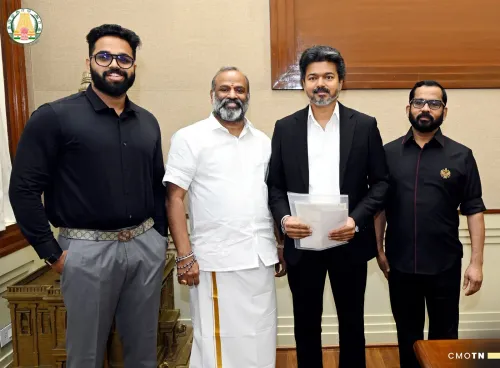
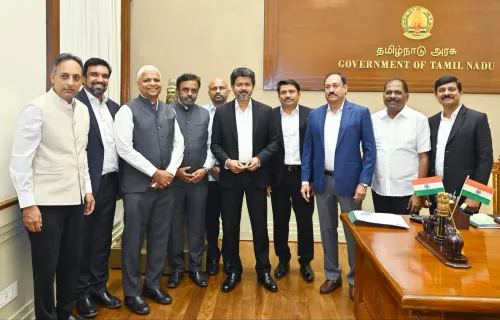
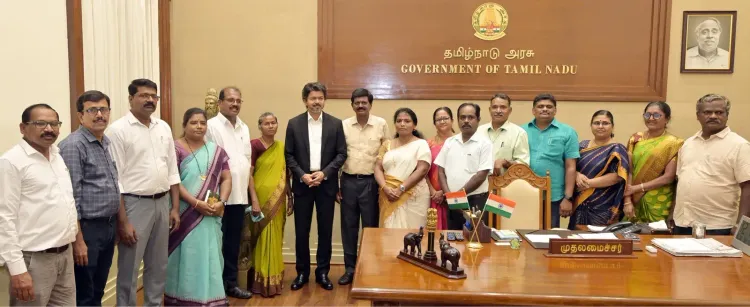
Tamil Nadu Chief Minister Joseph Vijay met senior TNGEA office-bearers — state president M. Bhaskaran, general secretary V. Somasundaram, and treasurer S. Daniel Jeyasingh — at the Chief Secretariat in Chennai on 26 May 2026, in a formal engagement on state government employees' concerns.
Key Takeaways
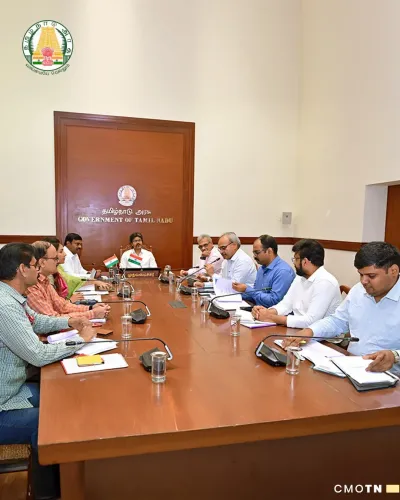
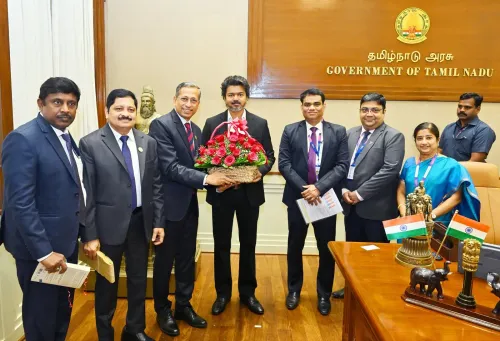
CM Joseph Vijay held a formal meeting with the Tamil Nadu Government Employees Association (TNGEA) on 26 May 2026 .
The TNGEA delegation included State President M.
Bhaskaran , General Secretary V.
Somasundaram , and State Treasurer S.
The meeting was held at the Chief Secretariat, Chennai , Tamil Nadu's principal administrative headquarters.
Such meetings are part of an established administrative practice in Tamil Nadu for managing public-sector employee relations.
Subsequent government orders or committee formations addressing issues raised will be the key indicators of outcomes.
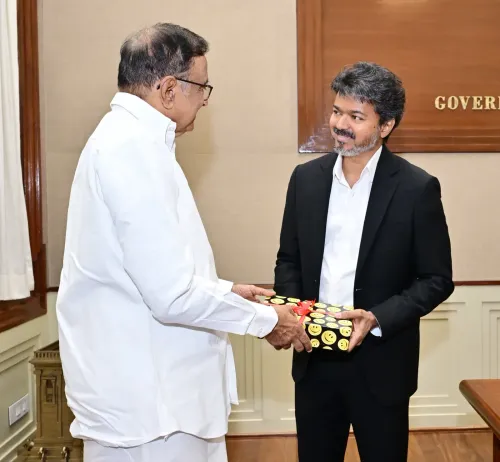
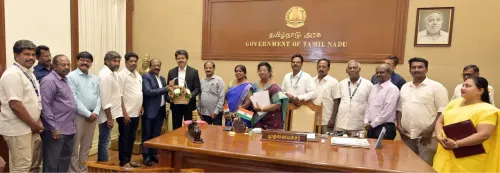
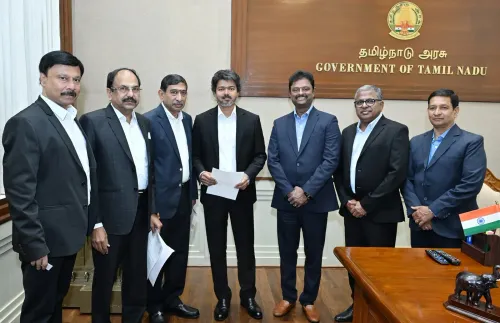
The Chief Minister's Office of Tamil Nadu announced on 27 May 2026 that Chief Minister Joseph Vijay held a formal meeting with senior office-bearers of the Tamil Nadu Government Employees Association (TNGEA) at the State Secretariat, Chennai, on 26 May 2026.
The TNGEA delegation comprised State President M. Bhaskaran, General Secretary V. Somasundaram, State Treasurer S. Daniel Jeyasingh, and other office-bearers. The meeting was held at the Chief Secretariat (தலைமைச் செயலகம்), the nerve centre of Tamil Nadu's administrative machinery.
Context
The Tamil Nadu Government Employees Association is a registered body representing state government staff across departments, and it routinely engages with the administration on matters of service conditions, pay, pensions, and welfare. Formal meetings between the Chief Minister and recognised employee associations at the Secretariat are an established part of Tamil Nadu's administrative practice.
The CMO's post, originally in Tamil, confirmed that the TNGEA leadership 'met and spoke with' (சந்தித்துப் பேசினர்) the Chief Minister, indicating a substantive exchange rather than a ceremonial visit.
Policy Backdrop
State government employees in Tamil Nadu number in the hundreds of thousands and their associations wield considerable organisational influence. Historically, Chief Ministers have used Secretariat-level meetings to receive formal representations from such bodies, often preceding government orders on pay revisions, allowances, or service-rule amendments.
Such engagements also serve as an early-warning mechanism for the administration, allowing it to gauge employee sentiment before grievances escalate into strikes or agitations. The involvement of the TNGEA's top three office-bearers — president, general secretary, and treasurer — suggests the delegation carried a structured agenda.
Stakeholders and Impact
The primary stakeholders are Tamil Nadu's state government employees, whose service conditions, pay scales, and pension entitlements are determined by government orders issued from the Secretariat. Any commitments or assurances made during the meeting could affect a large section of the public-sector workforce.
TNGEA's reach spans multiple departments, meaning outcomes of this meeting — whether a committee formation, a policy review, or a formal representation — could have broad administrative consequences across the state.
What's Next
Observers will watch for any subsequent government orders, circulars, or committee notifications that may emerge from the issues raised during the 26 May 2026 meeting. Formal representations submitted by employee associations at such meetings typically enter the administrative pipeline and may result in policy action within weeks.
The CMO's decision to publicly communicate the meeting through its official channel signals transparency and may be followed by further announcements on the specific demands discussed.
Point of View
Engaging TNGEA early in his tenure follows a pattern seen across Tamil Nadu administrations, where pre-emptive dialogue has historically reduced the risk of organised agitations. The presence of the treasurer alongside the president and general secretary hints at a financially weighted agenda — likely touching on pay, arrears, or pension matters. The CMO's public communication of the meeting raises the stakes for a tangible follow-up.
NationPress
20 Sept 2026
Frequently Asked Questions
Who is the Tamil Nadu Government Employees Association (TNGEA)?
TNGEA is a registered association representing state government employees across departments in Tamil Nadu. It regularly engages with the administration on service conditions, pay scales, pensions, and employee welfare.
Why did TNGEA meet CM Joseph Vijay on 26 May 2026?
The TNGEA's state president, general secretary, and treasurer met CM Joseph Vijay at the Chief Secretariat to present the association's formal agenda, likely covering service conditions and employee welfare matters. The specific demands discussed have not been officially disclosed.
Where was the meeting between CM Joseph Vijay and TNGEA held?
The meeting was held at the Chief Secretariat (தலைமைச் செயலகம்) in Chennai, which is the principal administrative headquarters of the Tamil Nadu government.
What could be the outcome of the CM's meeting with TNGEA?
Outcomes may include government orders on pay revisions or allowances, formation of review committees, or formal acknowledgment of the association's representations. Observers will watch for official notifications in the weeks following the meeting.
Is it common for Tamil Nadu Chief Ministers to meet government employee unions?
Yes. Chief Ministers in Tamil Nadu have periodically held formal meetings with recognised employee associations at the Secretariat. These interactions are an established part of managing public-sector human resources in the state.