CM Joseph Vijay Meets CREDAI Leaders at Chennai Secretariat
Synopsis
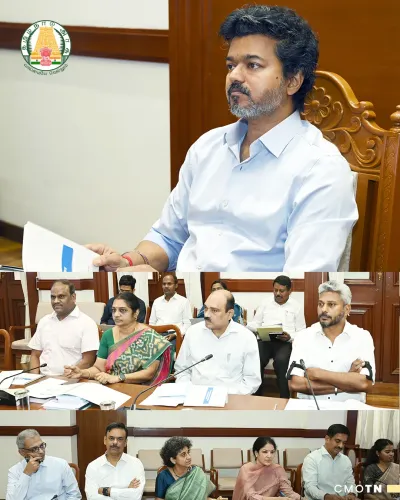
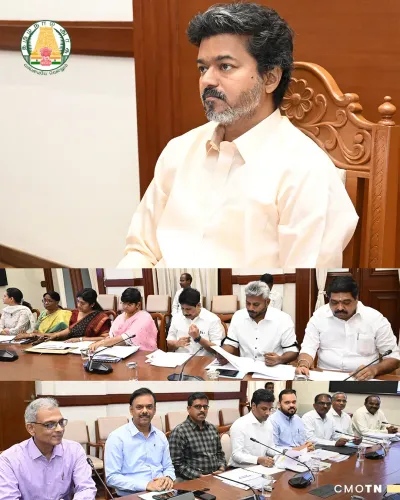
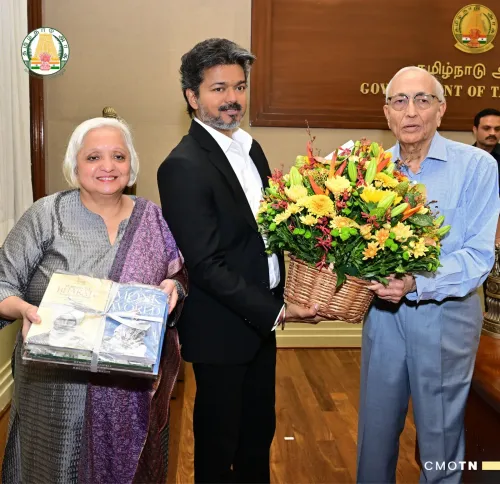
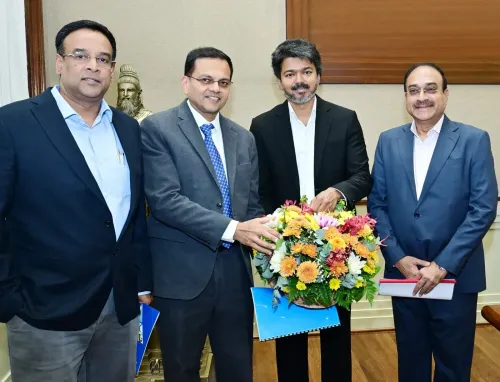
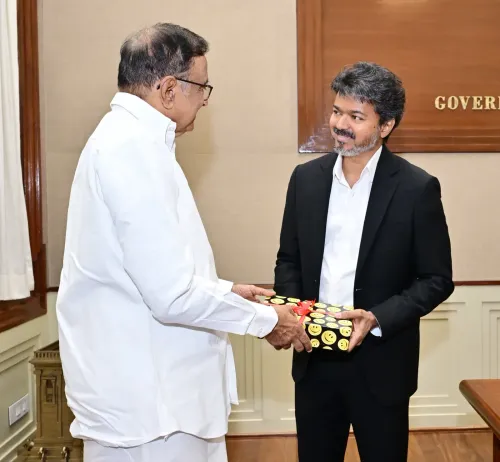
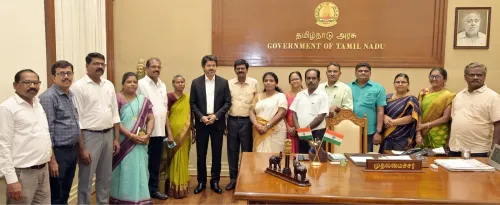
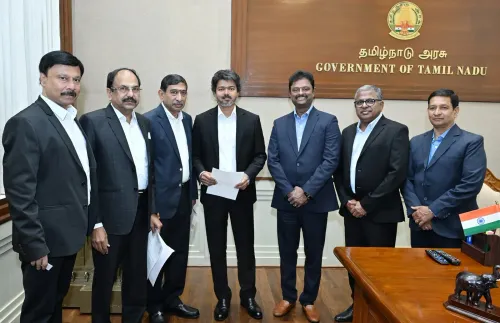
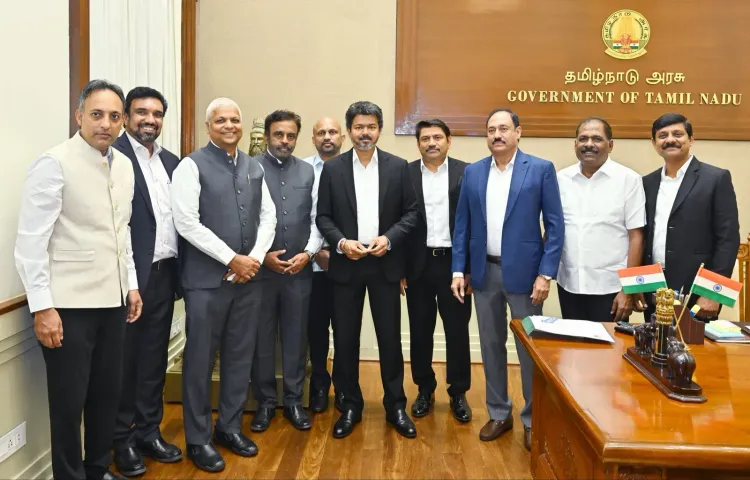
Tamil Nadu Chief Minister C. Joseph Vijay received a CREDAI delegation at the Chennai Secretariat on 3 June 2026. Office-bearers from CREDAI Chennai, Tamil Nadu and the national body, including Mehul H. Doshi, S. Sridharan and W.S. Habeeb, met the CM to discuss issues facing the state's real estate sector.
Key Takeaways
CREDAI delegation met Tamil Nadu CM C.
Joseph Vijay at the Chennai Secretariat on 3 June 2026 .
Delegation included Mehul H.
Doshi (President, CREDAI Chennai) and W.S.
Habeeb (President, CREDAI Tamil Nadu).
Sridharan represented CREDAI's National Managing Committee.
Meeting reflects routine engagement between state governments and the real estate industry body.
Tamil Nadu's real estate sector operates under the RERA framework adopted in 2017 .
The Chief Minister's Office of Tamil Nadu on 3 June 2026 announced that a delegation from the Confederation of Real Estate Developers' Associations of India (CREDAI) called on Tamil Nadu Chief Minister C. Joseph Vijay at the Secretariat in Chennai. The meeting brought together senior office-bearers of CREDAI's Chennai, Tamil Nadu and national units to discuss issues concerning the state's real estate sector.
According to the post, the delegation that met the Chief Minister included Mehul H. Doshi, President of CREDAI Chennai; S. Sivagurunathan, Adviser; S. Sridharan, Managing Committee member of CREDAI National; Suresh Krishnan, Joint Secretary; and W.S. Habeeb, President of CREDAI Tamil Nadu, along with other office-bearers of the association. The communication, issued in Tamil, described the meeting as a courtesy call and consultation at the thalaimai seyalagam (head secretariat).
Context
CREDAI is the apex industry body representing private real estate developers across India, with state and city chapters that engage routinely with governments on regulatory and investment matters. Its Chennai and Tamil Nadu chapters are among the most active, reflecting the scale of housing and commercial construction activity in the state's urban centres.
The Chief Minister's Office did not release a detailed agenda for the meeting, but such interactions traditionally cover building approvals, land-use rules, sectoral taxation and the pace of clearances for housing projects.
Policy backdrop
Tamil Nadu adopted the Real Estate (Regulation and Development) Act framework in 2017, setting up a state-level regulator to oversee project registrations, disclosures and consumer protection. Since then, developers have engaged the state on operational aspects of the law, including registration timelines, compliance norms and grievance redressal.
Chennai, alongside Coimbatore, Madurai and Tiruchirappalli, has seen sustained demand for residential and commercial real estate, with the sector contributing significantly to employment in construction, allied services and ancillary manufacturing.
Stakeholders and impact
For CREDAI, direct access to the Chief Minister offers a platform to flag sector concerns ranging from approval bottlenecks to input costs, stamp duty and incentives for affordable housing. For the state government, the engagement signals openness to private capital in urban development at a time when several Indian states are competing to attract real estate investment.
Homebuyers and the broader construction workforce are indirect stakeholders, with policy decisions on approvals and regulation shaping project pipelines, delivery timelines and prices.
What's next
The Chief Minister's Office has not indicated specific follow-up measures arising from the meeting. Sector watchers will look for subsequent announcements on building regulations, affordable housing initiatives or investment facilitation steps that may emerge from continued consultations between the state and industry bodies.
The interaction underscores the centrality of the real estate and construction industry to Tamil Nadu's urban economy, and the role state-level political leadership plays in shaping its trajectory.
Point of View
With its links to land, finance and labour, is politically sensitive and economically central, making CREDAI a recurring interlocutor at Chief Ministers' offices across India. For a newly installed administration, such early engagement signals continuity in dialogue with private capital while reserving room to recalibrate regulatory specifics. The substance of any commitments will be visible in subsequent notifications on approvals, RERA implementation and housing incentives.
NationPress
24 Sept 2026
Frequently Asked Questions
Who met Tamil Nadu CM Joseph Vijay on 3 June 2026?
A CREDAI delegation including Mehul H. Doshi, S. Sivagurunathan, S. Sridharan, Suresh Krishnan and W.S. Habeeb met the Chief Minister at the Chennai Secretariat.
Where was the meeting held?
The meeting was held at the Tamil Nadu Secretariat (thalaimai seyalagam) in Chennai.
What does CREDAI typically discuss with state governments?
CREDAI typically raises issues around building approvals, land-use policies, RERA implementation, stamp duty, taxation and incentives for affordable housing.
Has Tamil Nadu implemented RERA?
Yes, Tamil Nadu adopted the Real Estate (Regulation and Development) Act framework in 2017, setting up a state-level regulator for the sector.