Political Tensions Erupt at CM Vijayan's Press Conference
Synopsis
Amid the peak of the Assembly election campaign, CM Pinarayi Vijayan's press conference devolved into a political battleground, raising questions about media access and accountability in governance.
Key Takeaways
Journalistic Freedom: The right to question leadership is essential in democracy.
Media Bias Accusations: Claims of selective questioning can undermine public trust.
Political Accountability: Leaders are expected to engage transparently, especially during elections.
Social Media Influence: Online discourse can amplify controversies and shape public perception.
Future Media Engagement: Anticipation surrounds CM Vijayan's next press meeting as elections approach.
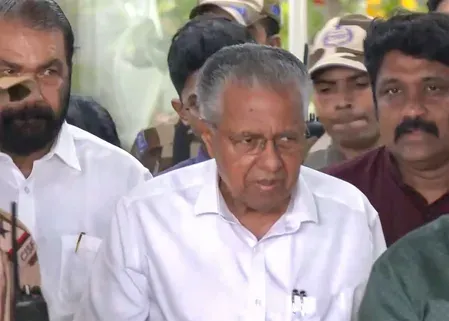
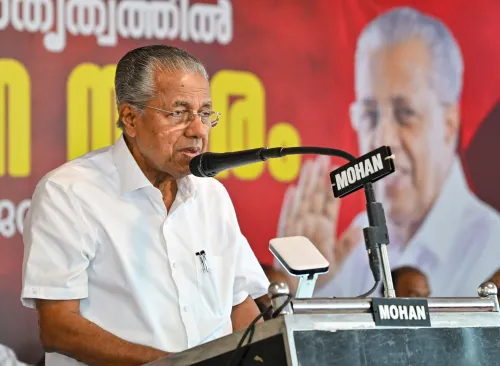
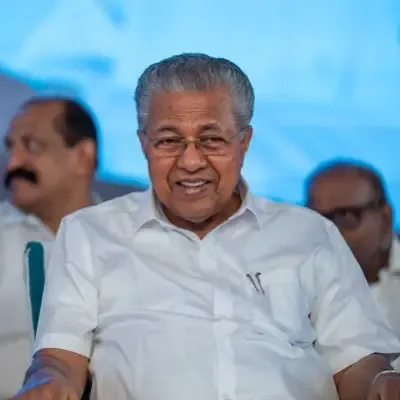
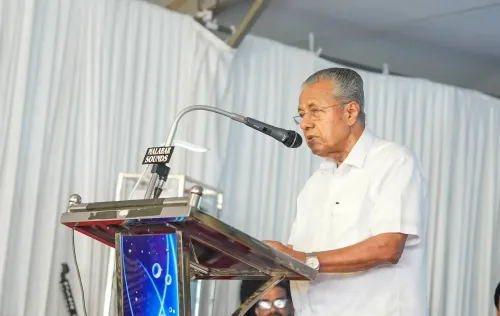
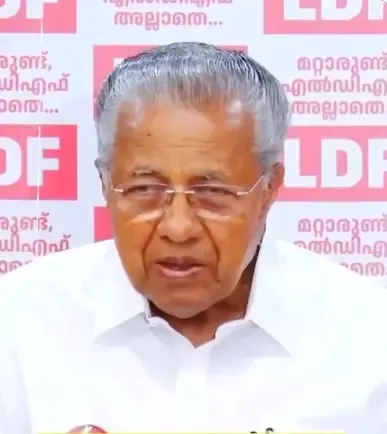
Kollam, March 30 (NationPress) As the Assembly election campaign reaches its zenith, Chief Minister Pinarayi Vijayan's press conference on Monday transformed into a scene of dramatic exchanges and open disputes, derailing what was intended to showcase governance into a significant political event.
The Chief Minister convened with the media to highlight the government's developmental milestones and to counter the criticisms from the opposition, but was met with unexpected protests from journalists.
They claimed biased access, accusing him of favoring questions from pro-CPI(M) media while ignoring broader media representation.
Things escalated when CM Vijayan responded to only three questions—two from Kairali and one from Deshabhimani—before attempting to wrap up the session, stating that time was limited and additional inquiries could be addressed the following day.
As he exited, journalists collectively voiced their discontent, stating, “This is unacceptable, Chief Minister… it is insufficient to respond only to Kairali and Deshabhimani - the party's own publication,” questioning the rationale behind inviting the press if diverse queries were not welcomed.
Under increasing pressure, CM Vijayan returned to the stage, took his seat again, and fielded more questions.
He emphasized that journalists ought to pose their queries instead of holding them back and reiterated that the session’s early conclusion was due to time constraints.
He also asserted that he had not shown favoritism towards any media outlet during his responses.
The press conference gained momentum following a previous incident in which the Chief Minister allegedly dismissed a journalist's inquiry regarding a supposed SDPI-CPI(M) agreement, suggesting the journalist “had some issue.”
During Monday’s session, journalists sought to revisit this allegation, among other topics.
The incident elicited strong reactions.
Journalists accused the Chief Minister of dodging accountability while promoting public discourse.
The opposition claimed that Vijayan, who recently released a decade-long report card, was apprehensive about questions that could unveil his administration's flaws.
The controversy has spilled over onto social media, where critics highlighted the inconsistency of challenging public debate while restricting media engagement.
As campaigning enters its final phase, this occurrence threatens to influence voter perception, casting doubt not only on development claims but also on the government's approach to media relations.
The Chief Minister is anticipated to meet the media again on Tuesday, with keen interest in his forthcoming responses.
Notably, CM Vijayan has engaged with the media on very few occasions since assuming office in 2016, having discontinued the weekly post-cabinet press interactions that had been customary since the late 1950s.
Leader of the Opposition V.D. Satheesan has publicly stated that once the UDF takes power after the May 4 elections, the new Chief Minister will certainly engage with the media at least once every ten days.
Point of View
The incident at CM Vijayan's press conference illustrates the delicate balance between governance and media relations. The public's right to question and hold leaders accountable is paramount, especially during an election cycle. This situation highlights the importance of transparency and open communication in democratic processes.
NationPress
10 Oct 2026
Frequently Asked Questions
What sparked the confrontation during CM Vijayan's press conference?
The confrontation arose from journalists protesting against perceived biased access and selective questioning, as CM Vijayan primarily addressed questions from pro-CPI(M) outlets.
How did CM Vijayan respond to the protests from journalists?
Initially, CM Vijayan attempted to conclude the press conference after answering only three questions, but he later returned to address more inquiries following the journalists' protests.
What criticism did CM Vijayan face from the opposition?
The opposition criticized CM Vijayan for allegedly avoiding questions that could expose the government's shortcomings, particularly after he released a 10-year report card.
What was the reaction on social media regarding this incident?
Critics on social media pointed out the contradiction between CM Vijayan's calls for public debate and his restrictive engagement with the media.
How often has CM Vijayan engaged with the media since taking office?
CM Vijayan has had very few official media interactions since he took office in 2016, having discontinued the weekly post-cabinet press meetings.