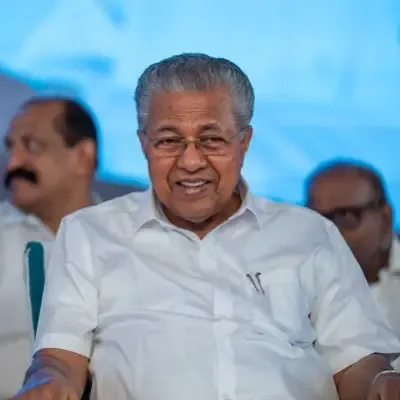
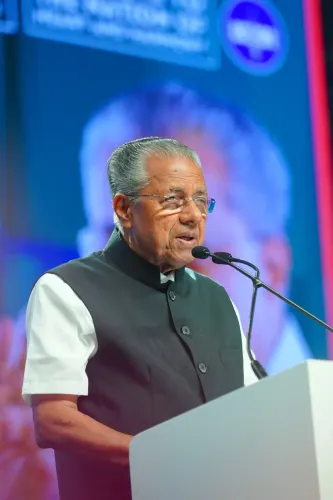
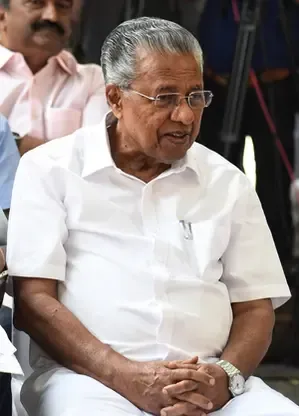
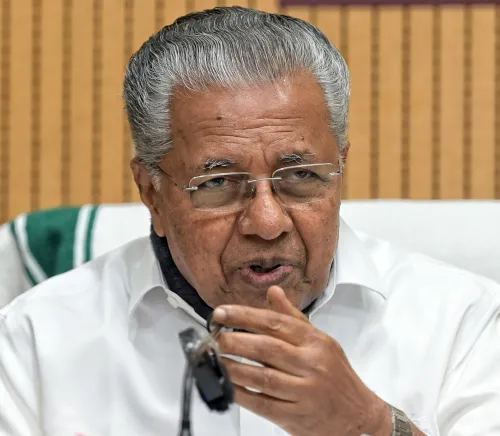
Internal Strife Threatens Pinarayi Vijayan's Third Term Ambitions
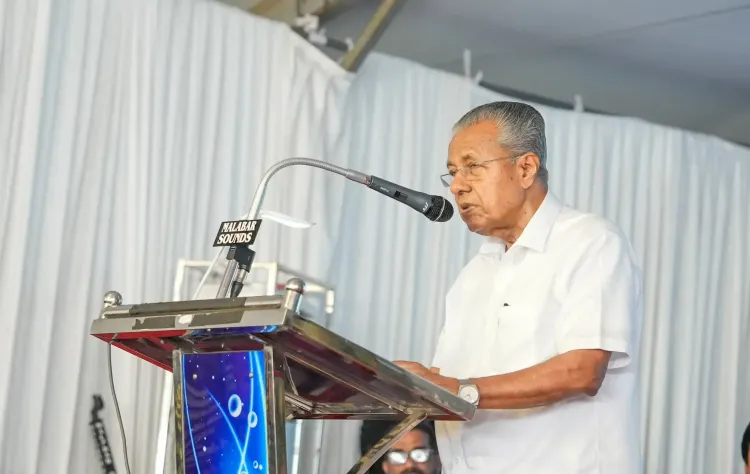
Synopsis
As Kerala nears a vital Assembly election, Chief Minister Pinarayi Vijayan's quest for a third consecutive term faces significant hurdles, with internal dissent from the CPI(M) threatening to reshape the electoral landscape.
Key Takeaways
Pinarayi Vijayan's bid for a third term is threatened by internal dissent.
Rebellion has emerged in key CPI(M) districts like Kannur and Alappuzha .
Anti-incumbency sentiment is growing among voters.
Former CPI(M) leaders are contesting as Independents.
The Congress party is also facing its own challenges.
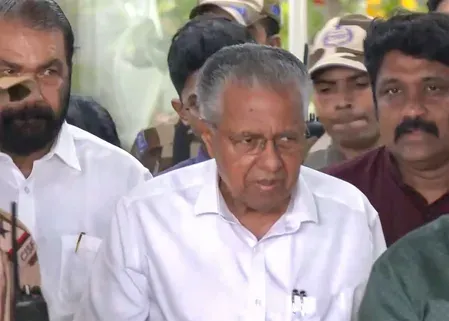
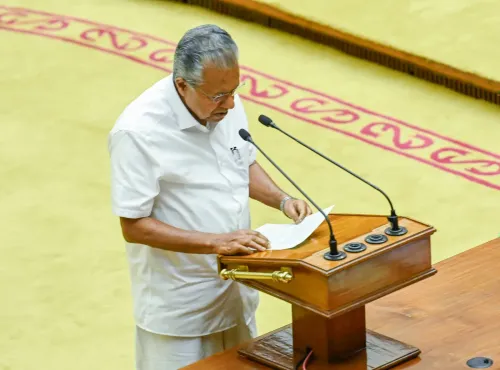
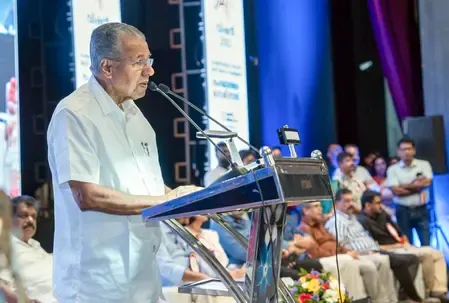
Thiruvananthapuram, March 17 (NationPress) As Kerala approaches a pivotal Assembly election in just a few weeks, Chief Minister Pinarayi Vijayan faces an increasingly precarious situation in his quest for a historic third consecutive term. The Communist Party of India (Marxist) is currently experiencing rising internal challenges that could complicate his ambitions.
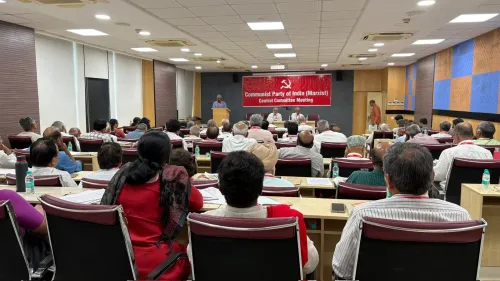
Traditionally known for its strict organizational discipline and swift management of dissent, the CPI(M) is now confronting a notable rebellion that is spreading across its key strongholds. This unrest, coupled with a growing anti-incumbency mood after two uninterrupted terms in office, has fundamentally shifted the electoral dynamics.
What is particularly alarming is that dissent has erupted in districts previously regarded as the party's unassailable fortresses—specifically, Kannur, Alappuzha, and Palakkad. In Alappuzha, former minister G. Sudhakaran, who has served two terms, has publicly distanced himself from the party and is campaigning as an Independent, indicating significant dissatisfaction among senior party leaders.
The situation in Kannur, considered the ideological heart of CPI(M), is even more dramatic. In an unprecedented move, two prominent figures have declared their intention to run as Independents. V. Kunjikrishnan plans to contest from Payyannur, while the seasoned leader T. K. Govindan will challenge the party from Taliparamba.
This level of open defiance in Kannur, the party's most robust district, is historically unprecedented and signals deeper issues within the organization.
In Palakkad, the crisis has taken a new turn. Former legislator P.K. Sasi has cut ties with the party and is now spearheading a faction of local leaders, further undermining the party's grassroots unity.
Compounding the party's difficulties is the anticipated defection of A. Suresh, a close associate of veteran Communist leader V. S. Achuthanandan, who is expected to join the Congress and contest from Malampuzha, a constituency closely linked to Achuthanandan. Adding to the turmoil is a notable shift in the party's candidate selection strategy.
In contrast to previous elections, the CPI(M) has opted to retain numerous veterans who have already served two or even three terms. This decision has left many young leaders and emerging figures feeling sidelined and dissatisfied, intensifying internal discord. The timing of these events makes the situation particularly precarious.
With just 24 days remaining until the election, the party finds itself with limited options to mitigate the damage or adjust its strategy. Unlike prior instances when dissent was swiftly quelled or remained localized, the current wave of rebellion is widespread and politically significant.
Overlaying this internal turmoil is the broader issue of anti-incumbency.
After two consecutive terms, a rarity in Kerala's political landscape, signs of voter fatigue, governance issues, and a perception of centralized decision-making are becoming increasingly evident.
Nevertheless, CPI(M) leadership is relying on the disarray within the opposition to navigate this crisis. With the Congress yet to finalize its candidate slate and signs of dissent arising within its ranks, the ruling party aims to leverage the situation to its benefit.
However, senior Congress leader and candidate K. Muraleedharan downplayed concerns regarding delays in candidate selection, calling them routine. He noted, “In the 2001 elections, it took us nearly two weeks to finalize our list. When votes were counted, we registered a historic victory, and A. K. Antony was sworn in. In the Congress, such delays are natural.”
When taken together, these elements create a significant challenge for Vijayan and the CPI(M).
While the party retains a strong organizational foundation and a dedicated support base, the convergence of anti-incumbency sentiment, internal dissent in core areas, and dissatisfaction among aspiring leaders could make the pursuit of a third consecutive term significantly more challenging than in previous years.
Point of View
Anti-incumbency, and dissatisfaction among party members presents a unique challenge for the ruling party as it seeks to maintain its power.
NationPress
28 Sept 2026
Frequently Asked Questions
What challenges is Pinarayi Vijayan facing?
Pinarayi Vijayan is facing internal dissent within the CPI(M), rising anti-incumbency sentiment, and dissatisfaction among aspiring leaders, making his bid for a third consecutive term uncertain.
Which districts are experiencing rebellion against the CPI(M)?
Rebellion is particularly evident in the traditionally strong districts of Kannur, Alappuzha, and Palakkad.
How is the Congress party positioned in this election?
The Congress party is currently finalizing its candidate list and experiencing its own internal dissent, which CPI(M) hopes to leverage in the upcoming election.
What impact does anti-incumbency have on the elections?
Anti-incumbency can lead to voter fatigue and concerns over governance, making it challenging for the ruling party to secure votes after two consecutive terms in power.
Are there any significant figures defecting from the CPI(M)?
Yes, notable figures such as A. Suresh are expected to defect to the Congress party, further complicating the CPI(M)'s electoral strategy.