Has Local Body Poll Setback Sparked Dissent Against Kerala CM?
Synopsis
In a surprising turn of events, Kerala CM Pinarayi Vijayan faces dissent within the CPI(M) following local body election setbacks. This marks a pivotal moment in his nearly three-decade-long dominance. Will this challenge his authority or lead to a transformation within the party?
Key Takeaways
Pinarayi Vijayan has dominated Kerala's CPI(M) for nearly 30 years.
Recent local body election setbacks have sparked internal dissent.
Criticism of Vijayan's leadership style has been voiced publicly for the first time.
The dissent may indicate a shift in party dynamics.
Future leadership strategies may need to adapt to changing loyalties.
Thiruvananthapuram, Dec 18 (NationPress) For almost three decades, Pinarayi Vijayan has been the cornerstone of Kerala’s CPI(M), initially as a powerful organizational figure and later as an undisputed leader. His authoritative grip over both the party and the government didn’t happen overnight; it began to solidify after he was appointed state secretary in 1998, when he methodically consolidated control over the cadre-based party.
Upon his resignation in 2014, factions had been subdued, dissent quelled, and power centralized to an extent rarely observed in the CPI(M)’s Kerala unit. This dominance intensified post-2016, as Vijayan successfully outmaneuvered V.S. Achuthanandan, the Left's main electoral strategist, to take up the office of Chief Minister.
While Achuthanandan led the electoral charge, the real power shifted decisively to Vijayan, resulting in an extraordinary consolidation where the party, government, and coalition coalesced around a solitary figure.
From the moment he assumed office until the recent local body election setback, Vijayan seemed untouchable. No dissent was publicly expressed, either within the CPI(M) or the broader Left Democratic Front. Decisions went largely unchallenged, criticisms were muted, and loyalty often manifested as uncritical support. Both admirers and supporters helped elevate the Chief Minister to a nearly unassailable status.
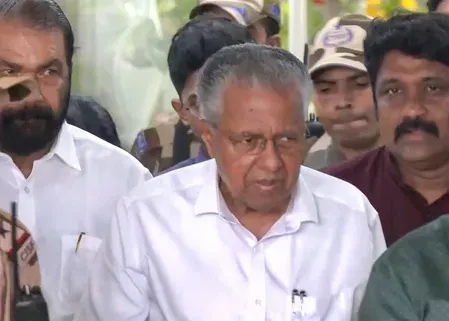
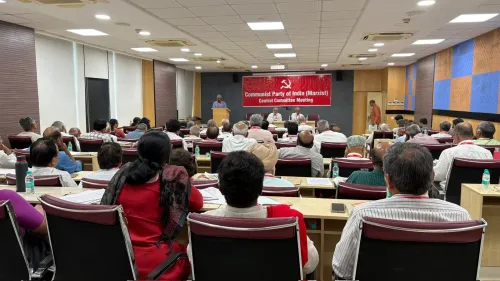
The recent developments during the CPI(M) meeting on Wednesday signify a significant shift. For the first time, a faction of the leadership openly critiqued Vijayan’s authoritarian approach. Though the criticism was measured, its very existence indicates that the long-standing silence has finally been shattered. What was previously whispered in private discussions has now transitioned into official party dialogue.
The catalyst for this change is clearly the setback in the local body elections, which disrupted the meticulously crafted image of invincibility. Electoral defeats historically have a way of reshuffling loyalties within the CPI(M), and there is ample historical evidence to support this claim.
The pressing question now is whether this is merely a fleeting disturbance or the onset of a more profound transformation. Will Vijayan adapt, ease his grip, and welcome dissent within the party’s collective structure? Or will he reaffirm his authority, demonstrating that his control remains unbroken?
For a leader whose strength has been rooted in command and control, the forthcoming months will test whether iron can be reshaped or if it ultimately fractures.
Point of View
The recent dissent against Kerala CM Pinarayi Vijayan highlights a critical moment in the CPI(M)'s history. As political dynamics shift, it's essential to monitor how this internal conflict may reshape the party's future and influence governance in Kerala. Nation always remains committed to delivering insights into pivotal political transformations.
NationPress
26 Sept 2026
Frequently Asked Questions
What triggered the dissent against Pinarayi Vijayan?
The dissent emerged following setbacks in the local body elections, challenging the narrative of Vijayan's invincibility.
How long has Pinarayi Vijayan been in power?
Pinarayi Vijayan has been a dominant force in Kerala's CPI(M) for nearly three decades.
What does this dissent indicate for the CPI(M)?
The dissent may signal a shift in party dynamics, potentially leading to increased internal challenges for Vijayan.
Has there been dissent within the CPI(M) before?
Historically, dissent has been muted, but the recent events have broken this long-standing silence.
What could be the future implications for Vijayan?
Vijayan may need to adapt his leadership style to accommodate dissent or risk further challenges to his authority.