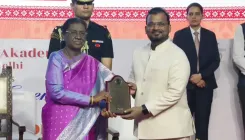
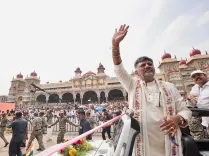
CM Vishnu Deo Sai attends royal Dussehra at Rainibhatha
Synopsis
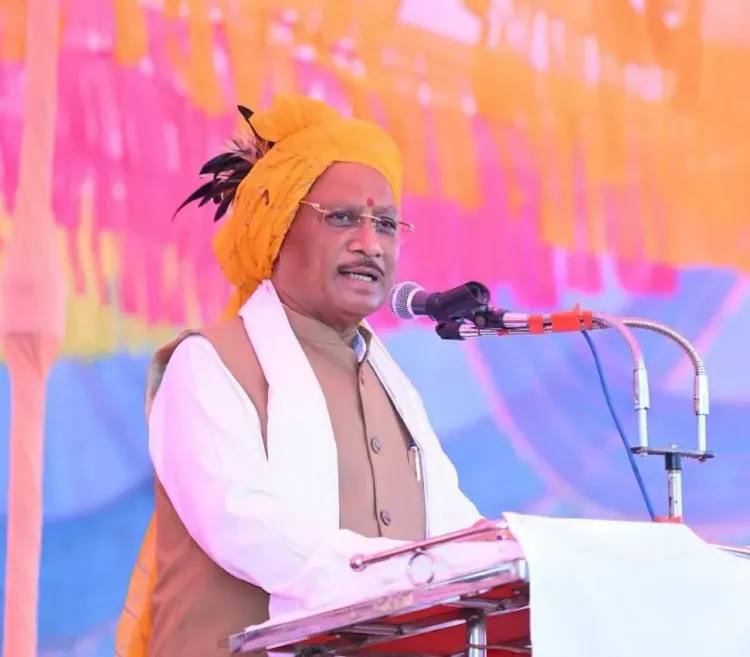
Chhattisgarh CM Vishnu Deo Sai joined the historic Rajashahi Dussehra at Rainibhatha in Sarangarh-Bilaigarh on Vijayadashami, invoking Lord Ram's ideals and reaffirming his government's 'Viksit Chhattisgarh' development resolve.
Key Takeaways
CM Vishnu Deo Sai attended the historic Rajashahi Dussehra at Rainibhatha , Sarangarh-Bilaigarh district on 21 October 2026 .
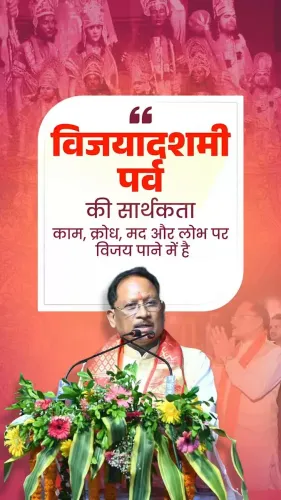
He described Vijayadashami as 'the eternal proclamation of victory of righteousness over unrighteousness and truth over falsehood.' The CM linked the festival's spirit to his government's Viksit Chhattisgarh (Developed Chhattisgarh) development agenda.
Sarangarh-Bilaigarh encompasses the former Sarangarh princely state, whose royal-era Dussehra traditions have been observed for generations at Rainibhatha.
Sai has been Chief Minister since December 2023 following the BJP's assembly election victory in Chhattisgarh.
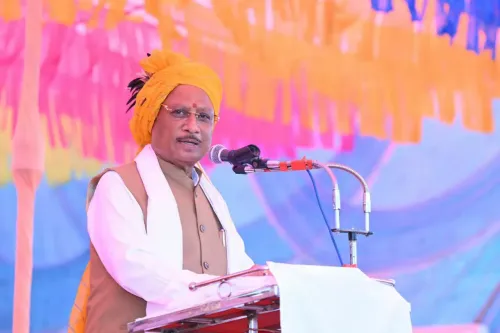
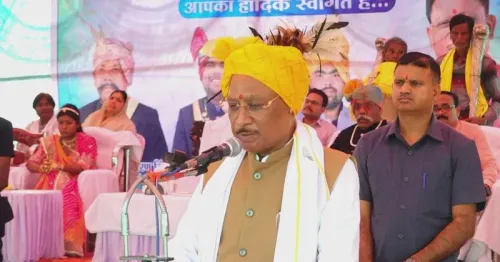
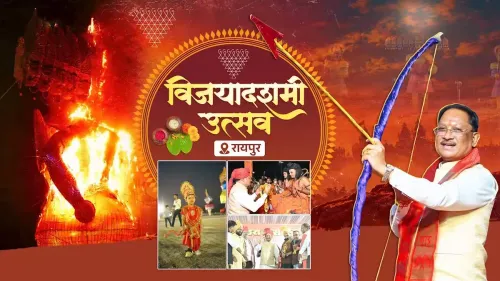
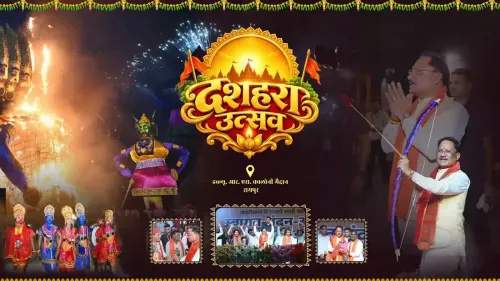
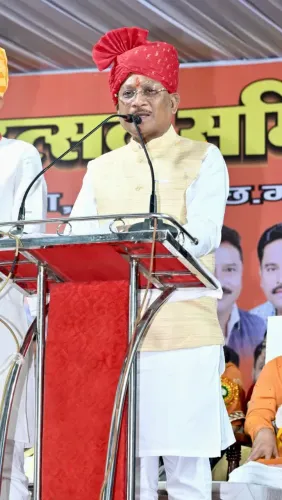
On the auspicious occasion of Vijayadashami, Chhattisgarh Chief Minister Vishnu Deo Sai joined the historic Rajashahi Dussehra (royal Dussehra) celebrations at Rainibhatha in Sarangarh-Bilaigarh district on Wednesday, 21 October 2026, paying tribute to the ideals of Lord Shri Ram at one of the region's most storied festival grounds.
A royal tradition rooted in Chhattisgarh's princely past
Sarangarh-Bilaigarh is no ordinary district on the festival map. The region encompasses the territory of the former Sarangarh princely state, whose royal-era Dussehra observances have been carried forward with ceremonial grandeur for generations. The Rainibhatha event is among the most prominent of these, blending folk tradition with the solemnity of a once-royal court — a living link to the cultural heritage of central India.
CM Sai described Vijayadashami as 'adharm par dharm aur asatya par satya ki vijay ka shashwat udgosh' — 'the eternal proclamation of the victory of righteousness over unrighteousness, and truth over falsehood.' The framing was deliberate: ancient symbolism pressed into the service of a contemporary political pledge.
Festival as a development pledge for 'Viksit Chhattisgarh'
Sai explicitly linked the spirit of the festival to his government's governance agenda. The occasion, he said, 'further strengthens the resolve to build a Viksit Chhattisgarh (Developed Chhattisgarh) while walking the path of truth and dharma.' The phrase Viksit Chhattisgarh — a state-level echo of the BJP's national Viksit Bharat vision — has become a recurring touchstone in the CM's public addresses since he took office in December 2023.
For a chief minister who has made district-level outreach a signature of his early tenure, an appearance at a heritage festival in a relatively smaller district carries its own signal: that cultural patronage and developmental ambition are, in his government's telling, two sides of the same coin.
Why state leaders show up — and what it means locally
Across India, senior state leaders routinely participate in major local religious observances — it is both cultural acknowledgement and political geography. In Chhattisgarh, where tribal communities, former princely territories, and forest-belt districts each carry distinct identities, a CM's presence at a district-level royal Dussehra is a visible act of cultural solidarity. The Sarangarh-Bilaigarh district itself was carved out relatively recently, and high-profile state attention to its festivals reinforces its administrative recognition.
Dussehra this year falls as the state approaches its third year under the current government, a period in which infrastructure announcements and welfare scheme deliveries have intensified across Chhattisgarh's districts.
The effigies may have burned at Rainibhatha tonight — but the political message the Chief Minister lit alongside them will keep glowing well into the policy season ahead.
Point of View
High-visibility district visits serve a dual purpose: deepening grassroots connect and reminding voters that administrative recognition of newer districts comes with cultural respect. The pattern suggests the government will use upcoming festival seasons as soft-launch platforms for further welfare and infrastructure announcements.
NationPress
21 Oct 2026
Frequently Asked Questions
Where did Chhattisgarh CM Vishnu Deo Sai celebrate Dussehra 2026?
CM Vishnu Deo Sai celebrated Dussehra 2026 at the historic Rajashahi Dussehra event in Rainibhatha, Sarangarh-Bilaigarh district, Chhattisgarh.
What is the Rajashahi Dussehra at Rainibhatha?
The Rajashahi Dussehra at Rainibhatha is a historic royal-era festival held in Sarangarh-Bilaigarh district, which was once part of the Sarangarh princely state. It preserves traditional ceremonial Dussehra observances linked to the former royal court.
What did CM Vishnu Deo Sai say at the Dussehra event?
CM Sai described Vijayadashami as the eternal proclamation of victory of righteousness over unrighteousness and truth over falsehood, and linked the festival's ideals to his government's resolve to build a 'Viksit Chhattisgarh' (Developed Chhattisgarh).
What is 'Viksit Chhattisgarh'?
'Viksit Chhattisgarh' means 'Developed Chhattisgarh' and is a governance slogan used by CM Vishnu Deo Sai's BJP government to articulate its development vision for the state, mirroring the national 'Viksit Bharat' framework.
When did Vishnu Deo Sai become Chief Minister of Chhattisgarh?
Vishnu Deo Sai became Chief Minister of Chhattisgarh in December 2023, following the BJP's victory in the state assembly elections.