CM Vishnu Deo Sai Celebrates Hareli Tihar at Raipur Residence
Synopsis
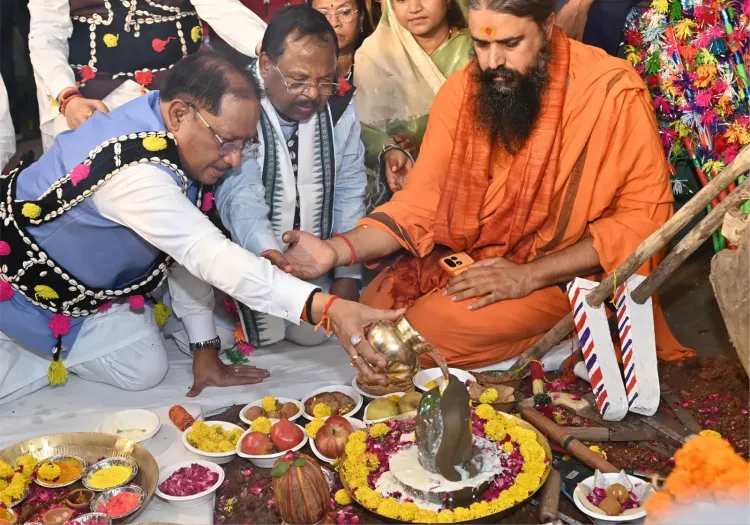
Chief Minister Vishnu Deo Sai celebrated Hareli Tihar at his Nava Raipur residence, worshipping farming implements and deities alongside Speaker Raman Singh and Cabinet members, praying for the state's prosperity on Chhattisgarh's first and most significant agrarian festival.
Key Takeaways
CM Vishnu Deo Sai observed Hareli Tihar at the Chief Minister's residence in Nava Raipur .
Legislative Assembly Speaker Raman Singh and Cabinet ministers participated in the ceremony.
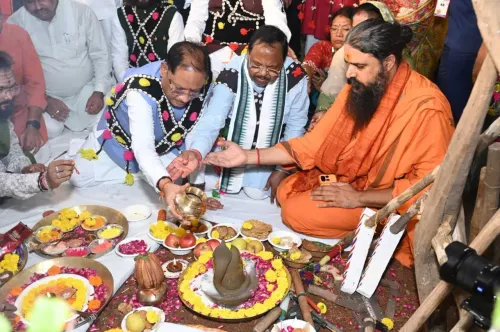
Traditional farming tools — nangur (plough), kudari (hoe), and rapa (leveller) — were worshipped as part of the ritual.
Prayers were offered to Gauri-Ganesh , Bhagwan Mahadev , and the Navagraha for the state's well-being.
Hareli Tihar is Chhattisgarh's first festival of the year, marking the start of the agricultural season.
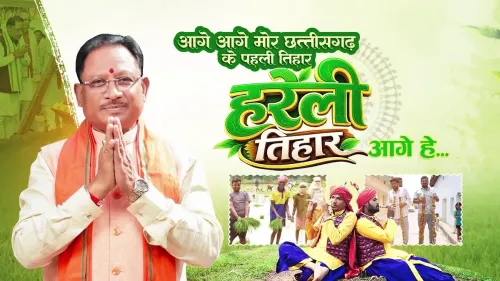
CM Sai posted his greetings in Chhattisgarhi , the regional mother tongue, under #HareliTihar2026 .
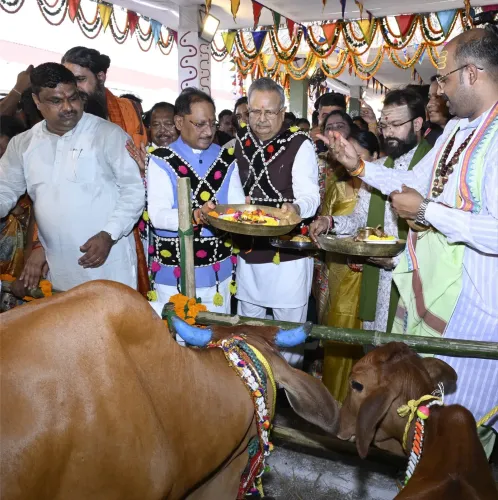
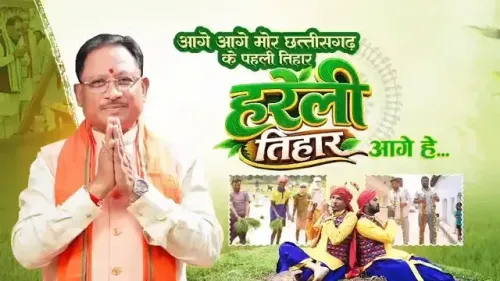
Before the monsoon rains have fully soaked Chhattisgarh's paddy fields, the state's oldest agrarian festival lights up the Chief Minister's official residence. Chhattisgarh Chief Minister Vishnu Deo Sai observed Hareli Tihar on Wednesday at the Chief Minister's residence in Nava Raipur, performing prayers alongside Legislative Assembly Speaker Raman Singh and Cabinet colleagues, and extending greetings to every resident of the state.
Ploughs, hoes, and the prayer that opens the farming year
At the heart of the ceremony was the worship of traditional farming implements — the nangur (plough), kudari (hoe), and rapa (leveller) — tools that still define the rhythm of rural life across Chhattisgarh's vast agrarian belt. CM Sai offered prayers to Gauri-Ganesh, Bhagwan Mahadev, and the Navagraha, seeking prosperity and well-being for the entire state. Paying tribute to Chhattisgarh Mahtari — the folk invocation of the state as mother — he said the festival was a salute to 'the hard work of our farmers and their faith in nature.'
Why Hareli matters in Chhattisgarh's public life
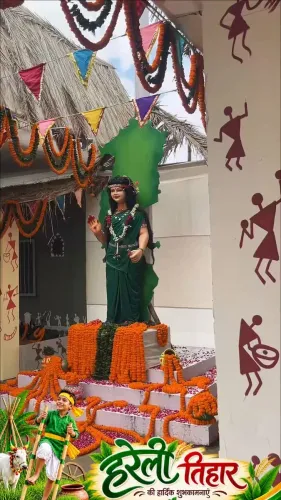
Hareli Tihar is the first major festival of the Chhattisgarhi calendar, marking the formal start of the agricultural season when fields have been sown and the earth turns green. The name itself derives from hariyali — greenery. For a state where farming and tribal communities form the social backbone, the festival carries both ritual weight and political resonance.
Since Chhattisgarh's formation in 2000, successive governments have made Hareli observances at the official residence a visible act of solidarity with rural constituencies. Raman Singh, who served as Chief Minister for fifteen years before becoming Assembly Speaker, has been a fixture at such ceremonies — his presence alongside CM Sai underscoring a cross-generational continuity in the BJP's engagement with the state's folk traditions.
A blessing for 'greenery, happiness, and prosperity'
Posting in Chhattisgarhi — the region's mother tongue — CM Sai wrote that he prays the festival 'brings greenery, happiness, and prosperity to the state.' The choice of language was deliberate: Chhattisgarhi is spoken by the majority of the state's rural population, and addressing them in their own tongue signals cultural authenticity over official formality. He signed off with warm greetings — gada-gada badhai, meaning 'heartfelt congratulations' — to all Chhattisgarh residents under #HareliTihar2026.
Point of View
But CM Sai's decision to post in Chhattisgarhi rather than Hindi or English reflects a sharper cultural pitch to the state's rural and tribal base. The inclusion of Speaker Raman Singh — the BJP's longest-serving Chief Minister in the state — frames the event as a show of party unity and institutional continuity. For a government that came to power in late 2023, anchoring itself in folk traditions is also a soft form of governance branding: connecting the administration to the land before any policy announcement is made. The broader pattern suggests Chhattisgarh's BJP leadership sees agrarian festivals as low-cost, high-return moments of political communion with its core constituency.
NationPress
12 Aug 2026
Frequently Asked Questions
What is Hareli Tihar and why is it celebrated in Chhattisgarh?
Hareli Tihar is Chhattisgarh's first major festival of the year, marking the start of the agricultural season. Farmers worship traditional tools like the plough and hoe, along with deities including Gauri-Ganesh and Mahadev, praying for a good harvest and prosperity.
Where did CM Vishnu Deo Sai celebrate Hareli Tihar in 2026?
CM Vishnu Deo Sai celebrated Hareli Tihar at the Chief Minister's official residence in Nava Raipur, the newly developed capital of Chhattisgarh.
Who attended the Hareli Tihar celebration with CM Vishnu Deo Sai?
Legislative Assembly Speaker Raman Singh and members of the state Cabinet joined CM Sai for the Hareli Tihar prayers and rituals at the Chief Minister's residence.
What farming tools are worshipped during Hareli Tihar?
During Hareli Tihar, traditional farming implements including the nangur (plough), kudari (hoe), and rapa (a levelling tool) are ritually worshipped to honour farmers and their connection to the land.
What does 'Hareli' mean in Chhattisgarhi?
'Hareli' derives from the Chhattisgarhi word for greenery or verdure, reflecting the festival's timing at the start of the monsoon sowing season when fields turn green.