CM Vishnu Deo Sai joins digital justice workshop in Chhattisgarh

Synopsis
Chief Minister Vishnu Deo Sai joined the 'Strengthening Digital Justice' state-level workshop on 2 August 2026, addressing implementation of India's three new criminal laws — the Bharatiya Nyaya Sanhita, Bharatiya Nagarik Suraksha Sanhita, and Bharatiya Sakshya Adhiniyam — which took effect from 1 July 2024.
Key Takeaways
CM Vishnu Deo Sai participated in the 'Strengthening Digital Justice' state-level workshop on 2 August 2026 .
The workshop was held in coordination with the Ministry of Law and Justice, Government of India .
India's three new criminal laws — Bharatiya Nyaya Sanhita, Bharatiya Nagarik Suraksha Sanhita, and Bharatiya Sakshya Adhiniyam — replaced colonial-era codes and came into force on 1 July 2024 .
The new laws mandate digital evidence handling, electronic filings, and e-proceedings, making technology integration a legal requirement for states.
Chhattisgarh's BJP government , in office since December 2023 , is positioning the state as an active implementer of the Centre's justice digitisation agenda.
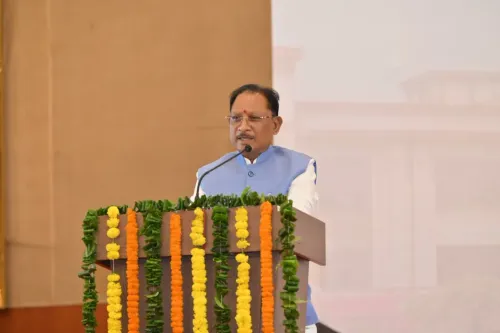
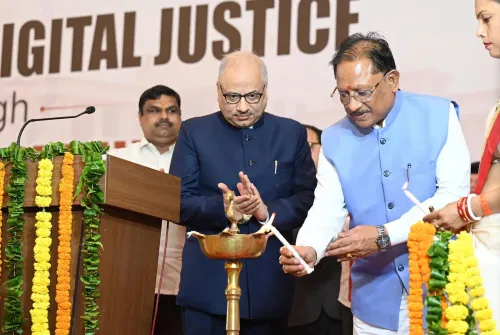
A state that once ran its courts on colonial-era codes is now being asked to lead the charge on digital justice. Chief Minister Vishnu Deo Sai of Chhattisgarh participated in the 'Strengthening Digital Justice' state-level workshop on Sunday, 2 August 2026, sharing his views on the digital justice system and the effective implementation of India's new criminal laws.
The Chief Minister's Office posted on X that Sai 'डिजिटल न्याय व्यवस्था और नए आपराधिक कानूनों के प्रभावी क्रियान्वयन पर अपने विचार किए साझा' — shared his thoughts on the digital justice system and the effective implementation of the new criminal laws — at the workshop, which was organised in coordination with the Ministry of Law and Justice, Government of India.
The three laws reshaping India's courts
The workshop's urgency is rooted in a landmark legislative overhaul. Parliament passed the Bharatiya Nyaya Sanhita, the Bharatiya Nagarik Suraksha Sanhita, and the Bharatiya Sakshya Adhiniyam in December 2023, replacing the colonial-era Indian Penal Code, Code of Criminal Procedure, and Evidence Act respectively. All three came into force on 1 July 2024. The new framework places explicit emphasis on digital evidence, electronic filings, and e-proceedings — making technology integration not a convenience but a legal requirement. For a state like Chhattisgarh, with vast rural and forested districts where physical court access has historically been a challenge, the digital justice push carries particular weight. Faster case disposal, virtual hearings, and electronic evidence handling are the stated goals — and state governments are the primary implementers.Chhattisgarh's role in the national rollout
The BJP government in Chhattisgarh, in power since December 2023, has positioned itself as a willing partner in the Centre's governance reform agenda. CM Sai's presence at a state-level workshop co-tagged with the Ministry of Law and Justice (@MLJ_GoI) signals that the state is treating implementation as a political priority, not merely an administrative exercise. The workshop format — bringing together the judiciary, police, and legal professionals at the state level — is part of the Centre's broader push through the e-Courts project to build capacity district by district. The real test lies ahead: training modules for district court staff, integration of digital tools at the grassroots level, and sustained coordination between state police and the judiciary on electronic evidence standards. A workshop sets the direction. Execution is what delivers justice.Point of View
Championing their implementation is both policy and politics. The broader pattern — state-level workshops, e-courts expansion, digital evidence mandates — reflects the Centre's strategy of embedding technology so deeply into criminal procedure that reversal becomes structurally difficult. The real accountability question is whether district-level infrastructure in a state like Chhattisgarh can actually absorb the digital mandate.
NationPress
2 Aug 2026
Frequently Asked Questions
What is the 'Strengthening Digital Justice' workshop in Chhattisgarh?
It is a state-level workshop focused on digitising the justice delivery system and implementing India's new criminal laws — the Bharatiya Nyaya Sanhita, Bharatiya Nagarik Suraksha Sanhita, and Bharatiya Sakshya Adhiniyam — organised in coordination with the Ministry of Law and Justice.
What are the new criminal laws India introduced?
Parliament passed the Bharatiya Nyaya Sanhita, Bharatiya Nagarik Suraksha Sanhita, and Bharatiya Sakshya Adhiniyam in December 2023, replacing the IPC, CrPC, and Evidence Act. They came into force on 1 July 2024 with a strong emphasis on digital evidence and e-proceedings.
Who is Vishnu Deo Sai?
Vishnu Deo Sai is the Chief Minister of Chhattisgarh, in office since December 2023, representing the BJP.
Why is digital justice important for Chhattisgarh?
Chhattisgarh has large rural and forested districts where physical court access is limited. Digital justice tools — virtual hearings, electronic evidence, e-filings — can significantly improve access to justice for residents in remote areas.
What is the e-Courts project in India?
The e-Courts project is a central government initiative to digitise court processes across India, enabling faster case disposal, virtual hearings, and electronic record management at district and subordinate courts.