CM Vishnu Deo Sai Launches 'Save Democracy' Padyatra in Chhattisgarh
Synopsis
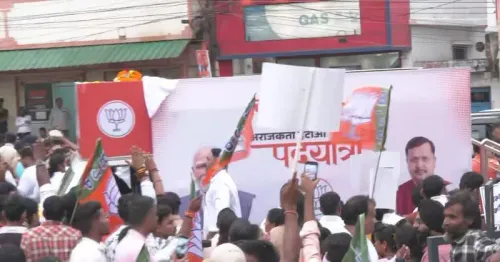
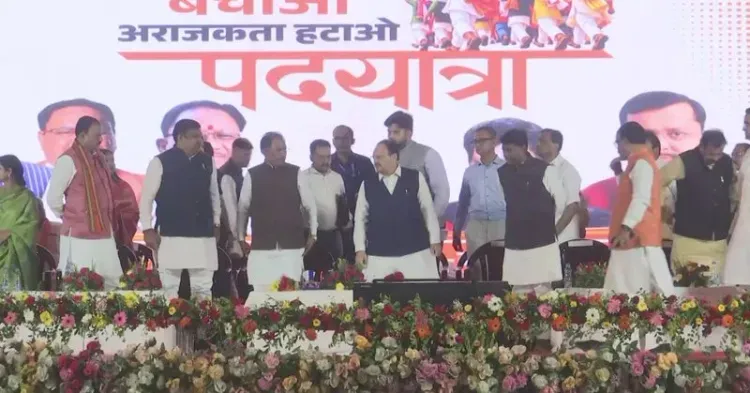
Chhattisgarh Chief Minister Vishnu Deo Sai launched a 'Save Democracy – Remove Anarchy' padyatra on October 30, 2026, blending street-level mobilisation with a live X broadcast to reinforce the BJP's governance narrative in the state.
Key Takeaways
CM Vishnu Deo Sai launched the 'Loktantra Bachao – Arajkata Hatao' padyatra on October 30, 2026 .
The slogan translates to 'Save Democracy – Remove Anarchy', framing BJP as a defender of democratic order.
Sai live-streamed the march on X , combining on-ground mobilisation with digital outreach.
Sai has led the Chhattisgarh government since December 2023 following the BJP's assembly election win.
Padyatras are a recurring political tool across Indian state politics to bypass media filters and reach citizens directly.
A march with a message — Chhattisgarh Chief Minister Vishnu Deo Sai on Friday, October 30, 2026, flagged off a street-level campaign titled 'Loktantra Bachao – Arajkata Hatao' ('Save Democracy – Remove Anarchy'), a padyatra aimed at taking the BJP's political narrative directly to citizens on foot.
'Save Democracy, Remove Anarchy' — The March's Core Message
The padyatra's two-part slogan signals a deliberate framing strategy: cast the ruling dispensation as a defender of democratic order while positioning the opposition as a force of chaos. In Indian political tradition, such foot marches carry symbolic weight — they echo Gandhi-era mass contact, strip away the insulation of motorcades, and force the marching leader into direct dialogue with ordinary voters.
For Sai, the exercise doubles as a show of organisational strength. Having assumed the Chief Minister's office in December 2023 following the BJP's decisive victory in the Chhattisgarh assembly elections, he now leads a government that is well past its first anniversary and entering a phase where it needs to consolidate public trust on governance delivery.
Padyatras as Political Tools in Indian State Politics
Across India's states, leaders from the BJP to the Congress to regional parties have repeatedly turned to the padyatra format when they want a message to cut through the noise of press conferences and social media. The foot march forces participation — workers mobilise, local media follows the route, and residents along the way become inadvertent audiences.
In Chhattisgarh's context, the 'anarchy' framing is notable. It suggests the BJP intends to remind voters of what the party argues were the governance failures of the previous Congress administration — keeping anti-incumbency alive as a political asset even in its own term.
What the Broadcast Signals
Sai simultaneously live-streamed the event on X, amplifying a ground-level march into a digital-media moment. The pairing of street mobilisation with real-time broadcasting is now standard operating procedure for BJP leaders at the state level — reach the faithful on the ground, reach the broader public on screen.
Any specific policy grievances highlighted along the padyatra route, the cities and constituencies it covers, and any opposition response will sharpen the political stakes of this campaign in the days ahead.
The question Chhattisgarh's voters will ultimately answer: does a ruling party's 'save democracy' march look like conviction — or choreography?
Point of View
Vishnu Deo Sai is deploying a time-tested BJP playbook: keep the opposition on the defensive even while in power. The 'anarchy' tag keeps the 2023 anti-Congress electoral narrative alive and primes the party faithful well ahead of the next election cycle. The live X broadcast layers a modern media dimension onto a classical mass-contact format, signalling that state-level BJP leaders are increasingly comfortable operating across both registers simultaneously. Whether the padyatra translates into tangible governance outcomes — or remains a mobilisation ritual — will define its lasting political value.
NationPress
30 Oct 2026
Frequently Asked Questions
What is the 'Loktantra Bachao – Arajkata Hatao' padyatra?
It is a political foot march launched by Chhattisgarh Chief Minister Vishnu Deo Sai on October 30, 2026, with the slogan meaning 'Save Democracy – Remove Anarchy', aimed at carrying the BJP's governance message directly to citizens.
Who is Vishnu Deo Sai?
Vishnu Deo Sai is the Chief Minister of Chhattisgarh and a BJP leader who took office in December 2023 after the party won the state assembly elections.
Why did the BJP organise a padyatra in Chhattisgarh?
The padyatra is a political mobilisation exercise to reinforce the BJP's narrative around democratic governance and to contrast its administration with the previous Congress government's tenure.
What does 'padyatra' mean in Indian politics?
A padyatra is a foot march used by Indian political leaders to directly engage voters, build organisational momentum, and communicate a campaign message outside formal election periods.
Was the Chhattisgarh padyatra broadcast live?
Yes, CM Vishnu Deo Sai simultaneously broadcast the padyatra live on X, amplifying the ground-level event to a wider digital audience.