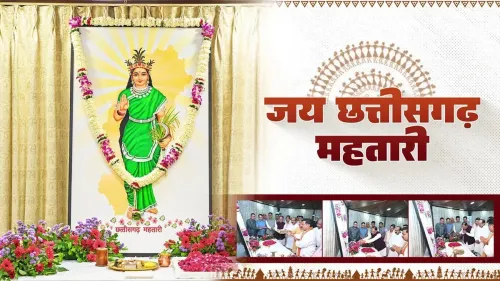
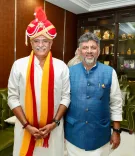
CM Vishnu Deo Sai marks Chhattisgarh's 26th Rajyotsav
Synopsis
Chhattisgarh Chief Minister Vishnu Deo Sai marked the state's 26th Foundation Day on 1 November 2026, highlighting security gains against the Maoist insurgency and crediting PM Modi and Home Minister Amit Shah for guiding a developmental turnaround in former conflict zones.
Key Takeaways
Chhattisgarh completed 26 years as a state on 1 November 2026 , having been carved from Madhya Pradesh in 2000.
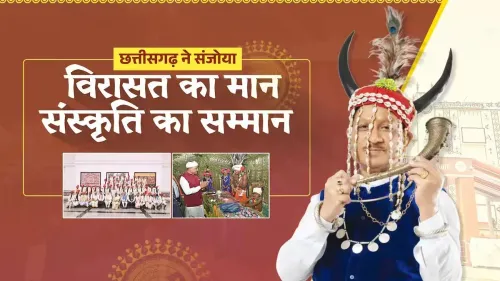
CM Vishnu Deo Sai opened his Rajyotsav message in Chhattisgarhi , the regional language, before switching to Hindi — a deliberate cultural salute.
Sai credited PM Narendra Modi and Home Minister Amit Shah with providing leadership in the fight against Maoism.
The post claims a 'historic milestone' in peace and security in districts previously affected by the Maoist insurgency , particularly in the Bastar belt.
The anniversary message signals continued state and central focus on infrastructure and welfare rollout in former conflict zones.
Twenty-six years ago, on 1 November 2000, a new state was carved from the heart of India. Today, Chhattisgarh Chief Minister Vishnu Deo Sai marked that founding anniversary — Rajyotsav — with a message that wove together pride in the state's journey and a pointed claim: that the war against Maoist insurgency has turned a corner.
From carved-out state to national-stage performer
Chhattisgarh was born on 1 November 2000 under the Madhya Pradesh Reorganisation Act, becoming India's 26th state. Rich in minerals and home to a large tribal population, it inherited both enormous natural wealth and a deep-rooted security challenge in its southern districts. CM Sai's post, written partly in Chhattisgarhi — '26 bachhar ke hoge hamar Chhattisgarh' ('Our Chhattisgarh has turned 26') — was a deliberate nod to the state's indigenous identity before pivoting to the Hindi-language policy argument.
The Chief Minister described the state as now ranking among India's fastest-progressing states, having 'established a distinct identity on the national stage.' That is a broader developmental claim; what gives it political weight in this anniversary message is the security framing that follows.
The Bastar front: a claim of decisive shift
The post's sharpest assertion is about the Maoist insurgency — decades of left-wing extremist conflict concentrated in the Bastar region that has cost thousands of lives and kept development locked out of some of Chhattisgarh's most resource-rich terrain. CM Sai credited Prime Minister Narendra Modi and Union Home Minister Amit Shah with providing the leadership and guidance under which Chhattisgarh has 'fought a decisive battle against Maoism and achieved a historic milestone in the direction of peace and security.'
The BJP-led central government has consistently framed left-wing extremism as India's primary internal security challenge, coupling intensified security operations with welfare and infrastructure outreach in former conflict zones. CM Sai's anniversary message lands squarely within that frame — arguing that villages once under the shadow of insurgency are now seeing 'new possibilities of development' and a renewed sense of trust among residents.
What Rajyotsav 2026 signals for former conflict zones
Anniversary messages double as policy signals. The emphasis on former Maoist-affected areas points to what state and central planners are watching: the rollout of centrally supported development schemes — roads, schools, connectivity — in districts that were effectively no-go zones for infrastructure investment for much of Chhattisgarh's first two decades. The #CGRajyotsav2026 hashtag and the direct tags of @narendramodi and @AmitShah also signal that the state government is keen to keep federal attention — and federal funding — anchored to the region's transition story.
Twenty-six is a young age for a state. For Chhattisgarh, the next chapter may well be written in its southernmost districts — where, if the security gains hold, the real developmental catch-up is only just beginning.
Point of View
Reinforcing regional cultural identity while the policy substance is aimed squarely at Delhi. If the security transition in Bastar consolidates, Chhattisgarh's mineral and forest wealth could reposition the state as a major economic player — but that outcome depends entirely on whether the peace holds and federal scheme delivery actually reaches the ground.
NationPress
1 Nov 2026
Frequently Asked Questions
When was Chhattisgarh formed as a state?
Chhattisgarh was carved out of Madhya Pradesh and established as India's 26th state on 1 November 2000 under the Madhya Pradesh Reorganisation Act.
Who is the current Chief Minister of Chhattisgarh?
Vishnu Deo Sai is the Chief Minister of Chhattisgarh. He is a BJP leader who assumed office in December 2023 .
What is the Maoist insurgency in Chhattisgarh?
The Maoist — or Naxal — insurgency is a decades-long left-wing extremist conflict concentrated in southern Chhattisgarh's Bastar region, which has historically blocked development and claimed thousands of lives.
What is CGRajyotsav?
Rajyotsav is Chhattisgarh's Foundation Day, celebrated every year on 1 November to mark the anniversary of the state's creation in 2000.
What did CM Vishnu Deo Sai say on Chhattisgarh Foundation Day 2026?
CM Sai hailed the state's 26-year journey, credited PM Modi and Home Minister Amit Shah for decisive action against Maoism, and said former conflict zones are now seeing new possibilities for development and public trust.