CM Mohan Yadav Touts Dongla as Future Global Time Reference
Synopsis
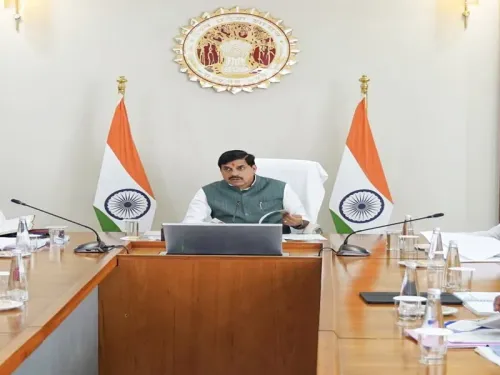
Madhya Pradesh CM Dr. Mohan Yadav declared on X that Dongla village in Mahidpur, Ujjain, is destined to become the world's standard time reference, invoking India's ancient astronomical heritage tied to the Ujjain meridian.
Key Takeaways
Mohan Yadav , Chief Minister of Madhya Pradesh, posted on 17 June 2026 claiming Dongla, Mahidpur will one day set the world's standard time.
The post was in Hindi and included a video, but contained no formal policy or project announcement.
Ujjain was historically used as a prime meridian in ancient Indian astronomical texts, lending regional context to the claim.
India's current standard time (IST, UTC+5:30) has been based on the 82.5° East longitude near Mirzapur, UP since 1905 .
No active government proposal to shift any time reference to Dongla has been verified as of the post date.
The statement fits a broader Madhya Pradesh pattern of promoting ancient astronomical landmarks for cultural heritage and tourism.
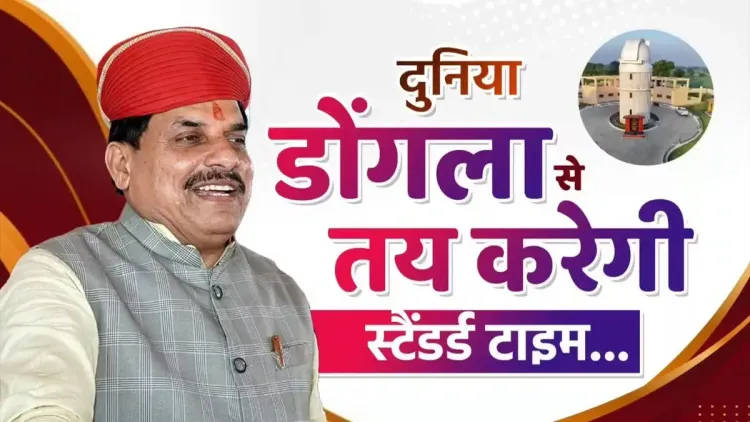
Madhya Pradesh Chief Minister Dr. Mohan Yadav on Wednesday, 17 June 2026, made a bold cultural assertion on X, claiming that the village of Dongla in Mahidpur tehsil, Ujjain district, is destined to become the world's standard time reference — sooner or later.
Posting in Hindi, the Chief Minister wrote: 'Aaj nahin to kal duniya Mahidpur ke Dongla se apni ghadi ka standard time tay karegi' — translated as, 'If not today, then tomorrow, the world will set its clock's standard time from Dongla of Mahidpur.' The post, which included a video, stopped short of announcing any formal government proposal.
Context
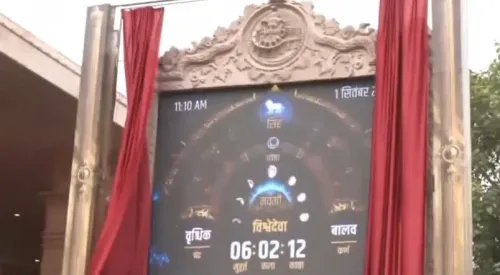
Dongla is a village in the Mahidpur tehsil of Ujjain district in Madhya Pradesh. The broader Ujjain region holds deep significance in Indian astronomical tradition: the city of Ujjain was historically used as a prime meridian for time calculations in ancient Indian texts, predating the adoption of Greenwich as the global standard.
Dr. Mohan Yadav's remark appears to draw on this legacy, extending it specifically to Dongla as a location of timekeeping importance — though the precise scientific or geographical basis for singling out Dongla over Ujjain itself was not elaborated in the post.
Policy Backdrop
India adopted Indian Standard Time (IST) in 1905, fixing it at UTC+5:30, based on the 82.5° East longitude passing near Mirzapur, Uttar Pradesh. This decision effectively sidelined Ujjain's historical claim as a meridian reference, a point that heritage advocates in Madhya Pradesh have periodically raised.
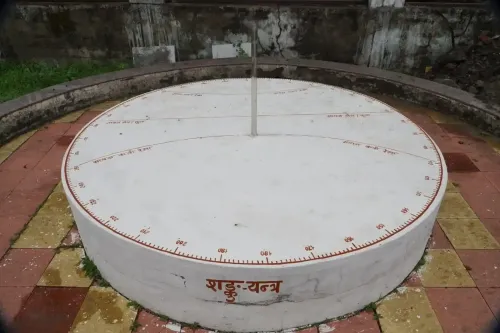
Indian states, particularly Madhya Pradesh, have in recent years actively promoted ancient astronomical landmarks as part of broader cultural heritage campaigns. Ujjain — home to the Vedha Shala (Jantar Mantar observatory) — has been a focal point of such efforts, with the state government frequently invoking its role in classical Indian astronomy during heritage and tourism drives.
Stakeholders and Impact
The Chief Minister's statement is likely to resonate with local residents of Mahidpur and Ujjain district, elevating the profile of a relatively obscure village onto a national, and potentially international, conversation about India's astronomical heritage. The tourism sector in the Ujjain region could also benefit from renewed attention to the area's historical ties to timekeeping.
At the same time, no verifiable public record exists of an active proposal — at the state or central level — to formally shift any standard time reference to Dongla. The statement, as posted, is an expression of cultural pride and aspiration rather than a policy announcement.
What's Next
Observers will watch for any follow-up from the Madhya Pradesh government in the form of scientific studies, heritage project announcements, or representations to the central government regarding Dongla's geographical or astronomical credentials. Any engagement from national scientific bodies or the Union government on the question of India's historical meridians would mark a significant escalation of the conversation.
For now, Dr. Mohan Yadav's post plants a cultural flag — signalling that Madhya Pradesh intends to keep the legacy of its ancient astronomical geography firmly in public discourse.
Point of View
The Chief Minister amplifies local pride while keeping the claim aspirational enough to avoid immediate scrutiny. The post fits a wider national pattern in which state leaders use social media to assert civilisational narratives, often ahead of formal institutional backing. Whether this translates into a concrete heritage or scientific project at Dongla will be the real test of intent.
NationPress
19 Sept 2026
Frequently Asked Questions
Why did CM Mohan Yadav say Dongla will set the world's standard time?
CM Mohan Yadav made the statement to highlight the cultural and astronomical heritage of the Ujjain region, of which Dongla in Mahidpur tehsil is a part. Ujjain has historically been regarded as a prime meridian in ancient Indian astronomy, and the Chief Minister invoked this legacy to assert Dongla's future significance.
What is the significance of Dongla village in Mahidpur, Ujjain?
Dongla is a village in Mahidpur tehsil, Ujjain district, Madhya Pradesh. Its significance, as cited by CM Yadav, stems from the broader Ujjain region's historical role as a reference meridian in classical Indian astronomical texts and timekeeping traditions.
Is there a proposal to change India's standard time reference to Ujjain or Dongla?
As of the post date, no verified active proposal exists at the state or central government level to shift India's or the world's standard time reference to Dongla or Ujjain. CM Yadav's post was an expression of cultural aspiration, not a formal policy announcement.
What is the history of Indian Standard Time and Ujjain's role?
India adopted Indian Standard Time (IST) in 1905, set at UTC+5:30 based on the 82.5° East longitude near Mirzapur, Uttar Pradesh. Before this, ancient Indian astronomical tradition used the Ujjain meridian as a prime reference for time calculations, a legacy that heritage advocates in Madhya Pradesh continue to highlight.
What has the Madhya Pradesh government done to promote Ujjain's astronomical heritage?
The Madhya Pradesh government has consistently promoted Ujjain's astronomical landmarks, including the Vedha Shala observatory, as part of state-level heritage and tourism campaigns. References to Ujjain's historical role in Indian astronomy are a recurring theme in the state's cultural outreach.