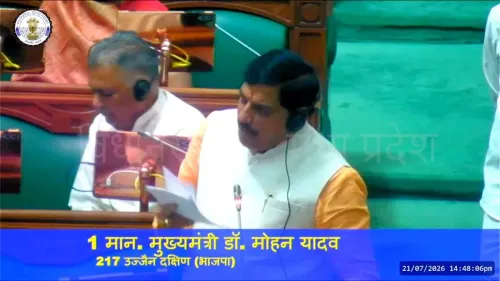
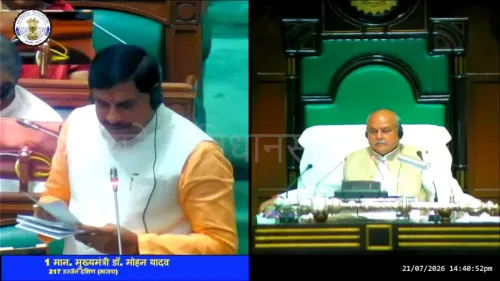
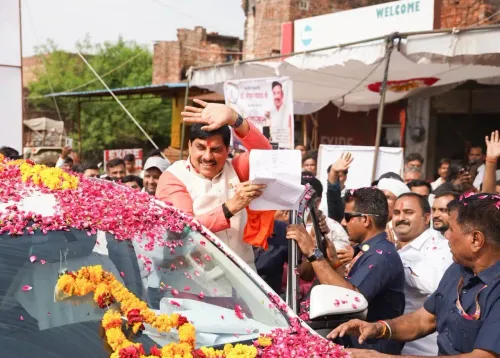
CM Mohan Yadav Accuses Congress of Blocking Women's 33% Reservation
Synopsis
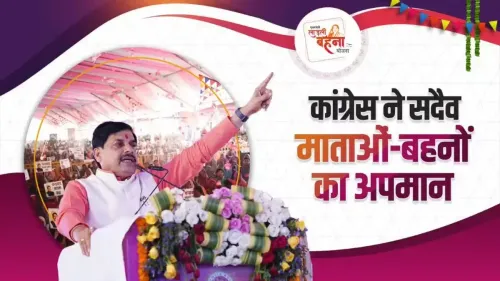
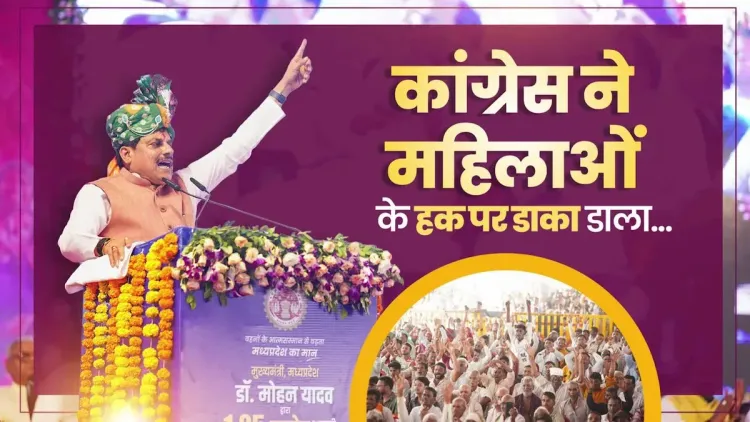
Madhya Pradesh CM Dr. Mohan Yadav accused Congress of collectively opposing women's 33% political reservation, linking the charge to the state's Ladli Bahna Yojana and framing the opposition as a denial of women's rights in a pointed political attack on 12 July 2026.
Key Takeaways
Mohan Yadav , Chief Minister of Madhya Pradesh , accused Congress of uniting to block women's 33% political reservation .
He used the #LadliBahnaMP hashtag, tying his political charge to the state's flagship women's welfare scheme.
The Constitution (106th Amendment) Act , reserving one-third of seats for women in Parliament and state assemblies, was passed and received presidential assent in September 2023 .
The Ladli Bahna Yojana provides Rs 1,000 per month to eligible women aged 21–60 from low-income families in Madhya Pradesh .
Implementation of the women's reservation law is pending a future delimitation exercise, meaning reserved seats are not yet in effect.
The exchange reflects a broader BJP–Congress pattern of competing for women voters in Hindi-belt states ahead of elections.
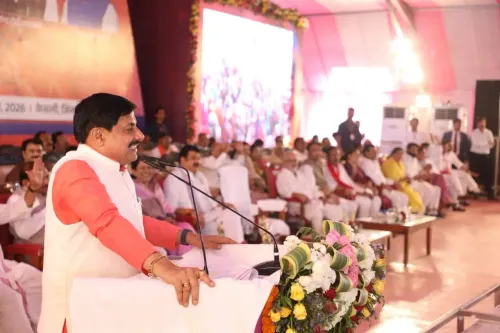
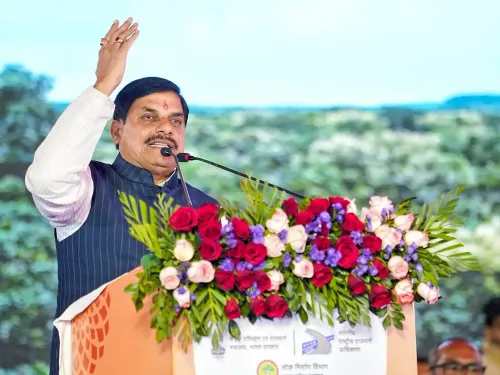
Madhya Pradesh Chief Minister Dr. Mohan Yadav on Sunday, 12 July 2026, accused the Indian National Congress of collectively opposing women's 33 per cent political reservation, framing the charge as a betrayal of women's rights and linking it to the state's Ladli Bahna Yojana.
Context
Posting in Hindi on X, Dr. Yadav wrote: 'जब महिलाओं को 33% आरक्षण देने की बात आई, तो कांग्रेस की नेत्री और उनके सभी साथी विरोध में एकजुट हो गए' — ['When the question of giving women 33% reservation arose, the Congress leader and all her colleagues united in opposition']. He added that together they had 'robbed our sisters of their rights,' invoking the #LadliBahnaMP hashtag to anchor the statement in the ruling party's flagship women's welfare scheme.
The remarks represent a pointed political charge against the principal national opposition party on the specific issue of legislative gender quotas.
Policy Backdrop
The Constitution (106th Amendment) Act — commonly called the Women's Reservation Bill — was passed by both houses of Parliament and received presidential assent in September 2023, reserving one-third of seats for women in the Lok Sabha and state legislative assemblies. The law's implementation is linked to a future delimitation exercise, meaning reserved seats have not yet come into effect.
Madhya Pradesh has also run the Ladli Bahna Yojana since 2023, which provides monthly financial assistance of Rs 1,000 to eligible women aged 21 to 60 from low-income families. BJP governments in Hindi-belt states have paired such direct-benefit transfers with advocacy for political reservations as a dual strategy to consolidate support among female voters.
Stakeholders and Impact
Women beneficiaries of the Ladli Bahna Yojana and female voters across Madhya Pradesh are the primary audience for Dr. Yadav's messaging. By invoking both the reservation debate and the state scheme in a single post, the Chief Minister draws a direct line between national legislative politics and ground-level welfare delivery.
Congress and BJP have long exchanged accusations over the timing, scope, and credit for gender-focused legislation. Such exchanges form part of routine pre-electoral positioning in central Indian states, where women constitute a decisive voter bloc.
What's Next
The practical implementation of the 2023 women's reservation law remains contingent on the completion of delimitation, with no fixed date yet announced. Any revision to Ladli Bahna beneficiary lists or payment amounts in upcoming state budgets will be closely watched as an indicator of the scheme's political trajectory.
As Madhya Pradesh approaches future electoral cycles, women's welfare policy and political reservation are likely to remain central themes in the contest between the ruling BJP and the opposition Congress.
Point of View
The BJP in Madhya Pradesh is reinforcing a narrative that positions it as the sole guarantor of women's advancement. The charge against Congress is unverified in its specifics, but the political architecture it serves — mobilising female voters ahead of future state and national polls — is well-established. This kind of messaging signals that gender politics will remain a primary battleground in central India.
NationPress
11 Oct 2026
Frequently Asked Questions
What did CM Mohan Yadav say about Congress and women's reservation?
CM Dr. Mohan Yadav accused Congress leaders and their allies of uniting to oppose giving women a 33% reservation in political bodies, calling it a denial of women's rights.
What is the Ladli Bahna Yojana in Madhya Pradesh?
The Ladli Bahna Yojana is a Madhya Pradesh government scheme launched in 2023 that provides Rs 1,000 per month to eligible women aged 21 to 60 from low-income families.
Has India passed a women's reservation bill?
Yes. The Constitution (106th Amendment) Act, reserving one-third of seats for women in the Lok Sabha and state assemblies, was passed by Parliament and received presidential assent in September 2023, though implementation awaits a future delimitation exercise.
Why is BJP attacking Congress on women's reservation in 2026?
BJP state leaders, including Madhya Pradesh CM Dr. Mohan Yadav, are using the women's reservation debate to consolidate female voter support, a pattern common in pre-electoral political positioning in Hindi-belt states.
When will the women's reservation law come into effect in India?
The 2023 women's reservation law is linked to a future delimitation exercise. No fixed date has been announced, so reserved seats in the Lok Sabha and state assemblies are not yet operational.