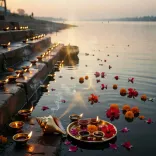
CM Mohan Yadav honours ancestors on Pitru Moksha Amavasya

Synopsis
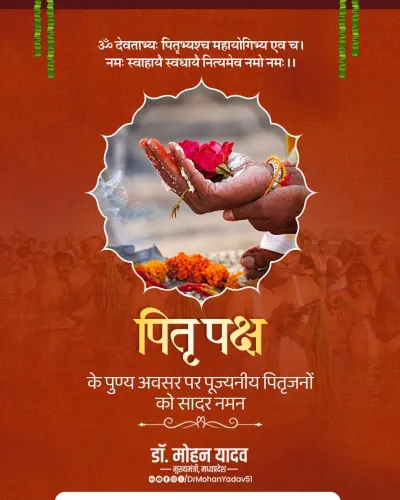
On Pitru Moksha Amavasya, MP Chief Minister Dr. Mohan Yadav offered salutations to departed ancestors and called on citizens to internalise their values and pass the heritage of 'sanskar' to future generations.
Key Takeaways
Madhya Pradesh Chief Minister Dr.
Mohan Yadav shared a message on Pitru Moksha Amavasya, October 10, 2026 .
The day — also called Sarva Pitru Amavasya — is the concluding and most significant day of the Pitru Paksha fortnight for ancestor rites.
Yadav identified sanskar, parampara, and naitik mulya (values, tradition, moral principles) as the greatest heritage from ancestors.
He called for a public sankalp (pledge) to embody ancestral ideals and transmit them to coming generations.
The message framed ancestor remembrance as an active, forward-looking civic duty rather than a purely ritual observance.
On the solemn occasion of Pitru Moksha Amavasya, Madhya Pradesh Chief Minister Dr. Mohan Yadav offered reverent salutations to departed ancestors, calling this annual day of remembrance a moment to reaffirm the values they passed down.
Posting on Saturday, October 10, 2026, Dr. Yadav wrote in Hindi: 'श्रद्धा, कृतज्ञता और स्मरण के पावन पर्व पितृ मोक्ष अमावस्या पर पूज्य पितरों के चरणों में कोटि-कोटि नमन करता हूं' — 'On the sacred festival of Pitru Moksha Amavasya, a day of reverence, gratitude, and remembrance, I bow countless times at the feet of our revered ancestors.'
What the day signifies
Pitru Moksha Amavasya — also known as Sarva Pitru Amavasya or Mahalaya Amavasya — falls on the new-moon day that concludes the Pitru Paksha fortnight, a sixteen-day period in the Hindu calendar dedicated to performing shradh rites for the departed. It is considered the most auspicious single day within that fortnight for those who do not know the exact lunar date of an ancestor's death, as offerings made today are believed to reach all departed souls.
The heritage Dr. Yadav invoked
The Chief Minister's message centred on three pillars: sanskar (values), parampara (tradition), and naitik mulya (moral principles) — which he described as 'our greatest heritage, gifted to us by our ancestors.' He urged citizens to take a pledge — sankalp — to internalise those ideals and carry 'this priceless legacy of values to generations to come.' The framing was deliberately intergenerational: ancestors as the source, present generations as stewards, future generations as the intended recipients.
The call to preserve ancestral sanskar as a living, forward-moving duty — rather than mere ritual — gives the message a civic texture beyond personal piety.
Point of View
The message subtly connects religious observance to a broader ideological project of cultural nation-building. It is a low-stakes but symbolically deliberate communication, timed to a day of mass popular observance across Hindu households. The intergenerational language — ancestors, present stewards, future recipients — gives it a resonance that outlasts the occasion itself.
NationPress
10 Oct 2026
Frequently Asked Questions
What is Pitru Moksha Amavasya?
Pitru Moksha Amavasya, also called Sarva Pitru Amavasya or Mahalaya Amavasya, is the new-moon day concluding the Pitru Paksha fortnight. It is considered the most important day for performing shradh (ancestor remembrance) rites, especially for those uncertain of the exact lunar date of an ancestor's passing.
When is Pitru Moksha Amavasya in 2026?
In 2026, Pitru Moksha Amavasya falls on Saturday, October 10, which is when Chief Minister Dr. Mohan Yadav shared his message of remembrance.
What did MP CM Dr. Mohan Yadav say on Pitru Moksha Amavasya?
Dr. Mohan Yadav offered reverent salutations to departed ancestors and called on citizens to internalise the values, traditions, and moral principles passed down by their forebears, and to transmit that heritage to future generations.
What is Pitru Paksha?
Pitru Paksha is a sixteen-day fortnight in the Hindu lunar calendar dedicated to performing shradh rituals for deceased ancestors. It concludes on Pitru Moksha Amavasya, the new-moon day considered most auspicious for these rites.
What does 'sanskar' mean in Indian tradition?
'Sanskar' refers to the deeply ingrained values, rites of passage, and moral formation passed from one generation to the next in Indian cultural and religious tradition. CM Yadav cited it as one of the three pillars of the ancestral heritage — alongside parampara (tradition) and naitik mulya (moral principles).