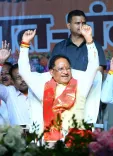
CM Mohan Yadav Performs Shastra Pujan at Indore Police Lines
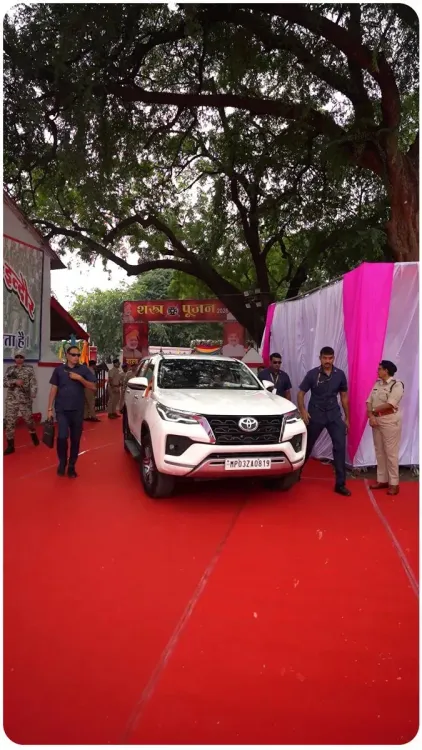
Synopsis
Chief Minister Dr. Mohan Yadav performed the traditional Shastra Pujan at Indore Police Lines on Vijayadashami, framing the ritual as a living symbol of Indian culture, valour, and dedication to duty by Madhya Pradesh's security forces.
Key Takeaways
Mohan Yadav performed shastra pujan at Indore Police Lines on 20 October 2026 .
The event coincided with Vijayadashami , the Hindu festival marking the triumph of good over evil.
The CMO described shastra pujan as a symbol of 'Indian culture, valour, and dedication to duty.' The ceremony was held at Madhya Pradesh Police lines in Indore , the state's largest city.
Indian political leaders across states routinely participate in Vijayadashami rituals alongside security forces as a mark of institutional and cultural respect.
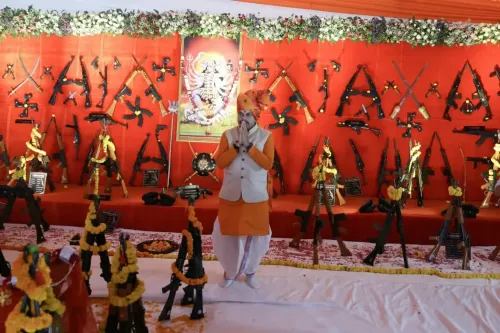
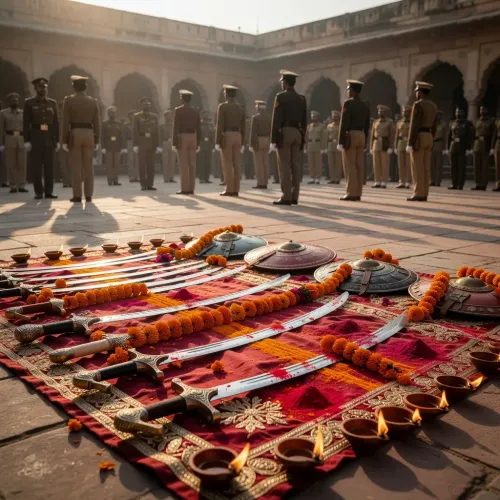
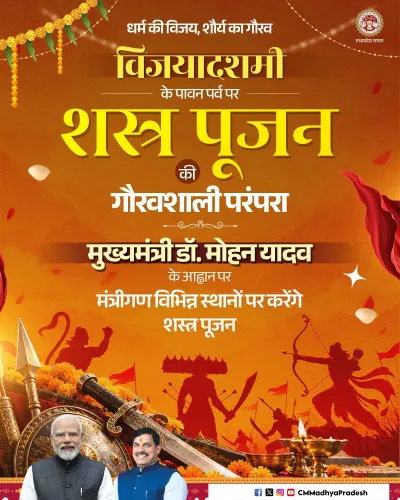
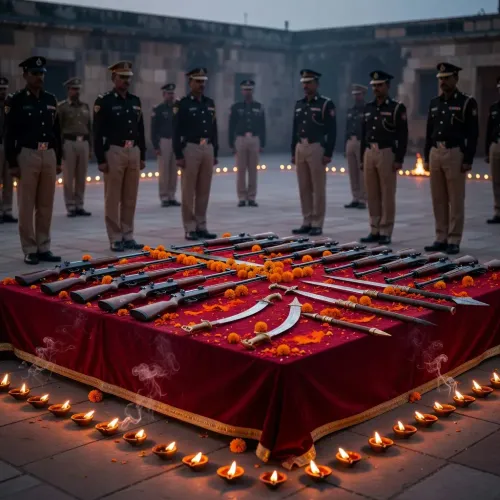
On the auspicious occasion of Vijayadashami, Chief Minister Dr. Mohan Yadav of Madhya Pradesh performed the traditional shastra pujan (weapon worship) ceremony at the Indore Police Lines on Tuesday, 20 October 2026 — reaffirming the ancient ritual's living presence at the heart of state governance.
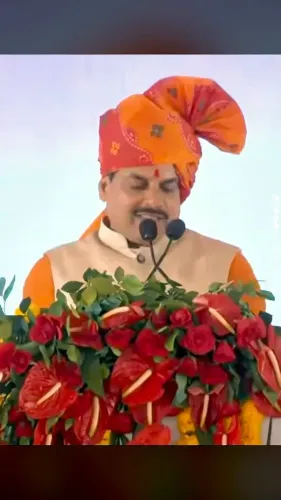
The Chief Minister's Office described the ceremony in clear terms: 'Shastra puja bharatiya sanskriti, shaurya aur kartavyanishtha ka pratik' — 'weapon worship is a symbol of Indian culture, valour, and dedication to duty.' The setting — a police lines ground rather than a temple courtyard — was a deliberate statement in itself.
Vijayadashami and the Shastra Pujan tradition
Vijayadashami, celebrated on the tenth day of the Navratri cycle, marks the mythological triumph of good over evil — Lord Rama's victory over Ravana, and Goddess Durga's conquest of the demon Mahishasura. For India's martial and administrative traditions, it is also the day dedicated to honouring the tools of one's profession. Farmers worship ploughs, artisans their instruments, and security forces their weapons.
The ritual carries particular resonance when performed at a police lines: it fuses the spiritual significance of the festival with the very real weight of duty carried by uniformed personnel every day. For Madhya Pradesh Police officers gathered at Indore, the ceremony is both a cultural moment and an institutional one.
Why Indore, and what it signals
Indore is Madhya Pradesh's largest city and its commercial and cultural engine. A chief ministerial presence at its police lines — rather than in the state capital Bhopal — underscores the city's prominence and the government's outreach across the state's urban centres.
Across India, Vijayadashami has become a calendar fixture for political leaders to appear alongside security forces, reinforcing a symbolic compact between governance and those who guard it. Dr. Mohan Yadav's participation continues that tradition in Madhya Pradesh, where such observances have been a consistent feature of administration regardless of which party holds power.
The ceremony carries no direct policy weight — but its optics are anything but incidental. A chief minister standing in a police lines, conducting shastra pujan before uniformed officers, sends a message about cultural continuity, institutional respect, and the state's self-image on one of Hinduism's most celebrated days.
For Madhya Pradesh's police force, this Vijayadashami closed with something older than any notification or reform circular: a moment of shared ritual — and the quiet authority that comes with it.
Point of View
Bridging cultural symbolism with institutional optics. For the BJP-led Madhya Pradesh government, such ceremonies align with a broader emphasis on Hindu cultural heritage as a pillar of governance identity. Choosing Indore — the state's economic capital — over Bhopal signals deliberate visibility in a city that carries both political and commercial weight. While the event carries no direct policy implication, it reinforces the government's consistent messaging around civilisational pride and the moral duty of the state's security apparatus.
NationPress
20 Oct 2026
Frequently Asked Questions
What is Shastra Pujan and why is it performed on Vijayadashami?
Shastra Pujan is the ritual worship of weapons and tools performed on Vijayadashami, a Hindu festival marking the victory of good over evil. It is a tradition in which warriors, soldiers, and security personnel honour their instruments of duty as symbols of valour and cultural heritage.
Where did CM Mohan Yadav perform Shastra Pujan in 2026?
Chief Minister Dr. Mohan Yadav performed the Shastra Pujan ceremony at the Indore Police Lines in Madhya Pradesh on 20 October 2026, on the occasion of Vijayadashami.
What did CM Mohan Yadav say about Shastra Pujan?
The Chief Minister's Office quoted him as describing shastra pujan as a symbol of 'Indian culture, valour, and dedication to duty' — bharatiya sanskriti, shaurya aur kartavyanishtha ka pratik .
Why do Indian chief ministers attend Vijayadashami events at police lines?
Participating in Vijayadashami rituals at police or military installations is a long-standing tradition across Indian states. It symbolises the government's respect for security forces and reinforces the cultural compact between governance and those responsible for public safety.
What is the significance of Vijayadashami in Indian culture?
Vijayadashami, observed on the tenth day of Navratri, celebrates the mythological triumph of Lord Rama over Ravana and Goddess Durga over the demon Mahishasura. It is one of Hinduism's most important festivals and is traditionally associated with beginning new endeavours and honouring one's professional tools.