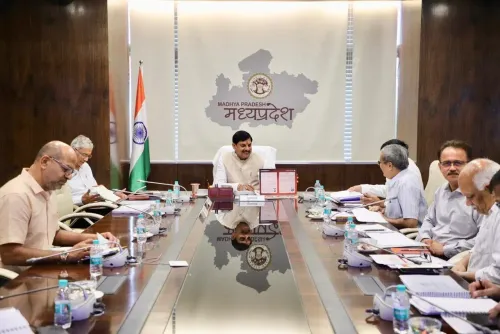
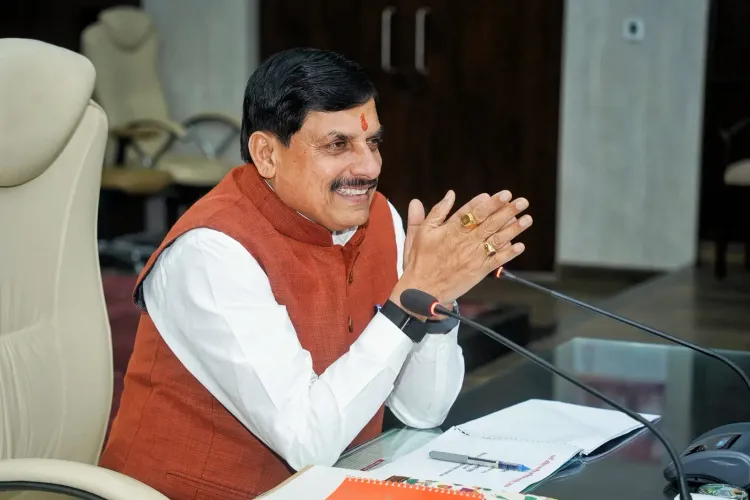
CM Mohan Yadav chairs meet for 68th Kalidas Festival in Ujjain
Synopsis
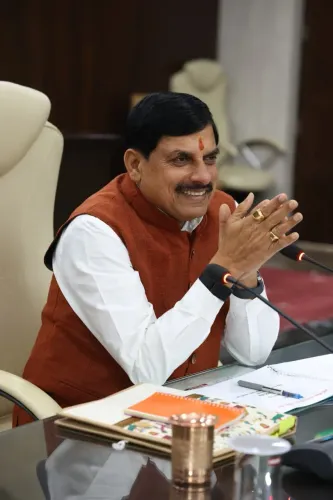
Madhya Pradesh CM Dr. Mohan Yadav chaired a planning meeting on 29 September for the 68th All India Kalidas Festival in Ujjain, opening 21 November, directing inclusion of state artists, regional dialect representatives, youth competitions, and a police band performance.
Key Takeaways
Mohan Yadav chaired the central committee meeting for the 68th All India Kalidas Festival on 29 September at the state secretariat.
The festival is scheduled to open in Ujjain on 21 November .
The CM directed that programmes focus on Madhya Pradesh's eminent lyricists, litterateurs, theatre artists, and directors .
Online and offline art competitions are to be introduced to broaden participation beyond Ujjain.
Representatives of regional dialects and languages of Madhya Pradesh are to be given a platform at the festival.
A police band performance is to be included in the official programme schedule.
With Ujjain's 68th All India Kalidas Festival opening on 21 November, Madhya Pradesh Chief Minister Dr. Mohan Yadav convened a planning meeting at the state secretariat on Tuesday, 29 September, directing the festival's central committee to centre the event on the state's own literary and artistic talent — and to leave no performer behind.
What the Chief Minister told the committee
Speaking to central committee members, Dr. Yadav issued clear instructions: programmes spotlighting Madhya Pradesh's distinguished personalities must form an integral part of the festival schedule. He called for the inclusion of the state's eminent lyricists, litterateurs, senior theatre artists, and directors, alongside dedicated space for youth participation. His directive, translated from Hindi, read: 'Pradesh ki pratibhaon ko avsar den' — 'Give the state's talents an opportunity.'
The CM also pushed for online and offline art competitions to widen the festival's reach beyond the physical venue in Ujjain. Representatives of regional dialects and languages are to be given a platform, and a police band performance is to be incorporated into the programme lineup — an unusual but deliberate gesture toward institutional participation in a classical arts setting.
Ujjain and the Kalidas legacy
Ujjain, the ancient city on the banks of the Kshipra river in western Madhya Pradesh, has hosted the All India Kalidas Festival for decades. The event is named after Kalidasa, the classical Sanskrit poet and dramatist widely regarded as India's greatest literary figure, who is traditionally associated with the city. The festival serves as the country's foremost annual platform for Sanskrit literature, classical theatre, and allied performing arts.
Madhya Pradesh has long used the festival as a vehicle for cultural diplomacy within the country — drawing scholars, theatre troupes, and musicians from across India to Ujjain each November. The 68th edition marks another chapter in that decades-long tradition.
Regional languages and youth at the centre
The most pointed signal in Tuesday's meeting was the explicit direction to include voices from Madhya Pradesh's regional dialect communities — a state that is home to a rich mosaic of spoken traditions including Malwi, Bundeli, Bagheli, and Nimadi. Bringing their representatives onto the Kalidas stage alongside classical Sanskrit programming is a deliberate broadening of the festival's cultural mandate.
The dual push for online and offline competitions further signals an intent to make the 68th Kalidas Samaroh the most accessible edition yet — pulling in participants who cannot travel to Ujjain but can still compete and engage digitally.
The final programme schedule and confirmed participation lists are expected ahead of the 21 November opening — and when they arrive, they will show whether the Chief Minister's broad directives translate into a genuinely transformed festival or another well-intentioned blueprint.
Point of View
Grassroots inclusion, and digital-era accessibility. By mandating regional dialect representation alongside classical Sanskrit programming, the CM is broadening the festival's political appeal across Madhya Pradesh's diverse linguistic communities. The push for online competitions also fits a broader BJP-governed state pattern of hybridising legacy cultural events to reach younger, digitally connected audiences. Whether these directives produce a genuinely restructured programme or remain aspirational guidance will be the real test ahead of the 21 November curtain-raiser.
NationPress
29 Sept 2026
Frequently Asked Questions
What is the All India Kalidas Festival?
The All India Kalidas Festival is an annual cultural event held in Ujjain, Madhya Pradesh, celebrating the legacy of classical Sanskrit poet Kalidasa through theatre, literature, and performing arts. It has been organised for several decades by the Madhya Pradesh government.
When is the 68th Kalidas Festival in Ujjain?
The 68th All India Kalidas Festival is scheduled to begin on 21 November in Ujjain, Madhya Pradesh.
What did CM Mohan Yadav say about the Kalidas Festival?
CM Dr. Mohan Yadav directed the festival's central committee to include programmes on Madhya Pradesh's eminent artists and literary figures, ensure youth participation through online and offline art competitions, represent regional dialects and languages, and incorporate a police band performance.
Why is the Kalidas Festival held in Ujjain?
Ujjain is traditionally associated with the classical Sanskrit poet Kalidasa, making it the natural and historic venue for the All India Kalidas Festival, which the Madhya Pradesh government has hosted there for decades.
Will the 68th Kalidas Festival have online competitions?
Yes, CM Dr. Mohan Yadav directed that both online and offline art competitions be organised as part of the 68th Kalidas Festival to widen participation beyond those who can physically attend in Ujjain.