CM Mohan Yadav Pays Tribute to Green Revolution Icon Swaminathan
Synopsis
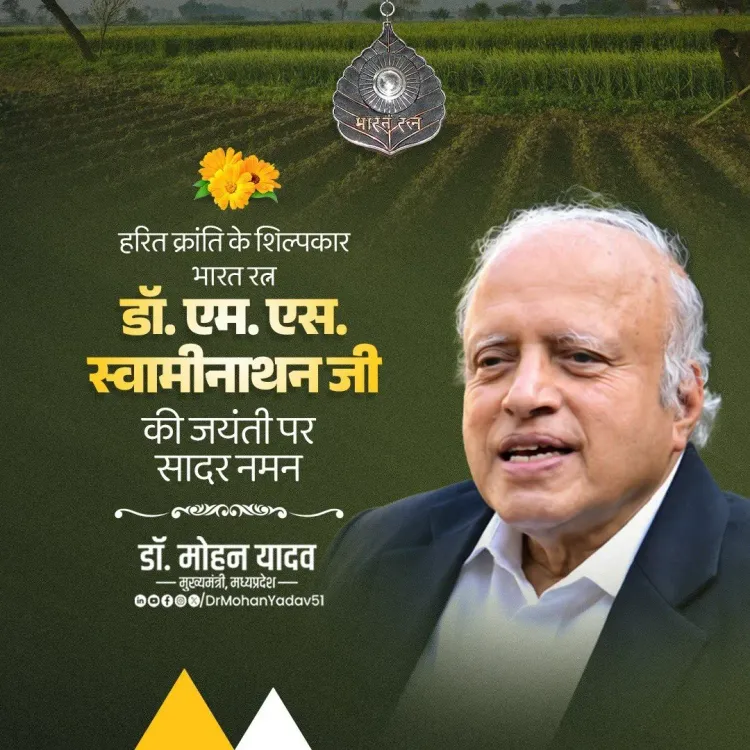
Madhya Pradesh Chief Minister Dr. Mohan Yadav paid tribute to Bharat Ratna Dr. M. S. Swaminathan on his birth anniversary, honouring the agricultural scientist's foundational role in India's Green Revolution and food self-sufficiency.
Key Takeaways
Mohan Yadav paid tribute to Bharat Ratna Dr.
Swaminathan on his birth anniversary, 7 August .
Swaminathan is credited as the architect of India's Green Revolution , which achieved national food-grain self-sufficiency.
His introduction of semi-dwarf, high-yielding wheat varieties between 1966 and 1968 triggered India's first major wheat production surge.
CM Yadav highlighted Swaminathan's contributions to agricultural research, innovation, and farmer welfare as the foundation of India's food self-reliance.
Tributes to Swaminathan on his August 7 anniversary are a recurring feature across India's political leadership.
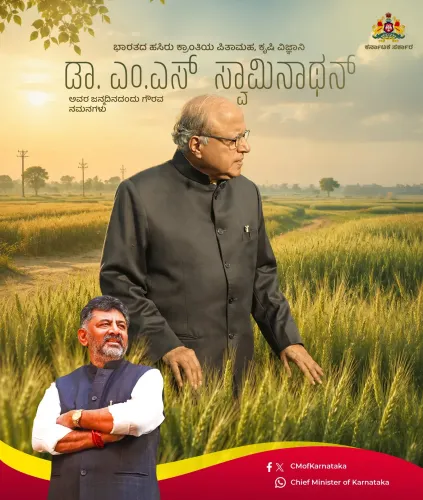
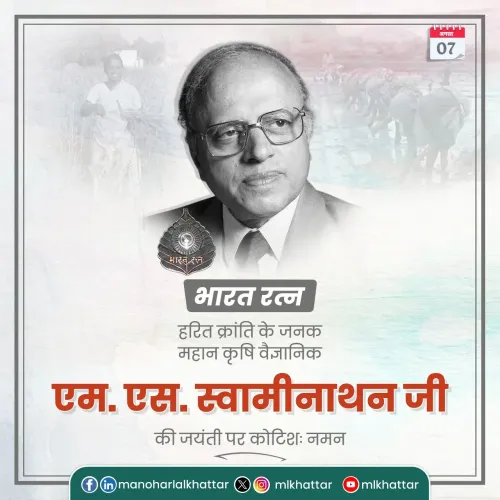
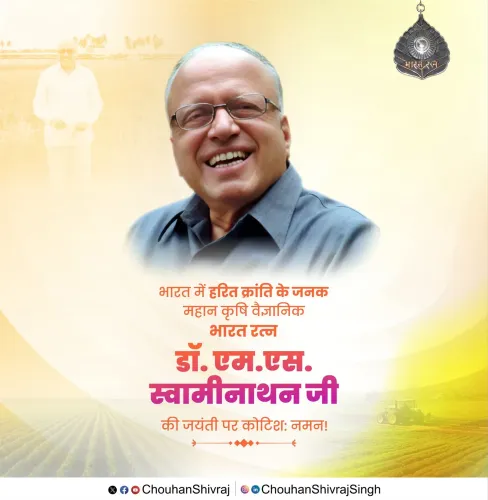
On the birth anniversary of the man who helped feed a billion people, Madhya Pradesh Chief Minister Dr. Mohan Yadav paid his respects to Bharat Ratna Dr. M. S. Swaminathan — the agricultural scientist whose work transformed India from a food-deficient nation into one capable of feeding itself.
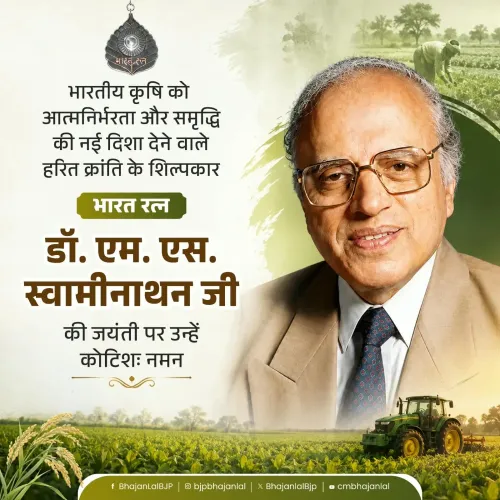
Posting on 7 August, CM Yadav wrote: 'हरित क्रांति के शिल्पकार, भारत रत्न डॉ. एम. एस. स्वामीनाथन जी की जयंती पर सादर नमन करता हूं।' — 'I pay my respectful tribute on the birth anniversary of the architect of the Green Revolution, Bharat Ratna Dr. M. S. Swaminathan.' He added that Swaminathan's invaluable contributions to agricultural research, innovation, foresight, and farmer welfare have proven to be the strong foundation of India's food self-sufficiency.
The Scientist Who Changed What India Could Eat
Dr. Mankombu Sambasivan Swaminathan occupies a singular place in modern Indian history. In the mid-1960s, when India faced chronic food shortages and depended heavily on imported grain, Swaminathan championed the introduction of semi-dwarf, high-yielding varieties of wheat — a move that triggered a dramatic surge in production between 1966 and 1968. That breakthrough, combined with expanded irrigation and policy support, became the engine of India's Green Revolution: a transformation that achieved national food-grain self-sufficiency and reshaped the lives of millions of farmers.A Birthday That Draws Tributes Across Party Lines
Swaminathan's August 7 birth anniversary has become a recurring moment in India's political calendar, drawing homage from leaders across the spectrum — a reflection of how deeply his legacy is woven into the national story of development. For BJP-governed states like Madhya Pradesh, invoking Swaminathan also connects to a broader political emphasis on farmer welfare and agricultural self-reliance — themes that sit at the centre of contemporary rural policy debates. The tribute is a reminder that science, not just policy, built the floor beneath India's food security. Swaminathan's legacy endures every time a farmer in the Gangetic plains or the Deccan plateau harvests a high-yield crop — and that is a story no anniversary can exhaust.Point of View
Invoking Swaminathan reinforces the party's farmer-centric messaging at a time when agrarian distress and rural welfare remain live political issues. The gesture also signals continuity: framing historical scientific achievement as a template for present-day agricultural ambition. It is soft politics, but it is deliberate politics.
NationPress
21 Sept 2026
Frequently Asked Questions
Who is Dr. M. S. Swaminathan and why is he famous?
Dr. M. S. Swaminathan was an agricultural scientist known as the architect of India's Green Revolution. He championed high-yielding wheat and rice varieties in the 1960s that transformed India into a food-grain self-sufficient nation. He was awarded the Bharat Ratna, India's highest civilian honour.
When is M. S. Swaminathan's birth anniversary?
Dr. M. S. Swaminathan's birth anniversary falls on 7 August . It is marked annually by tributes from political leaders, agricultural institutions, and farming communities across India.
What was the Green Revolution in India?
The Green Revolution was a mid-1960s agricultural transformation in India driven by the introduction of semi-dwarf, high-yielding seed varieties, expanded irrigation, and supportive policy. It ended chronic food shortages and made India self-sufficient in food-grain production.
What did Madhya Pradesh CM Mohan Yadav say about Swaminathan?
CM Dr. Mohan Yadav paid tribute to Swaminathan on his birth anniversary, describing him as the 'architect of the Green Revolution' and crediting his work in agricultural research, innovation, and farmer welfare as the strong foundation of India's food self-sufficiency.
What is Swaminathan's contribution to Indian farmers?
Swaminathan's introduction of high-yielding wheat varieties in the 1960s dramatically increased crop production, reducing India's dependence on food imports and improving the livelihoods of millions of farmers across the country.