CM Yadav unveils Acharya Vidyasagar stamp in Bhopal
Synopsis
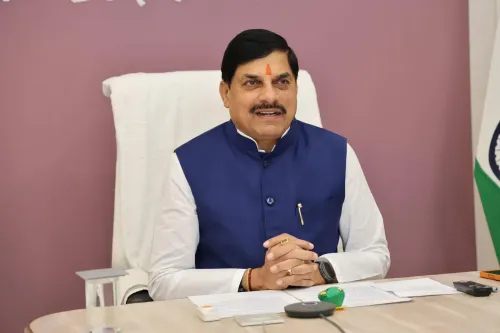
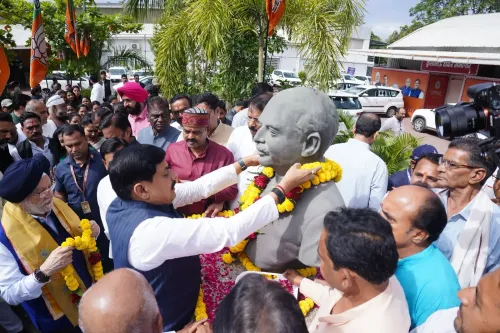
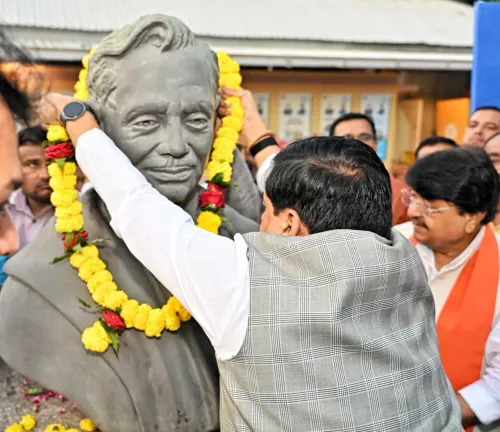
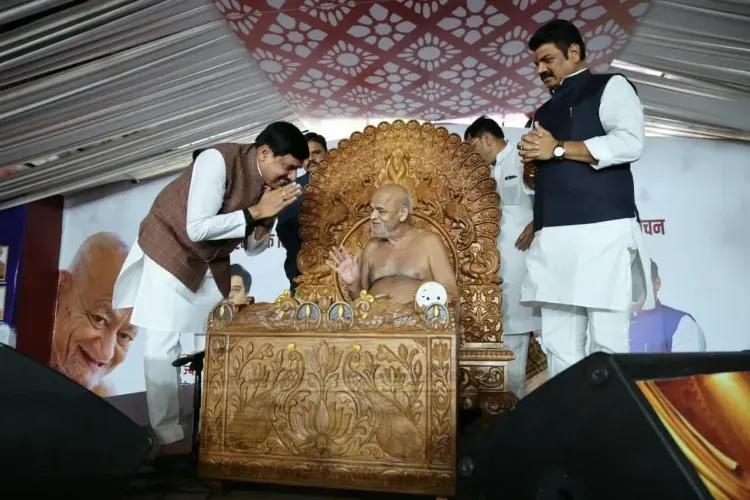
Madhya Pradesh CM Dr. Mohan Yadav unveiled a portrait and released a commemorative postage stamp in Bhopal for Acharya Vidyasagar Ji Maharaj. Sant Samay Sagar Ji attended. Union Minister Jyotiraditya Scindia joined virtually.
Key Takeaways
Madhya Pradesh Chief Minister Dr.
Mohan Yadav unveiled a portrait and released a postage stamp in Bhopal on Friday, 27 November 2026 in memory of Acharya Shri 108 Vidyasagar Ji Maharaj .
Sant Shri Samay Sagar Ji Maharaj attended the ceremony in person.
Union Minister Jyotiraditya Scindia joined the Bhopal programme virtually.
The Chief Minister credited the acharya with inspiring work in education, healthcare, cow protection, handloom, swadeshi and self-reliance.
He linked the monk's live-and-let-live ethic to Vasudhaiva Kutumbakam .
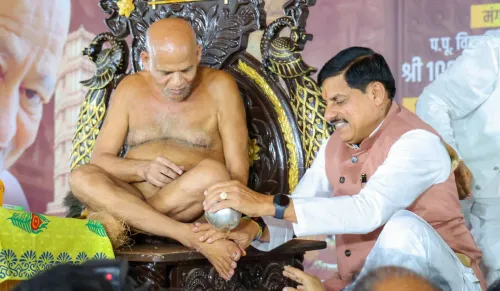
A portrait went up and a postage stamp came into circulation in Bhopal on Friday, 27 November 2026, as Madhya Pradesh Chief Minister Dr. Mohan Yadav led a state tribute to Digambara Jain monk Acharya Shri 108 Vidyasagar Ji Maharaj. Jain ascetic Sant Shri Samay Sagar Ji Maharaj attended in person, while Union Minister Jyotiraditya Scindia joined virtually. A life of penance was being written into the official record.
Portrait and stamp honour Vidyasagar in Bhopal
The Chief Minister said the Bhopal ceremony honoured a monk he called the living embodiment of penance, sacrifice, restraint and compassion — tap, tyag, sanyam aur karuna. He wrote that Acharya Vidyasagar, walking the path of sadhana, had given living shape to jiyo aur jeene do (live and let live), a sentiment he tied to Vasudhaiva Kutumbakam, the idea of the world as one family.
The portrait unveiling and the stamp release sat together as a single act of remembrance. No new scheme was announced. The point, in Dr. Yadav's telling, was to fix the acharya's ethic in Madhya Pradesh's public memory.
Scindia joins the Bhopal commemoration virtually
Jyotiraditya Scindia linked the Union government to the event from a distance. His virtual presence sat beside the in-person sannidhya (presence) of Sant Shri Samay Sagar Ji Maharaj, giving the hall both a monastic and an official register.
Indian state governments periodically organise portrait unveilings and commemorative stamp releases for deceased spiritual leaders whose work crossed into education, medicine and rural crafts. Madhya Pradesh has hosted similar recognitions of Jain acharyas whose teaching on self-reliance and non-violence overlaps with state priorities in schooling, health and village industries.
Education, gau-sanrakshan and swadeshi in the tribute
Dr. Yadav listed the fields he said the acharya had redirected. He wrote: 'His thoughts and inspiration in education, medicine, cow protection, handloom, swadeshi and self-reliance have given society a new direction.' Those headings map onto familiar Madhya Pradesh policy language — rural livelihoods, animal husbandry and indigenous production — even as they remain, here, the monk's inspiration rather than a fresh programme launch.
He added that the acharya's divine life would always inspire humanity to walk the path of compassion, ahimsa and paropkar, or service of others. For the Jain community and devotees, the Bhopal event is a formal imprint of a figure already central to Digambara memory. For the state, it folds a spiritual vocabulary into the public square.
Further local commemorations may follow. The sharper question is whether the acharya's social-service model is later cited inside Madhya Pradesh education and health programmes. The stamp is out. The portrait is up. The teaching now has to travel beyond the hall.
Point of View
Gau-sanrakshan, handloom and swadeshi, folding a Digambara Jain ethic into Madhya Pradesh's development vocabulary. Scindia's virtual presence adds a central overlay without converting the event into a policy launch. Watch whether the tribute stays ceremonial or whether the acharya's self-reliance model is later cited inside state education and health programmes.
NationPress
27 Nov 2026
Frequently Asked Questions
Who was Acharya Vidyasagar Ji Maharaj?
Acharya Shri 108 Vidyasagar Ji Maharaj was a prominent Digambara Jain monk known for penance, non-violence and social service in education, medicine, cow protection and handloom. Madhya Pradesh Chief Minister Dr. Mohan Yadav honoured him in Bhopal with a portrait unveiling and postage stamp release.
What did Mohan Yadav inaugurate in Bhopal on 27 November 2026?
He unveiled a portrait and released a commemorative postage stamp in memory of Acharya Vidyasagar Ji Maharaj. Sant Shri Samay Sagar Ji Maharaj was present, and Union Minister Jyotiraditya Scindia joined virtually.
Did Jyotiraditya Scindia attend the Vidyasagar event in Bhopal?
He joined the Bhopal programme virtually, according to Chief Minister Dr. Mohan Yadav. He did not attend the ceremony in person.
Why was a postage stamp released for Acharya Vidyasagar?
Indian state governments periodically issue commemorative stamps for deceased spiritual leaders whose public service spans social sectors. The Chief Minister said the acharya's ideas had given society a new direction in education, healthcare, cow protection, handloom, swadeshi and self-reliance.
What is Vasudhaiva Kutumbakam in this tribute?
The Chief Minister said the acharya embodied live and let live, a sentiment he linked to Vasudhaiva Kutumbakam, or the world as one family. The phrase is used here to connect Jain teaching with a wider official narrative of national integration.