CM Yogi Flags 2.25 Lakh UP Police Recruitments, Slams Past Govts
Synopsis
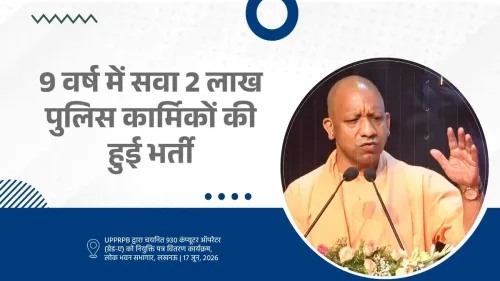
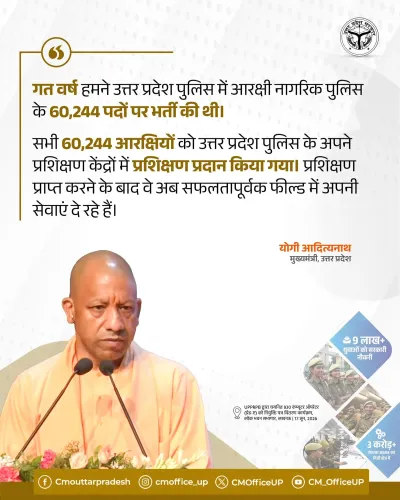
Uttar Pradesh Chief Minister Yogi Adityanath on 17 June 2026 declared that over 2.25 lakh police recruitments have been completed under his government, arguing that a refusal to defer — unlike previous administrations — made the milestone possible. The post renews his administration's core governance pitch on law-and-order staffing.
Key Takeaways
Yogi Adityanath announced on 17 June 2026 that over 2.25 lakh (2,25,000) recruitments have been made in Uttar Pradesh Police alone.
He attributed the achievement to ending what he called a 'tendency to defer' that characterised previous state governments.
Police recruitment drives have been conducted in structured phases since 2017 , covering constables, head constables, and sub-inspectors.
The backlog of unfilled sanctioned posts in UP Police had accumulated over multiple previous administrations before 2017.
The Chief Minister's remarks signal a possible push to accelerate pending recruitment in other state departments such as fire services and the Provincial Armed Constabulary .
Young aspirants from across Uttar Pradesh , particularly rural districts, are the primary beneficiaries of these large-scale selection drives.
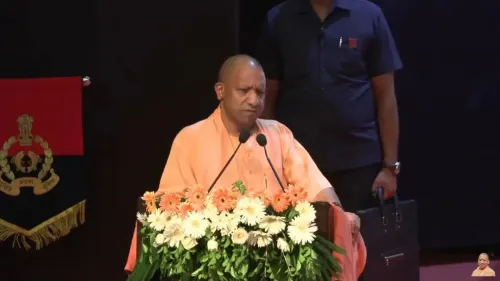
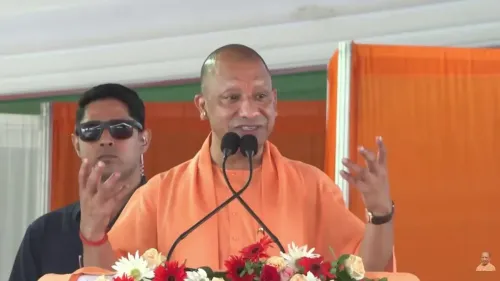
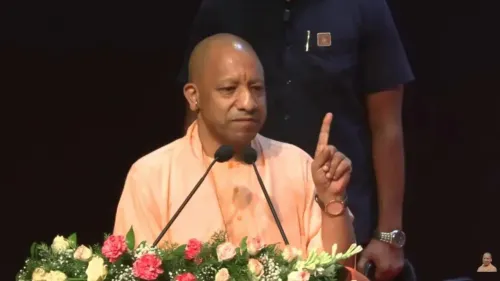
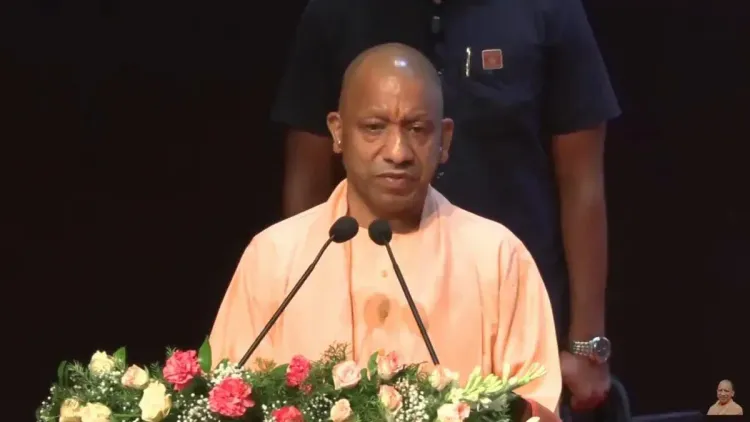
Uttar Pradesh Chief Minister Yogi Adityanath on Wednesday, 17 June 2026, asserted that his government has completed over 2.25 lakh (2,25,000) recruitments in the Uttar Pradesh Police alone, attributing the achievement to a deliberate break from what he described as a culture of deferral that marked previous administrations.
Posting in Hindi on X, the Chief Minister stated: 'Talne ki pravritti band honi chahiye' ('The tendency to defer must stop'), adding that had his government followed the approach of earlier regimes, these 2.25 lakh police appointments would never have been made. The post was accompanied by a video, the contents of which were shared in the same context of police recruitment milestones.
Context
When Yogi Adityanath assumed office in March 2017, the Uttar Pradesh Police carried a historically high burden of unfilled sanctioned posts — a backlog that had accumulated across successive state governments over several decades. Constable and sub-inspector vacancies, in particular, had remained unaddressed through multiple election cycles, leaving the force understaffed relative to its authorised strength.
The Chief Minister's remarks on 17 June 2026 position the 2.25 lakh figure as a direct consequence of choosing action over delay — a contrast he has drawn repeatedly since 2017 to distinguish his administration's record from those of his predecessors.
Policy Backdrop
Since 2017, the state government has conducted police recruitment in structured phases: written examinations, physical efficiency tests, and document verification, followed by final selection orders. These drives have covered constable cadres, head constables, and sub-inspector posts across both the civil police and the Provincial Armed Constabulary (PAC).
The broader law-and-order agenda of the Yogi Adityanath government has also included procurement of modern equipment and reorganisation of police stations, with recruitment presented as the foundational pillar. Officials have framed each selection round as clearing a portion of the inherited vacancy deficit rather than creating entirely new posts.
Stakeholders and Impact
The primary beneficiaries of these recruitment cycles are the lakhs of young aspirants — many from rural districts of Uttar Pradesh — who had been preparing for government uniformed-service examinations for years without a selection calendar in sight. A filled constabulary also strengthens policing capacity in districts that were chronically short-staffed.
For the ruling BJP, the recruitment numbers serve as a governance credential, particularly ahead of any electoral cycle, signalling that sanctioned public-sector posts are being filled rather than left vacant. Opposition parties, however, have at various points raised questions about examination integrity and the pace of final appointments — arguments the Chief Minister's post implicitly counters.
What's Next
Attention will now turn to whether the current recruitment cycle has been fully completed — including final appointment orders and training inductions — and whether comparable drives are being planned for other uniformed services such as the Fire Services or the PAC. The Chief Minister's framing of 'ending the tendency to defer' also signals a possible administrative directive to other departments to accelerate pending selection processes.
With Uttar Pradesh remaining India's most populous state and one of its largest police forces, how quickly these 2.25 lakh recruits are absorbed, trained, and deployed will be closely watched by both governance analysts and the next cohort of police aspirants.
Point of View
He frames a routine administrative milestone as a moral and political achievement. The '2.25 lakh' figure, whether or not independently verified in full, functions as a headline number that is difficult for opponents to rebut without appearing to argue against hiring police. This fits a broader pattern in which the Yogi administration has consistently used uniformed-service recruitment data to anchor its law-and-order brand — a brand that has proved electorally durable in Uttar Pradesh. The forward signal about 'ending deferral' across departments suggests the rhetoric may soon be backed by announcements in other sectors, possibly timed to the political calendar.
NationPress
24 Sept 2026
Frequently Asked Questions
How many police recruitments has the Yogi Adityanath government made in Uttar Pradesh?
Chief Minister Yogi Adityanath stated on 17 June 2026 that over 2.25 lakh (2,25,000) recruitments have been completed in Uttar Pradesh Police alone under his administration.
Why did CM Yogi criticise previous governments over police recruitment?
Yogi Adityanath argued that earlier state governments had a habit of deferring recruitment, leaving sanctioned police posts vacant for years. He said his government broke that pattern by actively conducting selection drives since 2017.
When did UP Police recruitment drives begin under Yogi Adityanath?
Structured recruitment drives covering constables, head constables, and sub-inspectors began after Yogi Adityanath took office in March 2017, aimed at clearing a large backlog of unfilled sanctioned posts.
Who benefits from the Uttar Pradesh Police recruitment drive?
Young aspirants across Uttar Pradesh — particularly from rural districts — who had been preparing for uniformed-service examinations are the primary beneficiaries, along with districts that were chronically short-staffed.
What is the significance of 2.25 lakh UP Police recruitments?
The 2.25 lakh figure represents the state government's claim of having addressed decades of accumulated vacancy in Uttar Pradesh Police, which the Chief Minister presents as a core part of his law-and-order governance agenda.