CM Yogi Credits Swachh Bharat for 3 Crore UP Toilets
Synopsis
CM Yogi Adityanath claimed over 3 crore toilets have been built for the poor in Uttar Pradesh under Swachh Bharat Mission, citing women's dignity and disease prevention while blaming Congress and SP for pre-2017 sanitation failures.
Key Takeaways
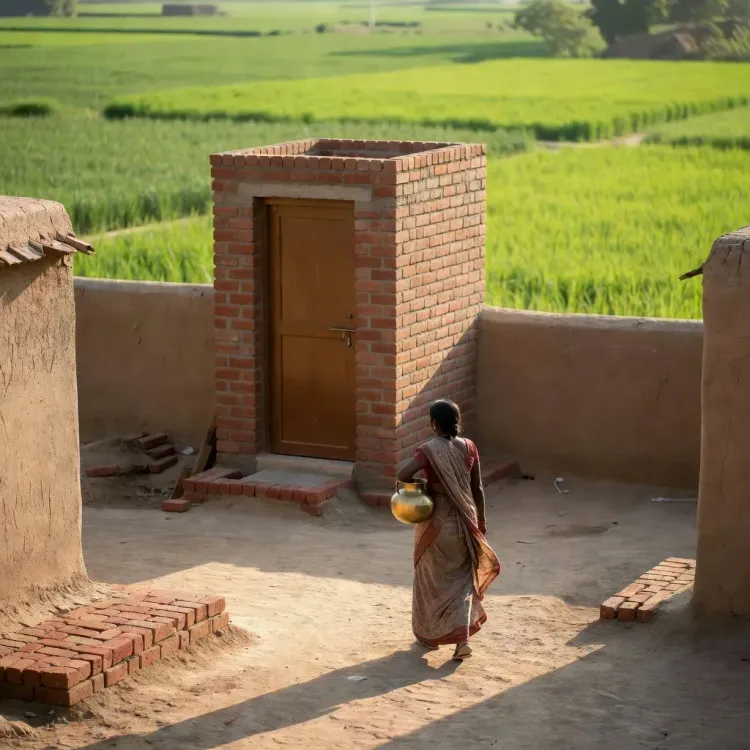
CM Yogi Adityanath claimed on 18 November 2026 that more than 3 crore toilets have been built for poor households across Uttar Pradesh .
The achievement is attributed to implementation of the Swachh Bharat Mission , launched by the central government in 2014 .
CM Yogi blamed the Congress and Samajwadi Party for the sanitation deficit that existed before the BJP came to power in UP in 2017 .
The statement frames toilet construction as a measure that has protected women's dignity and reduced disease burden in the state.
The claimed 3 crore figure and its independent verification remain subject to official assessment.
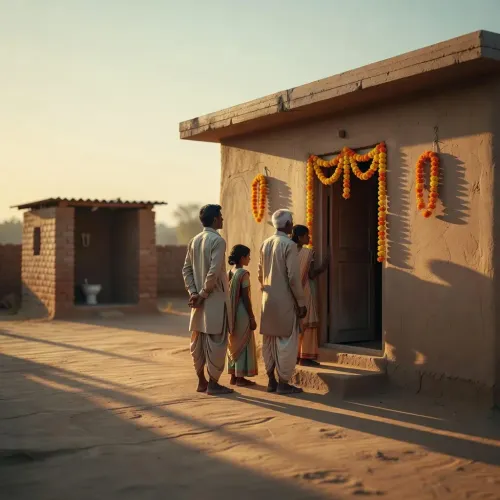
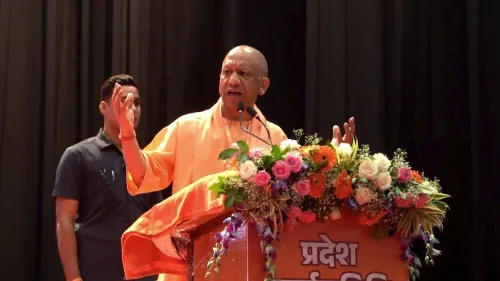
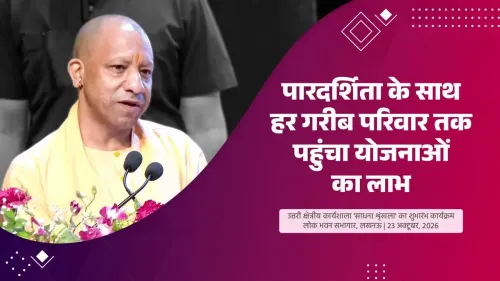
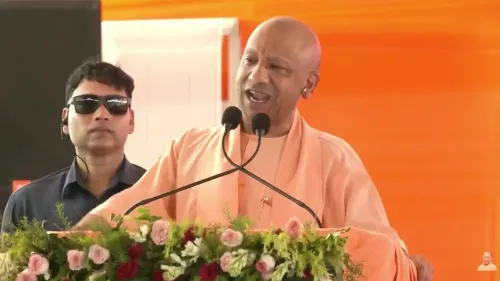
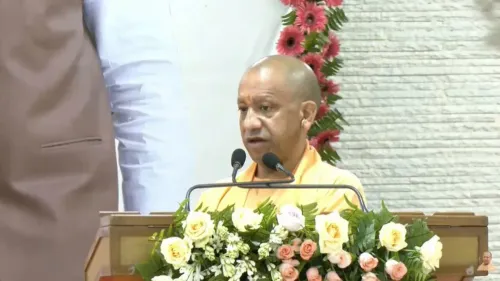
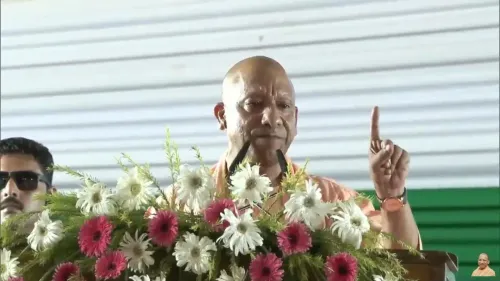
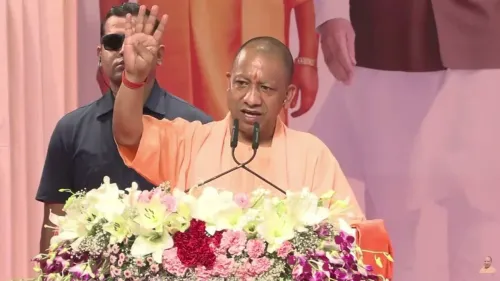
A sanitation milestone — or a political salvo? Uttar Pradesh Chief Minister Yogi Adityanath on Wednesday, 18 November 2026, claimed that more than 3 crore toilets have been built in the homes of the poor across Uttar Pradesh, directly attributing the achievement to the work done under Swachh Bharat Mission — and squarely blaming the Congress and Samajwadi Party for the sanitation deficit that existed before it.
Posting in Hindi, CM Yogi wrote: 'कांग्रेस और समाजवादी पार्टी के निकम्मेपन और उनके भ्रष्ट आचरण के कारण गरीबों के घरों में शौचालय नहीं बन पाए थे।' — 'Due to the incompetence and corrupt conduct of the Congress and the Samajwadi Party, toilets could not be built in the homes of the poor.' He added that the construction of over 3 crore toilets has now protected the dignity of women and freed communities from multiple diseases.
Swachh Bharat's Long Road Through UP
The Swachh Bharat Mission, launched by the central government in 2014, set out to eliminate open defecation across India through large-scale household toilet construction. Uttar Pradesh — India's most populous state — was always its most consequential testing ground. The state's sheer size meant that progress or failure here would define the programme's national story.
When the BJP under Yogi Adityanath came to power in 2017, sanitation coverage became a flagship welfare metric. The government has repeatedly pointed to toilet construction numbers as evidence that targeted welfare delivery — not just policy announcement — was finally reaching the rural poor.
Women's Dignity as the Political Centre of Gravity
The framing of sanitation as a women's dignity issue is deliberate and long-established in BJP messaging. Open defecation disproportionately affects women and girls, who face safety risks and loss of privacy. By anchoring the claim around 'nari garima' — women's dignity — CM Yogi is connecting a welfare statistic to an emotional and social argument that cuts across voter demographics.
The health dimension is equally pointed. Sanitation gaps have historically been linked to waterborne diseases, infant mortality, and stunting. The claim that toilet access has delivered 'freedom from many kinds of diseases' tracks with public health evidence on open-defecation-free outcomes — even if independent verification of the specific figures remains ongoing.
SP and Congress in the Crosshairs
This is not a neutral welfare update — it is a carefully structured contrast narrative. The Samajwadi Party governed Uttar Pradesh for a full term before 2017, and the Congress led the central government for the decade prior to 2014. By naming both parties as the reason toilets 'could not be built,' CM Yogi is prosecuting a case of governance failure that the BJP has used as a recurring election-cycle argument across multiple assembly and parliamentary cycles.
The rhetorical structure — 'they failed, we delivered, here is the number' — is calibrated to be both emotionally resonant and politically durable, particularly in rural constituencies where sanitation access remains a lived daily reality rather than an abstract policy metric.
Point of View
Making it harder for opponents to contest on pure numbers. The framing also reinforces the Swachh Bharat Mission's political salience as a Modi-era legacy scheme, tying state delivery directly to central policy. Whether independent data ultimately validates the 3 crore figure will determine how durable this talking point proves in future electoral contests.
NationPress
18 Nov 2026
Frequently Asked Questions
How many toilets have been built in Uttar Pradesh under Swachh Bharat Mission?
CM Yogi Adityanath has claimed that more than 3 crore toilets have been built in the homes of the poor in Uttar Pradesh. This figure is as stated by the Chief Minister and is subject to independent verification.
What is the Swachh Bharat Mission?
Swachh Bharat Mission is a national sanitation programme launched by the central government in 2014, aimed at constructing household toilets and eliminating open defecation across India.
Why did CM Yogi blame Congress and Samajwadi Party for poor sanitation in UP?
CM Yogi stated that due to the 'incompetence and corrupt conduct' of the Congress and Samajwadi Party, toilets could not be built for the poor before the BJP came to power. The SP governed UP before 2017 and Congress led the central government before 2014.
How does toilet construction protect women's dignity?
In the absence of household toilets, women and girls are forced to defecate in the open, exposing them to safety risks and loss of privacy. Access to toilets at home directly addresses these vulnerabilities, which is why sanitation is framed as a women's dignity issue.
When did Yogi Adityanath become Chief Minister of Uttar Pradesh?
Yogi Adityanath became Chief Minister of Uttar Pradesh in 2017 when the BJP won the state assembly elections. He is also the head of the Gorakhnath Math.