CM Yogi: All 75 UP Districts Get Equal Development Priority
Synopsis
Chief Minister Yogi Adityanath has reaffirmed that development work is progressing on a priority basis across all 75 districts of Uttar Pradesh, with no regional discrimination. The statement continues the administration's consistent messaging on inclusive growth since 2017.
Key Takeaways
The Chief Minister's Office of Uttar Pradesh shared the statement on 26 July 2026 .
CM Yogi Adityanath stated that all development works are moving forward on a priority basis with no discrimination.
The commitment covers all 75 districts of Uttar Pradesh, including historically underserved regions such as Bundelkhand and Purvanchal .
This messaging aligns with the administration's policy stance on equitable regional development maintained since March 2017 .
District administrations are the primary implementing bodies, with state-level reviews tracking on-ground progress.
The next budget session and district-level progress reports will be key tests of the stated commitment.
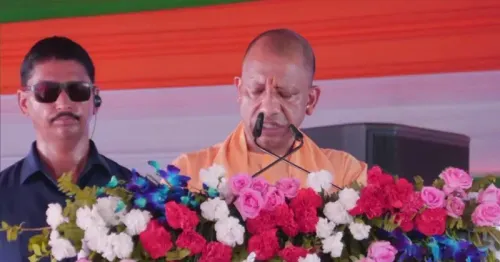
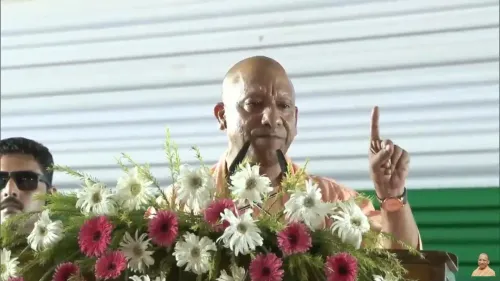
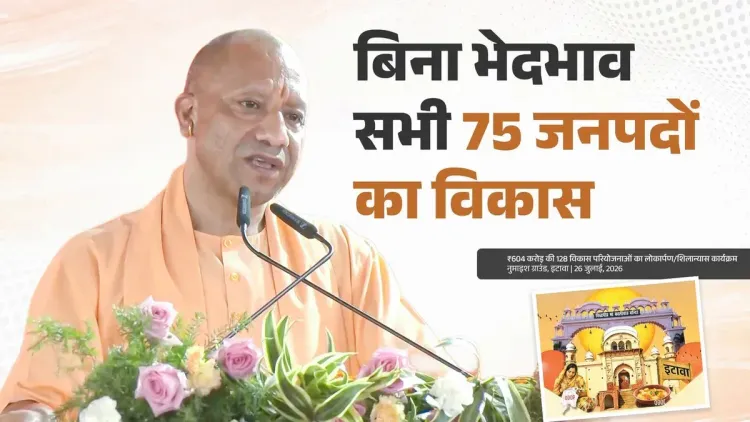
The Chief Minister's Office of Uttar Pradesh on Sunday, 26 July 2026, shared a statement from Chief Minister Yogi Adityanath affirming that development work across the state is progressing on a priority basis, with no discrimination between districts or regions.
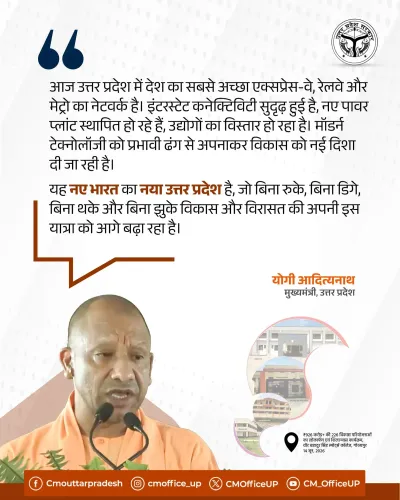
Quoting the Chief Minister directly, the post stated: 'Aaj prathamikta ke aadhar par sabhi vikas karya aage badh rahe hain. Kaheen koi bhedbhav nahin hai.' ['Today, all development works are moving forward on a priority basis. There is no discrimination anywhere.'] The statement added that the development of all 75 districts of the state is essential for the government.
Context
Uttar Pradesh is India's most populous state, with a vast geographic spread encompassing eastern, western, central, and Bundelkhand regions — each with distinct economic profiles and infrastructure needs. Historically, eastern UP and Bundelkhand have lagged behind western UP in industrial development, connectivity, and public services, making equitable resource allocation a politically and administratively sensitive issue.
The statement by CM Yogi Adityanath reaffirms a commitment that has been central to the administration's communication since it first took office in March 2017: that no region or district will be deprioritised in the state's development agenda.
Policy Backdrop
Since 2017, the Yogi Adityanath administration has issued successive policy directives and budget allocations aimed at reducing regional disparities within UP. State budgets have directed funds toward infrastructure, industrial corridors, welfare schemes, and connectivity projects spanning all four broad regions of the state.
Administrative decentralisation has been a recurring theme, with district-level officers held accountable for scheme implementation and progress reviews conducted at the state level. This approach is designed to ensure that development momentum is not concentrated in larger urban centres such as Lucknow, Kanpur, or Agra, but reaches smaller and historically underserved districts as well.
Stakeholders and Impact
The primary beneficiaries of this stated policy direction are the residents of all 75 districts of Uttar Pradesh, including those in regions that have traditionally received fewer state resources. District administrations are the key implementing bodies, responsible for translating state-level commitments into on-ground infrastructure and welfare delivery.
For communities in districts across Purvanchal, Bundelkhand, and other relatively less-developed zones, consistent government messaging on equitable development carries direct implications for the pace and quality of public works, health infrastructure, road connectivity, and industrial investment that reaches their areas.
What's Next
District-level progress reports and scheme-review meetings in the coming months will be closely watched as indicators of whether the on-ground pace of development matches the government's stated priorities. The next state budget session will also be a key moment to assess how resource allocation reflects the principle of equal development across all 75 districts.
Any divergence between stated intent and measurable district-level outcomes is likely to draw scrutiny from opposition parties and civil society groups tracking regional development indices in Uttar Pradesh.
Point of View
Scheme saturation, and economic indicators in lagging regions are genuinely converging with better-off districts. Absent that data, the statement functions as both a governance commitment and a political positioning exercise ahead of future electoral cycles.
NationPress
26 Jul 2026
Frequently Asked Questions
What did CM Yogi Adityanath say about UP district development in July 2026?
CM Yogi Adityanath stated on 26 July 2026 that all development works in Uttar Pradesh are progressing on a priority basis and that there is no discrimination between any of the state's 75 districts.
How many districts does Uttar Pradesh have?
Uttar Pradesh has 75 districts, spanning eastern, western, central, and Bundelkhand regions, each with varying levels of infrastructure and economic development.
What is CM Yogi Adityanath's policy on regional development in UP?
Since taking office in March 2017, CM Yogi Adityanath's administration has consistently maintained a policy of equitable development across all regions of UP, with budget allocations and scheme implementation directed at reducing regional disparities.
Which regions of Uttar Pradesh are considered underdeveloped?
Bundelkhand and Purvanchal (eastern UP) have historically lagged behind western UP in industrial development, road connectivity, and public services, making them key focus areas for equitable development policies.
How does the UP government ensure development reaches all districts?
The Yogi Adityanath administration uses district-level accountability mechanisms, state-level scheme reviews, and budget allocations targeting all 75 districts to ensure development is not concentrated only in major urban centres.