CM Yogi Eyes State Capital Region Spanning 6 UP Districts
Synopsis
Chief Minister Yogi Adityanath has confirmed that systematic development is actively under way across a State Capital Region covering Lucknow and five adjacent districts — Unnao, Hardoi, Sitapur, Barabanki and Raebareli — as Uttar Pradesh pushes planned growth beyond its congested capital city.
Key Takeaways
Six districts — Lucknow, Unnao, Hardoi, Sitapur, Barabanki and Raebareli — are being developed together under a State Capital Region (SCR) framework.
CM Yogi Adityanath confirmed on 24 September 2026 that development work is already in progress, not merely planned.
The SCR strategy mirrors India's National Capital Region model, distributing growth across a wider metropolitan belt to reduce pressure on the core city.
Lucknow was part of the Smart Cities Mission (2015) , providing a digital and infrastructure base for the broader SCR expansion.
The Uttar Pradesh government has pursued balanced regional development since 2017 , integrating district administrations into unified planning frameworks.
Specific master plans, metro extensions and budget allocations for the SCR districts are expected to be detailed in upcoming state budget and assembly sessions.
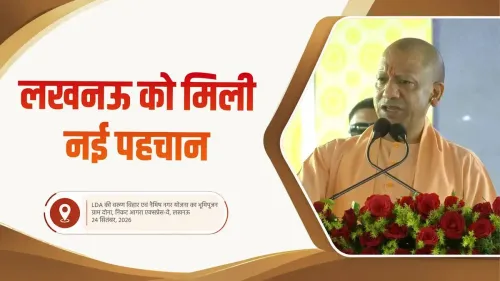
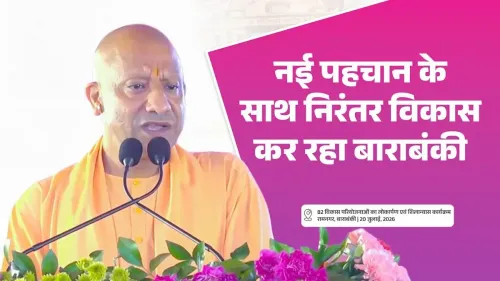
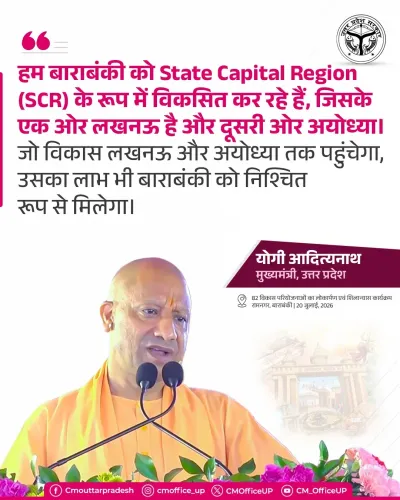
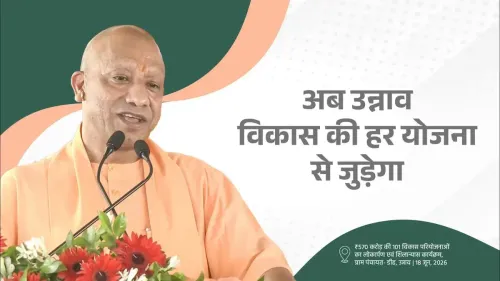
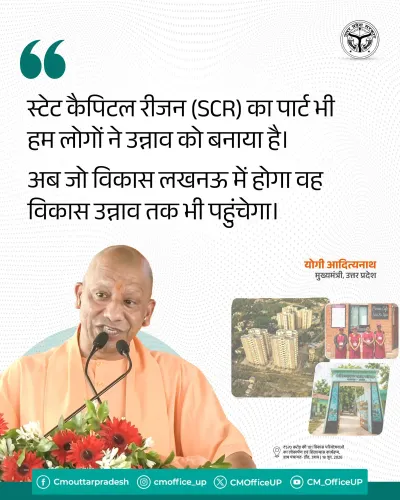
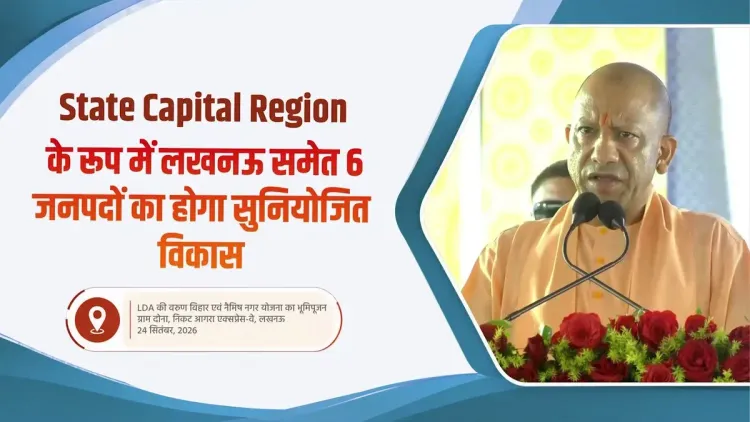
A ring of six districts is being knit into a single planned growth zone around Lucknow — and Chief Minister Yogi Adityanath wants every resident in the belt to feel it. On Thursday, 24 September 2026, the Chief Minister's Office of Uttar Pradesh quoted CM Yogi affirming that systematic development is actively under way across the State Capital Region (SCR), encompassing Lucknow alongside Unnao, Hardoi, Sitapur, Barabanki and Raebareli.
The CM's statement, in his own words: 'State Capital Region ke roop mein Lucknow ke saath-saath Unnao, Hardoi, Sitapur, Barabanki aur Raebareli ke vyavasthit vikas ka kaarya chal raha hai' — 'Organised development work is under way in Unnao, Hardoi, Sitapur, Barabanki and Raebareli alongside Lucknow, as part of the State Capital Region.' The phrasing is deliberate: not a plan, not a promise — work already in progress.
Why Six Districts and Not Just Lucknow?
The logic is familiar to any urban planner: a city under pressure exports its congestion to its neighbours. Lucknow, Uttar Pradesh's capital and its fastest-growing metropolis, has long strained its own boundaries for housing, roads and civic services. The SCR framework pulls the surrounding districts — each within roughly 80–120 kilometres of the capital — into a single coordinated development envelope, spreading infrastructure investment and easing pressure on the core city.
This mirrors capital-region strategies deployed across India: the National Capital Region (NCR) around Delhi being the most prominent precedent, with Gurugram, Noida and Faridabad absorbing what Delhi alone could not contain. Lucknow was also among the cities selected under the Smart Cities Mission in 2015, providing an early digital and infrastructure upgrade layer on which the broader SCR framework is now being built.
Each District's Stake in the Blueprint
Unnao sits directly across the Ganga to Lucknow's south-west, making it a natural industrial and logistics corridor. Raebareli, due south, hosts significant rail and manufacturing assets. Barabanki, to the east, has emerged as a warehousing hub given its proximity to key national highways. Hardoi and Sitapur to the north complete the ring, their agricultural hinterlands prime territory for planned townships and agri-logistics nodes.
The Uttar Pradesh government has pushed since 2017 to move beyond core-city investment and pull district administrations into a unified planning architecture — reducing the sharp development gradient between a gleaming state capital and its immediate rural neighbours.
What Comes Next for the SCR
Watchers of UP's infrastructure pipeline will now look to upcoming state budget sessions and assembly sittings for the granular detail: master plan notifications, land-use zoning, metro or rapid-rail extension proposals into the SCR belt, and actual budget line allocations for roads, sewerage and civic amenities across all six districts. The CM's public reaffirmation on 24 September 2026 signals this is a live political priority — not a shelved concept.
Six districts, one ambition. The question the SCR will ultimately answer is whether planned coordination can outpace the organic, chaotic spread that swallowed every unplanned capital periphery before it.
Point of View
CM Yogi distributes political ownership of development gains across a wide geography, including Raebareli, historically associated with the Congress party's electoral base. The move also signals that UP's infrastructure ambition is moving from project-by-project optics to systemic, region-wide urbanisation policy — a shift that, if backed by genuine budget allocations, could meaningfully accelerate the state's GDP contribution.
NationPress
24 Sept 2026
Frequently Asked Questions
What is the Uttar Pradesh State Capital Region (SCR)?
The UP State Capital Region is a planned multi-district development zone centred on Lucknow and including the surrounding districts of Unnao, Hardoi, Sitapur, Barabanki and Raebareli. It aims to spread infrastructure investment and reduce urban congestion in the capital.
Which districts are included in the Lucknow State Capital Region?
The six districts in the Lucknow SCR are Lucknow, Unnao, Hardoi, Sitapur, Barabanki and Raebareli.
What did CM Yogi Adityanath say about the State Capital Region in September 2026?
CM Yogi Adityanath stated on 24 September 2026 that systematic development work is actively under way across all six districts of the State Capital Region, framing it as ongoing work rather than a future plan.
How is the UP SCR similar to the National Capital Region (NCR)?
Like the NCR around Delhi, the UP SCR integrates surrounding districts into a unified planning framework to absorb population growth, distribute infrastructure investment and reduce pressure on the core capital city.
What infrastructure projects are expected under the Lucknow SCR plan?
While specific projects have not yet been publicly detailed, watchers expect upcoming state budgets and assembly sessions to announce master plans, road upgrades, possible metro extensions and civic amenity investments across the six SCR districts.