CM Yogi Eyes 5 GW Data Centre Capacity in UP by 2030
Synopsis
Chief Minister Yogi Adityanath has set a target of 5 GW data centre capacity in Uttar Pradesh by 2030, anchored by five large clusters, aiming to drive investment, innovation, industry, and employment through digital infrastructure.
Key Takeaways
5 GW target: Uttar Pradesh aims to develop 5 gigawatt data centre capacity by 2030 .
Five clusters: A network of five large data centre clusters is planned across the state.
Four-I framework: The initiative is framed around Investment, Innovation, Industry, and Employment.
Work under way: The government says preparatory work on the cluster network has already begun.
National race: UP enters a competitive field of Indian states vying for hyperscaler and co-location investment.
Details pending: Land allocation, power arrangements, and fiscal incentives are yet to be publicly announced.
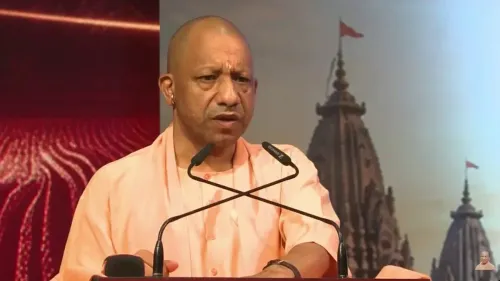
Uttar Pradesh is placing a giant bet on digital infrastructure. Chief Minister Yogi Adityanath, through the Chief Minister's Office of Uttar Pradesh, declared on Saturday, October 24, 2026 that the state is targeting a 5 gigawatt data centre capacity by 2030 — underpinned by a network of five large data centre clusters spread across the state.
The post, shared in Hindi, carries a direct quote attributed to the Chief Minister: 'हमारा विजन है कि वर्ष 2030 तक उत्तर प्रदेश में 05 गीगावाट Data Centre क्षमता विकसित की जाए' — 'Our vision is to develop a 5 gigawatt data centre capacity in Uttar Pradesh by the year 2030.' The announcement frames data as the fulcrum for four interlocking goals: Investment, Innovation, Industry, and Employment.
Five Clusters, One Ambition
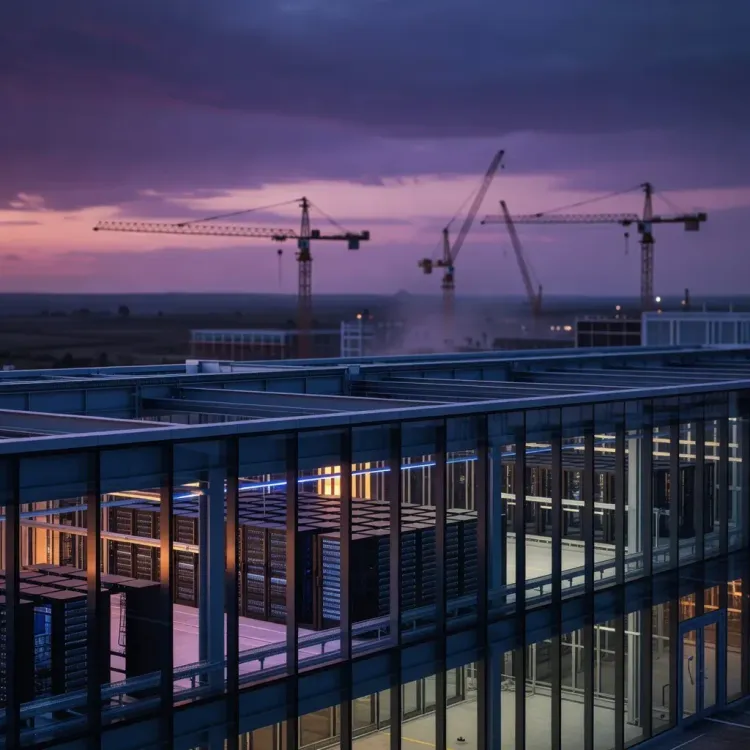
The five-cluster architecture is the structural spine of the plan. Rather than concentrating capacity in a single location, the strategy envisions a distributed network — a model that mitigates single-point failure risks and opens up land-allocation and power-supply options across India's most populous state. The government says work is already under way to build out this network, though the precise locations and timelines for individual clusters have yet to be made public.
The scale of the target is striking. 5 GW of IT load capacity would place Uttar Pradesh among the most ambitious state-level data centre programmes in Asia. For context, entire national markets in Southeast Asia operate at a fraction of that figure. Whether the state can marshal the land, uninterrupted power, and fibre backbone to match the ambition is the central question hanging over the announcement.
UP Joins a High-Stakes Race Among Indian States
Uttar Pradesh is not alone in chasing hyperscaler attention. Multiple Indian states have rolled out data centre policies over the past few years, offering power subsidies, stamp-duty waivers, and expedited approvals to lure global cloud giants and domestic co-location players. The competition has sharpened as India's data localisation requirements and explosive growth in digital services create a structural, long-term demand for on-shore storage capacity.
Chief Minister Adityanath has anchored his economic pitch around what he calls the power of 'four Is' — Investment, Innovation, Industry, and Employment. The data centre push sits squarely inside that frame: the state is betting that digital infrastructure, once built, pulls in the rest of the value chain — from hardware assembly to cloud-services talent.
The Policy Thread Back to Digital India
The move draws on the decade-long arc of India's Digital India programme, launched in 2015, which set in motion the expansion of digital networks and storage capacity nationwide. What began as a central-government drive has increasingly been picked up and amplified at the state level, with UP now among the most vocal in converting that framework into hard infrastructure targets.
Critical details — land parcels, power-purchase agreements, fiscal incentive structures — are expected to surface in forthcoming state budget documents or a dedicated data centre policy. Those specifics will determine whether the 2030 target is a genuine construction roadmap or an aspirational headline. The next budget cycle is the first real test.
Point of View
Innovation, Industry, Employment) is a recurring rhetorical device for the Adityanath government, suggesting this is as much political brand-building as industrial policy. The five-cluster model is strategically sound on paper, distributing economic benefit and resilience, but the execution will hinge on power availability — UP's Achilles heel for large-scale industrial growth. Until land and energy commitments are publicly detailed, the 5 GW figure sits closer to vision statement than binding roadmap.
NationPress
24 Oct 2026
Frequently Asked Questions
What is UP's data centre target by 2030?
Uttar Pradesh has set a vision to develop 5 gigawatt of data centre capacity by 2030 , as announced by Chief Minister Yogi Adityanath.
How many data centre clusters is UP planning?
The state plans to build five large data centre clusters spread across Uttar Pradesh to form a distributed infrastructure network.
Why is Uttar Pradesh focusing on data centres?
The government aims to use data infrastructure to attract investment, spur innovation, grow industry, and create employment — collectively framed as the 'four I' goals.
How does UP's plan fit into India's Digital India programme?
It extends the central government's Digital India initiative (launched 2015) to the state level, converting national digital-infrastructure goals into specific capacity and cluster targets.
Which other Indian states are competing for data centre investment?
Several states including Maharashtra, Tamil Nadu, and Telangana have announced data centre incentive policies, creating intense competition for global hyperscaler and domestic co-location players.