CM Yogi: UP to beautify Ambedkar statues and parks
Synopsis
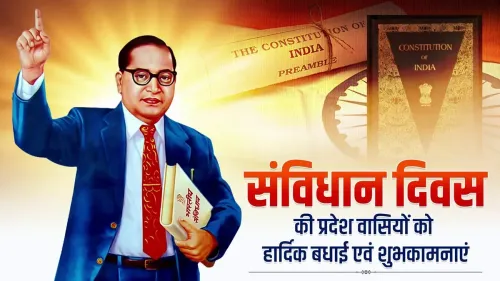
The Chief Minister's Office of Uttar Pradesh, quoting CM Yogi Adityanath on Constitution Day, said the state would honour Dr. B.R. Ambedkar and other social-justice pioneers through a campaign to beautify associated statues, parks and public sites.
Key Takeaways
The Chief Minister's Office of Uttar Pradesh on 26 November 2026 quoted CM Yogi Adityanath on a campaign to beautify statues, parks and sites linked to Dr.
Ambedkar and other social-justice pioneers.
The message was issued on Constitution Day, the anniversary of the Constitution's adoption on 26 November 1949.
Ambedkar chaired the Constituent Assembly's Drafting Committee and is described in the post as the architect of India's Constitution.
The post restates a government decision already taken and does not list sites, budgets or deadlines.
Uttar Pradesh has previously maintained Ambedkar-themed public sites in multiple districts as commemorative infrastructure.
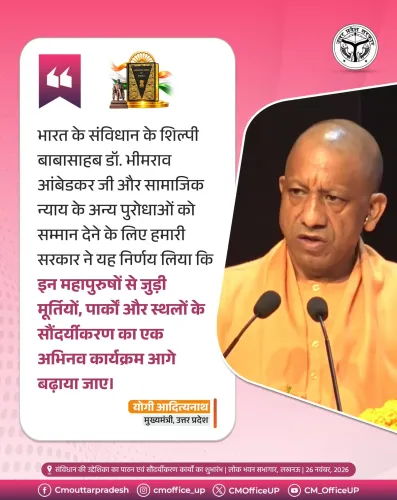
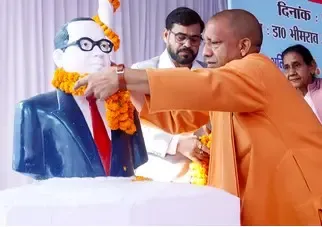
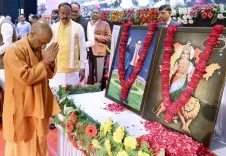
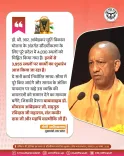
Constitution Day opened in Lucknow with a civic bet, not a greeting card. The Chief Minister's Office of Uttar Pradesh, quoting Chief Minister Yogi Adityanath, put the state's commemorative machinery on the record: honour Babasaheb Dr. Bhimrao Ambedkar — the architect of India's Constitution — and other pioneers of social justice by pushing an innovative campaign to beautify the statues, parks and sites that carry their names.
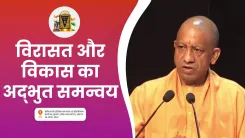
The office relayed the Chief Minister's Hindi pledge to honour भारत के संविधान के शिल्पी (the architect of India's Constitution) and other pioneers of social justice. In English it reads: ‘To honour Babasaheb Dr. Bhimrao Ambedkar, the architect of India's Constitution, and other pioneers of social justice, our government had decided to take forward an innovative campaign for the beautification of statues, parks and sites associated with these great personalities.’ The timestamp was 26 November 2026 — Constitution Day, the anniversary of the Constituent Assembly's adoption of the Constitution in 1949.
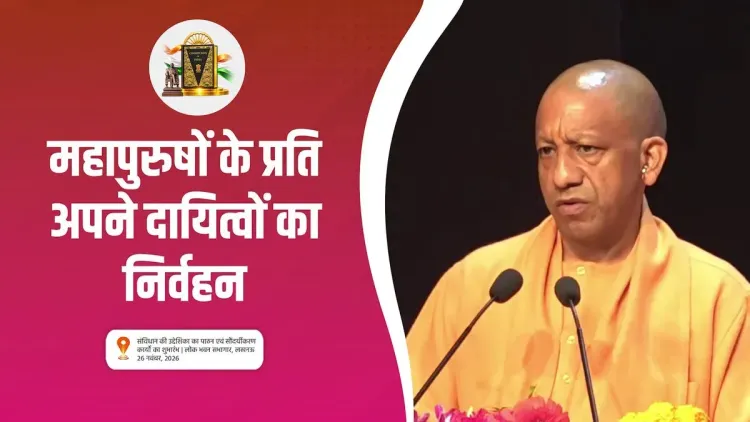
Yogi's Constitution Day pledge from Lucknow
Yogi Adityanath has led Uttar Pradesh since March 2017. On the calendar's most constitutional morning, his office chose a works-and-memory agenda rather than a recitation of articles: upgrade the physical places where Ambedkar and fellow social-reform figures are commemorated. The verb in the original post is telling. The government had decided — a prior resolution being restated and driven forward, not a flourish invented for the day.
Dr. Bhimrao Ambedkar remains the central figure in India's legal assault on untouchability and in the architecture of constitutional equality. Honouring him on 26 November is the day's natural grammar. The CMO message widens that frame. Other pioneers of social justice are folded into the same beautification drive.
Statues, parks and sites in the upgrade drive
The campaign, as described, targets three kinds of public assets: statues, parks and associated sites. State governments across India have periodically upgraded Ambedkar memorials. Uttar Pradesh has previously created and maintained Ambedkar-themed public sites in multiple districts, typically presented as measures to promote social harmony and public recognition of constitutional values.
Urban local bodies are the usual executing agencies for such civic works. Dalit communities and the wider public are the intended audience for the symbolism. What the post does not provide is a district-wise list, a rupee figure, or a completion clock. Those missing pieces will decide whether this remains a Constitution Day signal or becomes a measurable public-works programme.
On the day India celebrates the document Ambedkar drafted, Uttar Pradesh is betting that marble, gardens and civic upkeep can carry social justice into the street.
Point of View
And this Constitution Day restatement fits that pattern. Honouring Ambedkar through parks and statues is a familiar state-level tool across India, aimed at Dalit constituencies and at projecting constitutional values in public space. The test is delivery: without a published list of sites, funds and deadlines, the campaign remains a signal more than a works programme. Watch whether urban local bodies convert the pledge into visible upgrades in the next budget cycle.
NationPress
26 Nov 2026
Frequently Asked Questions
When is Constitution Day in India?
India marks Constitution Day on 26 November every year. The Constituent Assembly adopted the Constitution on 26 November 1949, and the date is used for civic commemorations of Dr. B.R. Ambedkar and constitutional values.
Who is called the architect of the Indian Constitution?
Dr. Bhimrao Ramji Ambedkar, known as Babasaheb, is widely called the architect of the Indian Constitution. He chaired the Constituent Assembly's Drafting Committee.
What did CM Yogi Adityanath say about Ambedkar on Constitution Day?
Through the Chief Minister's Office of Uttar Pradesh, Yogi Adityanath said the government had decided to honour Dr. Ambedkar and other social-justice pioneers by taking forward a campaign to beautify associated statues, parks and sites. The remarks were issued on 26 November 2026.
What is Uttar Pradesh doing for Ambedkar memorials?
The state government, as restated by the CMO, is pursuing a beautification campaign for statues, parks and sites linked to Ambedkar and other pioneers of social justice. Specific site lists, budgets and timelines were not given in the post.
Why does Uttar Pradesh highlight Ambedkar on 26 November?
26 November is Constitution Day, tied to Ambedkar's role as chairman of the Drafting Committee. State governments often use the date to reaffirm commemorative projects and constitutional messaging.