CM Yogi Lists UP's Infrastructure Firsts in Transport Push
Synopsis
Chief Minister Yogi Adityanath on 14 July 2026 highlighted Uttar Pradesh's transport milestones on X, listing the state's claim to India's first inland waterway, rapid rail corridor, city ropeway, the most airports, metro in seven cities, and the country's largest railway network.
Key Takeaways
CM Yogi Adityanath posted on 14 July 2026 listing Uttar Pradesh as home to several national transport firsts.
National Waterway-1 on the Ganga , designated under the National Waterways Act, 2016 , is cited as India's first inland waterway.
The Delhi-Meerut RRTS , approved in 2019 and partially operational by 2023 , is India's first rapid-rail corridor, with key sections in UP .
UP has metro rail systems operational or under construction in seven cities : Lucknow, Kanpur, Agra, Varanasi, Meerut, Gorakhpur, and Jhansi.
The state claims the highest number of operational airports in India, including new facilities at Jewar and Ayodhya .
These projects are integrated with the Centre's PM Gati Shakti national multimodal connectivity master plan.
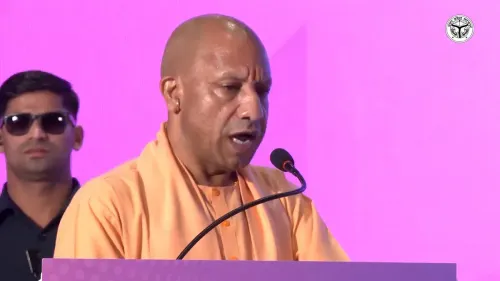
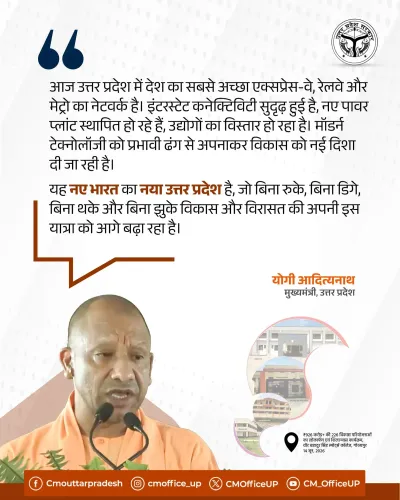
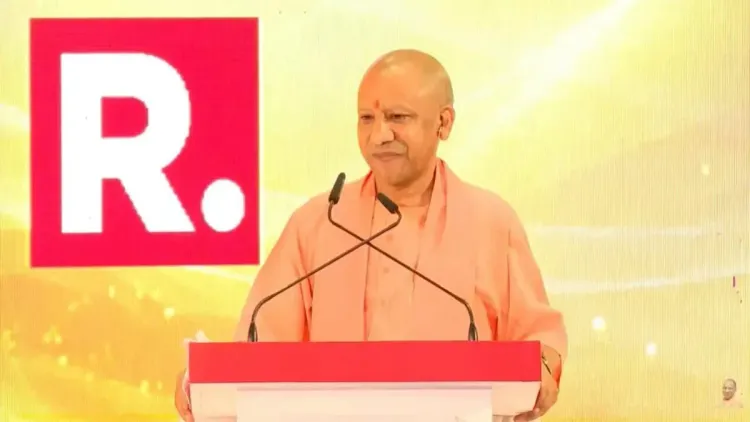
Uttar Pradesh Chief Minister Yogi Adityanath on Tuesday, 14 July 2026, took to X to highlight the state's growing portfolio of transport infrastructure milestones, citing Uttar Pradesh as home to the country's first inland waterway, first rapid rail corridor, and first city ropeway, among other firsts.
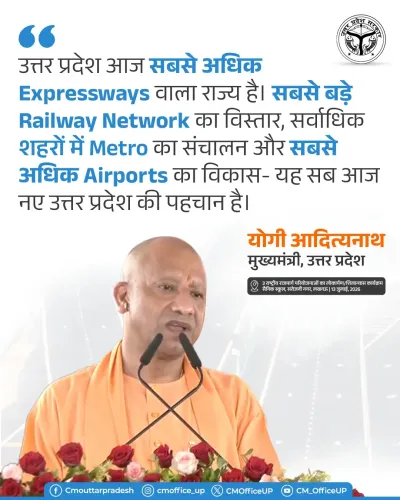
In the post, CM Yogi wrote: 'Desh ka pehla inland waterway, pehli rapid rail, pehla city rope-way UP ke paas hai' ('The country's first inland waterway, first rapid rail, first city ropeway belong to UP'), adding that the state also holds the most airports, metro systems in seven cities, and the largest railway network in the country.
Context
The post arrives as Uttar Pradesh continues to position itself as a benchmark state for multimodal transport under CM Yogi Adityanath's administration, which has been in office since 2017. The enumeration of 'firsts' is a deliberate public-communication strategy, consolidating several large-ticket projects under a single narrative of progress.
The claims span distinct infrastructure categories — waterways, rail, ropeway, aviation, and urban metro — reflecting the breadth of central and state investment channelled into Uttar Pradesh over the past decade.
Policy Backdrop
National Waterway-1 (NW-1), running along the Ganga from Haldia to Prayagraj, was designated under the National Waterways Act, 2016 as India's first modern inland waterway and remains a national-priority cargo corridor. Its Uttar Pradesh stretch anchors the 'inland waterway' claim in the post.
The Delhi-Meerut Regional Rapid Transit System (RRTS) received Cabinet approval in 2019 as India's inaugural rapid-rail corridor, with sections running through Uttar Pradesh becoming partially operational by 2023. The state's first urban ropeway projects were announced under a state ropeway policy introduced in 2021-22, aligned with national multimodal connectivity guidelines.
These projects are also integrated into the Centre's PM Gati Shakti national master plan, which aims to reduce logistics costs by synchronising road, rail, waterway, and aviation infrastructure across states.
Stakeholders and Impact
Urban commuters across Lucknow, Kanpur, Agra, Varanasi, Meerut, Gorakhpur, and Jhansi are the direct beneficiaries of the metro expansion that CM Yogi references. The Uttar Pradesh Metro Rail network, operational or under construction in all seven cities, represents one of the largest sub-national urban mobility programmes in India.
The logistics sector stands to gain from NW-1's cargo terminals, while the aviation expansion — which includes new facilities at Jewar and Ayodhya — is expected to stimulate tourism and trade. The post's framing of UP as holding the highest number of operational airports in India signals continued state emphasis on aviation-led economic growth.
What's Next
Attention will now turn to completion timelines for the remaining phases of the Delhi-Meerut RRTS and the pending metro corridors in cities such as Gorakhpur and Jhansi. Any new central funding announcements in the next Union Budget for waterway cargo terminals along NW-1 will be closely watched by the logistics industry.
With Uttar Pradesh accounting for a significant share of India's population and economic output, sustained infrastructure investment in the state will have outsized implications for national growth metrics — and for the political messaging of the ruling dispensation ahead of future electoral cycles.
Point of View
Where large-format infrastructure — waterways, rapid rail, airports — serves as both policy substance and electoral messaging. Listing seven metro cities and the largest railway network in a single breath signals an attempt to shift the political conversation in India's most populous state from welfare delivery to capital-stock creation. The timing, well ahead of any immediate electoral deadline, suggests the ruling dispensation is building a long-run infrastructure legacy argument rather than responding to a specific trigger.
NationPress
12 Oct 2026
Frequently Asked Questions
Which is India's first inland waterway and is it in UP?
National Waterway-1 (NW-1) on the Ganga , running from Haldia to Prayagraj , is India's first designated modern inland waterway under the National Waterways Act, 2016 . Its western terminus at Prayagraj lies in Uttar Pradesh , underpinning CM Yogi 's claim.
What is the Delhi-Meerut RRTS and why is it called India's first rapid rail?
The Delhi-Meerut Regional Rapid Transit System (RRTS) is India's first dedicated rapid-rail corridor, approved by the Cabinet in 2019 and partially operational by 2023 . It is designed to run at higher speeds than conventional metro systems, with significant sections passing through Uttar Pradesh .
In how many cities does UP have a metro rail system?
Uttar Pradesh has metro rail systems operational or under construction in seven cities : Lucknow, Kanpur, Agra, Varanasi, Meerut, Gorakhpur , and Jhansi , making it the state with the most urban metro projects in India.
Which new airports has UP opened recently?
Uttar Pradesh has expanded its aviation footprint with new or upgraded facilities including airports at Jewar (Noida International Airport) and Ayodhya , contributing to the state's claim of having the highest number of operational airports in India.
What is PM Gati Shakti and how does it relate to UP's infrastructure?
PM Gati Shakti is the Centre's national master plan for multimodal connectivity, aiming to synchronise road, rail, waterway, and aviation projects to cut logistics costs. Uttar Pradesh 's waterway, RRTS, metro, and airport projects are integrated into this framework, amplifying both their scale and policy visibility.