CM Yogi invokes Mahabharata legacy at Bijnor
Synopsis
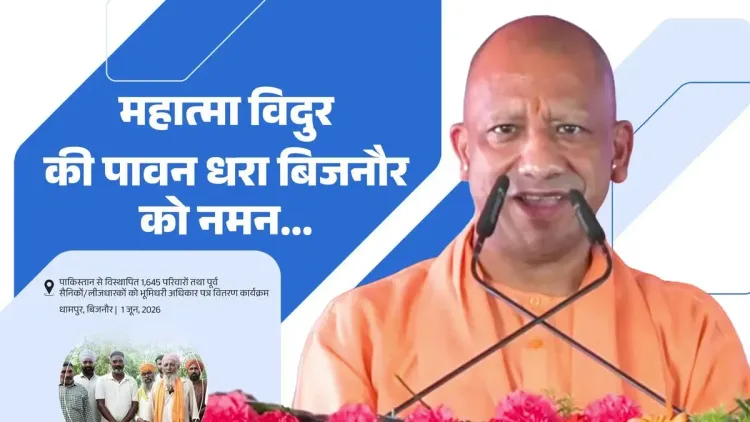
Chief Minister Yogi Adityanath on 1 June 2026 described Bijnor as 'the land of the Mahabharata' and invoked the principle that dharma protects those who protect it, continuing the UP government's pattern of highlighting mythological heritage across districts.
Key Takeaways
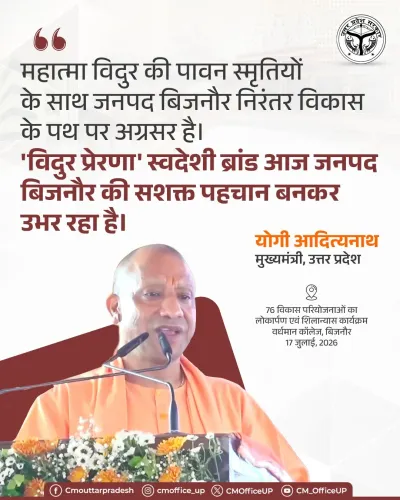
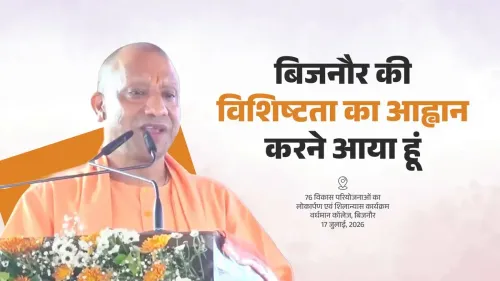
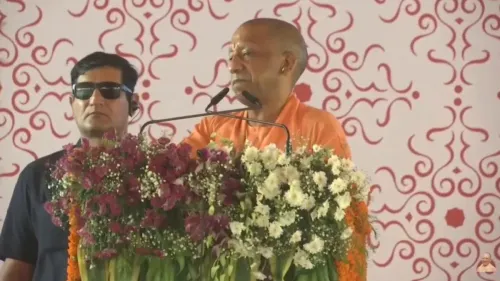
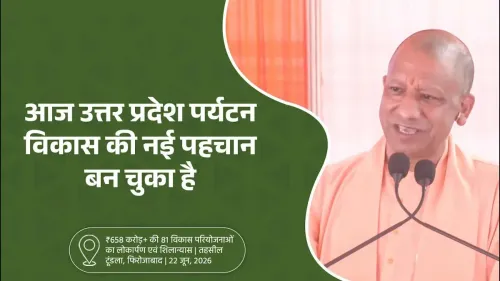
The Chief Minister's Office of Uttar Pradesh shared a statement by CM Yogi Adityanath on 1 June 2026 calling Bijnor 'the land of the Mahabharata.' The CM cited the principle: 'One who protects dharma, dharma protects in return.' The statement was accompanied by a video on the official CMO account.
Since 2017 , the UP government has actively promoted districts with Mahabharata and Ramayana associations as heritage tourism destinations.
Bijnor's mythological associations are rooted in local tradition; observers will watch for follow-up tourism or heritage infrastructure announcements for the district.
The Chief Minister's Office of Uttar Pradesh, on behalf of Chief Minister Yogi Adityanath, shared a statement on Monday, 1 June 2026, invoking Bijnor's association with the Mahabharata and linking it to a message of dharmic duty and protection.
Context
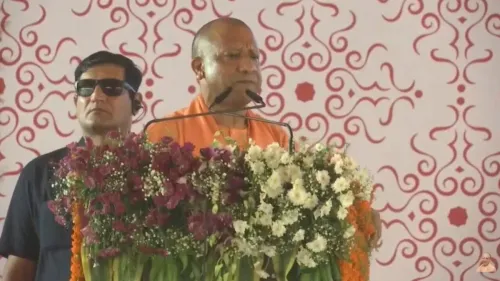
Chief Minister Yogi Adityanath declared, 'Bijnor Mahabharata ki dharti hai' ('Bijnor is the land of the Mahabharata'), and added that this heritage inspires a timeless principle: 'One who protects dharma, dharma protects in return.' The statement was shared with a video through the official CMO account, underscoring its intended public reach.
Bijnor, a district in western Uttar Pradesh, carries local traditions and oral histories associating certain sites in the region with events and characters from the Mahabharata, the ancient Sanskrit epic that remains central to Hindu cultural memory across the subcontinent.
Policy Backdrop
Since 2017, the Uttar Pradesh government under Yogi Adityanath has pursued a sustained effort to identify, develop, and promote districts with claimed Mahabharata and Ramayana connections as pilgrimage and heritage tourism destinations. This policy direction has shaped infrastructure spending, branding campaigns, and official communications across multiple districts in the state.
Bijnor's invocation fits an established pattern in which official messaging foregrounds mythological and cultural associations of a place — often as a precursor to or accompaniment of tourism-related announcements at the district level.
Stakeholders and Impact
Residents of Bijnor and pilgrims who visit sites linked to Hindu epics stand to be the most immediate audience for such messaging. Statements of this kind tend to energise local cultural organisations, temple trusts, and heritage bodies that advocate for state recognition and investment in mythologically significant locations.
The broader narrative also speaks to the Uttar Pradesh government's wider constituency, for whom the invocation of Mahabharata heritage carries both religious resonance and a signal of administrative intent to preserve and promote cultural identity.
What's Next
Observers will watch for follow-up action from the Uttar Pradesh Tourism Department or district administration in Bijnor — including heritage site notifications, infrastructure allocations in state budget documents, or the designation of pilgrimage circuits linking Bijnor to other Mahabharata-associated sites in the state.
Given the pattern established since 2017, such statements by Chief Minister Yogi Adityanath have frequently been accompanied or followed by concrete policy moves, making this declaration one to track in upcoming state announcements.
Point of View
Long-running effort by the Uttar Pradesh government to weave mythological geography into official identity and governance narratives. By publicly associating a specific district with the Mahabharata and coupling it with a dharmic aphorism, the CM simultaneously signals cultural intent and potentially primes the district for future heritage or tourism investment. The pattern — statement followed by policy action — has repeated across multiple UP districts since 2017, making this less a ceremonial utterance and more a marker on a policy roadmap. Whether concrete allocations for Bijnor follow will be the real test of the statement's weight.
NationPress
19 Sept 2026
Frequently Asked Questions
Why did CM Yogi Adityanath call Bijnor the land of the Mahabharata?
CM Yogi Adityanath referenced Bijnor's local traditions and oral histories that associate the district with events from the Mahabharata epic, using this heritage to invoke a message about the protection of dharma.
What is the significance of Bijnor in the Mahabharata?
Bijnor carries local traditions linking certain sites in the district to Mahabharata events and characters, though these associations are rooted in regional lore rather than documented historical records.
What is the UP government's policy on Mahabharata heritage sites?
Since 2017, the Uttar Pradesh government has promoted districts with claimed Mahabharata and Ramayana connections as pilgrimage and heritage tourism destinations, including infrastructure development and official branding campaigns.
What does 'dharma protects those who protect dharma' mean in this context?
CM Yogi Adityanath used this classical principle from Hindu tradition to draw a moral lesson from Bijnor's Mahabharata heritage, suggesting that upholding righteousness brings its own protection.
Will there be tourism development in Bijnor after CM Yogi's statement?
No specific project has been announced yet, but the UP government's established pattern since 2017 suggests that such statements often precede or accompany heritage and tourism infrastructure announcements at the district level.