CM Yogi Invokes Bithoor's Sita Legacy to Champion Women's Dignity
Synopsis
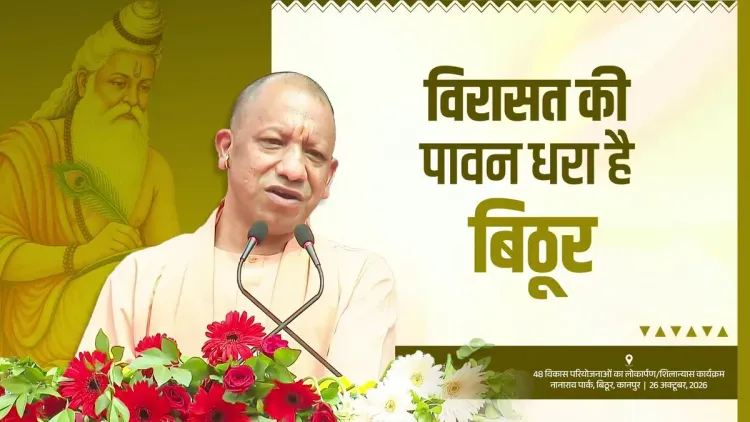
Chief Minister Yogi Adityanath invoked Bithoor's mythological identity as Sita's place of exile to argue that land where women are honoured becomes sacred, drawing on the story of Lava and Kusha to link women's dignity with civilisational strength.
Key Takeaways
CM Yogi Adityanath stated on 26 October 2026 that land which respects women becomes a pilgrimage site in itself.
He cited Bithoor in Kanpur district — traditionally identified as the ashram where Sita raised Lava and Kusha — as proof of this principle.
The reference to Lava and Kusha frames women's dignity as the source of a civilisation's valour and strength.
Yogi Adityanath has governed Uttar Pradesh since March 2017 and regularly anchors governance messaging in Ramayana geography.
Bithoor has been referenced in state cultural and heritage tourism initiatives, making it a recurring symbol in UP's public discourse.
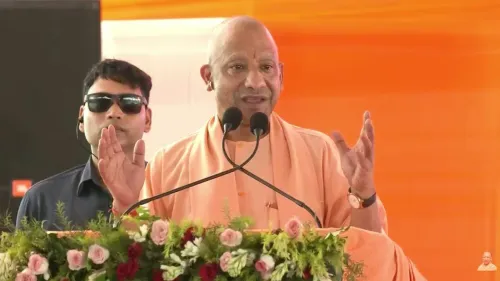
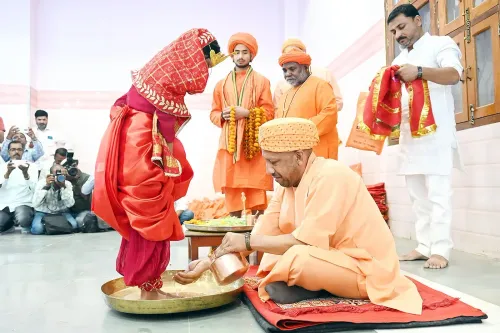
Where a woman is honoured, the land itself becomes a pilgrimage — and Chief Minister Yogi Adityanath invoked that ancient conviction on Monday, 26 October 2026, drawing a direct line from the sacred soil of Bithoor to a timeless argument about the sanctity of womanhood in Indian civilisation.
The Chief Minister's Office of Uttar Pradesh quoted him in Hindi: 'जहां नारी का सम्मान होता है, वह धरती अपने आप में तीर्थ बन जाती है' — 'Where a woman is respected, that land becomes a place of pilgrimage in itself.' The message extended the thought: just as Bithoor's holy earth proves this truth, the dignity shown to women there once produced brave sons in Lava and Kusha, the warrior children of the Ramayana.
Bithoor — Where Sita's Story Meets Kanpur's Dust
Bithoor, a quiet town on the banks of the Ganga in Kanpur district, carries a weight far larger than its size. Tradition identifies it as the site of the sage Valmiki's ashram, where Sita lived in exile and raised her twin sons, Lava and Kusha. The boys, raised without the trappings of a royal court, grew into warriors celebrated in the Ramayana for courage and skill — the very image the Chief Minister's post conjures. Bithoor has long occupied a place in Uttar Pradesh's cultural map, referenced in state messaging around heritage tourism and religious significance.
Yogi's Recurring Grammar of Myth and Governance
This is not the first time Yogi Adityanath, who has served as Chief Minister since March 2017, has reached for the Ramayana to frame a governance value. His administration has consistently woven the epic's geography — Ayodhya, Chitrakoot, now Bithoor — into a larger narrative that positions Uttar Pradesh's cultural landscape as both spiritual heritage and policy compass. The invocation of Lava and Kusha as emblems of valour born from a woman's dignity sharpens a message that links respect for women not just to social justice, but to the strength of civilisation itself.
The post, accompanied by a video from the Chief Minister's Office, lands against a backdrop of periodic state-level initiatives on women's safety and welfare, though no specific programme or event was cited in the message itself. The cultural register is deliberate: by naming Bithoor as living proof of the principle, CM Yogi anchors a moral claim in sacred geography rather than in policy data alone.
Whether a fresh Bithoor development announcement or a women's welfare scheme follows, the direction of the signal is clear — in Uttar Pradesh's political vocabulary, the mythological and the governmental are rarely kept in separate sentences.
Point of View
The statement operates simultaneously as cultural affirmation and implicit governance claim. It fits a broader arc in which Ramayana sites — Ayodhya, Chitrakoot, Bithoor — are progressively coded as proof points for the ruling dispensation's value framework. The question analysts will track is whether such cultural messaging is followed by concrete infrastructure or welfare announcements for Bithoor, converting symbolism into a policy footprint.
NationPress
26 Oct 2026
Frequently Asked Questions
What did CM Yogi Adityanath say about Bithoor and women?
CM Yogi said that land where women are respected becomes a pilgrimage in itself, and pointed to Bithoor as living proof — noting that the same respect for women's dignity produced brave sons like Lava and Kusha.
Why is Bithoor significant in the Ramayana?
Bithoor, a town in Kanpur district on the Ganga, is traditionally identified as the site of sage Valmiki's ashram where Sita lived after her exile from Ayodhya and gave birth to her twin sons Lava and Kusha.
Who are Lava and Kusha?
Lava and Kusha are the twin sons of Rama and Sita in the Ramayana, raised by Valmiki at his ashram and celebrated for their courage and warrior skill despite growing up outside the royal court.
How long has Yogi Adityanath been Chief Minister of Uttar Pradesh?
Yogi Adityanath has served as Chief Minister of Uttar Pradesh since March 2017.
Does the Uttar Pradesh government promote Bithoor as a heritage site?
Yes, Bithoor has been referenced in state-level cultural messaging and heritage tourism initiatives by successive UP governments, given its strong mythological association with the Ramayana.