CM Conrad Sangma Reviews Space Plan for New MTC Building

Synopsis
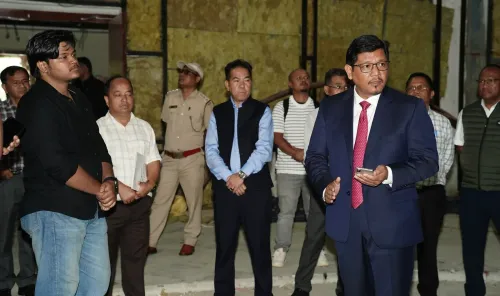
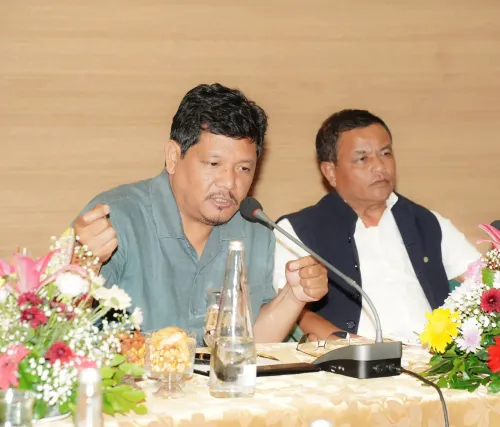
Meghalaya CM Conrad Sangma met MIDFC officials on October 26, 2026 to rationalise space allocation in the newly built MTC Building at Khyndailad, Police Bazar, Shillong, balancing commercial, tourism, and efficiency goals.
Key Takeaways
CM Conrad Sangma held a meeting with MIDFC officials on October 26, 2026 to discuss space allocation in the new MTC Building .
The building is located at Khyndailad, Police Bazar , Shillong's primary commercial and tourism hub.
Discussions weighed commercial potential , tourism importance , and efficient space utilisation as the three guiding criteria.
MIDFC is Meghalaya's nodal state agency for financing and executing infrastructure development projects.
The next milestone is a finalised allocation plan and any tendering or leasing process for units in the building.
In the heart of Shillong's busiest commercial corridor, decisions about how a new building gets carved up can reshape the retail and tourism landscape for years. Meghalaya Chief Minister Conrad Sangma met with officials of the Meghalaya Infrastructure Development Finance Corporation (MIDFC) on Monday, October 26, 2026, to deliberate on the rationalisation of space allocation inside the newly constructed MTC Building at Khyndailad, Police Bazar.
The Chief Minister's discussions centred on balancing three priorities: the area's strong commercial potential, its significance as a tourism destination, and the imperative of efficient space utilisation in a building that sits at one of Shillong's highest-footfall addresses.
Why Police Bazar Makes This Decision High-Stakes
Police Bazar is Shillong's nerve centre — a dense grid of retail outlets, eateries, hotels, and informal markets that draws both locals and tourists in large numbers daily. Khyndailad, located within this hub, commands premium real estate value. Any allocation of floor space in the new MTC Building here carries direct consequences for state revenue, local traders seeking formal commercial space, and tourism operators looking for a better-organised gateway into the city.
The MIDFC, the state's nodal agency for financing and executing infrastructure projects, is the institutional engine behind this build-out. Getting the space-mix right — retail, hospitality, government services, or tourism facilitation — is precisely the kind of upstream decision that determines whether a publicly funded structure pays for itself or becomes an underutilised shell.
Meghalaya's Broader Push to Monetise Urban Assets
This meeting fits a consistent pattern in Meghalaya's urban development approach: successive state governments have worked to redevelop prime Shillong real estate to maximise both revenue generation and public utility. With tourism emerging as one of the state's anchor economic sectors, integrating visitor-facing infrastructure into commercial redevelopments has become a deliberate policy tool.
For local traders and tourism operators — the two stakeholder groups with the most immediate skin in the game — the outcome of this rationalisation exercise will determine access, rental structures, and the character of the precinct for the foreseeable future.
The next watch-point is the finalised space allocation plan and any subsequent tendering or leasing process that MIDFC and the state government open to prospective occupants. That is when the strategy articulated in Monday's meeting becomes visible on the ground.
Point of View
Who holds both the Chief Ministership and the national presidency of the NPP, visible urban development wins in Shillong carry political capital ahead of any electoral cycle. The MIDFC's involvement also underscores a broader shift toward finance-corporation-led project execution, which introduces commercial discipline to what might otherwise be routine government construction. The real test will be whether the tendering process that follows is transparent and draws in credible operators — that is what converts a planning meeting into lasting urban impact.
NationPress
26 Oct 2026
Frequently Asked Questions
What is the MTC Building at Police Bazar, Shillong?
The MTC Building is a newly constructed structure located at Khyndailad in Police Bazar, Shillong, intended for mixed commercial and tourism-related use in one of the city's busiest areas.
What is MIDFC and what role does it play here?
MIDFC stands for the Meghalaya Infrastructure Development Finance Corporation, the state's nodal agency for financing and executing infrastructure projects, including the MTC Building development.
Why is space allocation in the MTC Building significant?
Police Bazar is Shillong's highest-footfall commercial and tourism hub, so how space is allocated in the new building directly affects state revenue, local traders, and tourism operators.
What did Conrad Sangma discuss in the MIDFC meeting?
CM Conrad Sangma met MIDFC officials to discuss rationalising space allocation in the MTC Building, balancing the area's commercial potential, tourism importance, and the need for efficient space utilisation.
What happens next after this space allocation review?
The key next step is the finalisation of the space allocation plan, followed by any tendering or leasing process that opens commercial units in the MTC Building to prospective occupants.