India's natural gas import bill surges 23% to $8.5 bn in Apr-Sep as West Asia conflict lifts prices

Synopsis
India's gas import bill jumped 23% to $8.5 billion in just six months — and the West Asia conflict is only half the story. With domestic output from ageing ONGC and OIL fields falling 4.4%, import dependence has crossed 52%, and the dual choking of the Strait of Hormuz and the Red Sea is forcing costlier US LNG purchases. The structural vulnerability is deepening.
Key Takeaways
India's natural gas import bill rose 23 per cent to $8.5 billion in April–September 2026 , up from $6.9 billion a year earlier.
LNG import volumes also increased 4.4 per cent to 18,189 MMSCM , partly due to rerouting through costlier US supply chains.
Domestic gas production fell 4.4 per cent to 16,804 MMSCM , attributed to ageing ONGC and OIL fields.
India's import dependence for natural gas rose to 52.3 per cent in April–September FY27 , up from 50.1 per cent a year earlier.
The Strait of Hormuz and the Red Sea — disrupted by Houthi attacks in Yemen — have emerged as twin shipping choke points threatening Indian LNG supply routes.
India's natural gas import bill surged 23 per cent to $8.5 billion in the first half of financial year 2026-27 (April–September 2026), up from $6.9 billion in the same period a year earlier, as the ongoing West Asia conflict pushed global energy prices sharply higher, according to data compiled by the government's Petroleum Planning and Analysis Cell (PPAC). The jump marks one of the steepest half-year increases in India's gas import costs in recent memory, driven by both price and supply-route disruptions.
Higher Prices and Rising Volumes
The cost surge was primarily price-driven, but import volumes also climbed. India imported 18,189 million standard cubic metres (MMSCM) of liquefied natural gas (LNG) during the six-month period — a 4.4 per cent rise over the 17,414 MMSCM recorded in the corresponding period of the previous year. The combination of elevated global prices and increased procurement has significantly widened the energy import outgo.
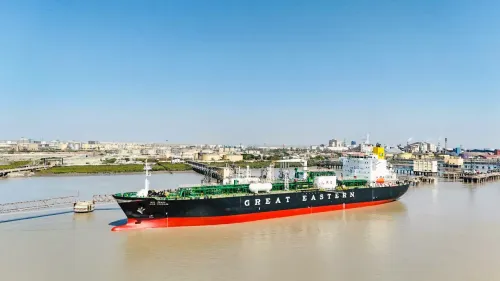
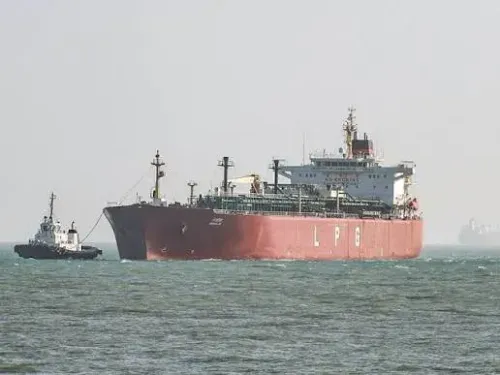
Notably, the disruption of shipping routes through the Strait of Hormuz forced oil marketing companies to source more LNG from the United States, which, according to a senior official, involved considerably higher shipping costs — amplifying the financial burden beyond what price alone would have implied.
Domestic Production Falls Short
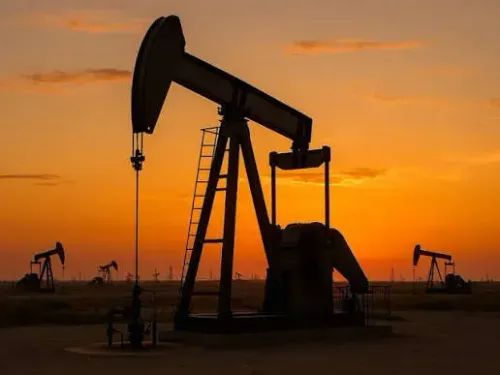
The pressure on imports has been compounded by a decline in domestic natural gas output. Production fell 4.4 per cent to 16,804 MMSCM during April–September 2026, compared with 17,585 MMSCM in the year-earlier period. Officials attributed the drop to ageing production fields operated by Oil and Natural Gas Corporation (ONGC) and Oil India Limited (OIL), both of which have faced declining well productivity in mature blocks.
As a result, India's dependence on imported natural gas rose to 52.3 per cent of total consumption during April–September FY27, up from 50.1 per cent in the same period of the previous year — crossing the halfway mark for the first time in recent years.
Overall Consumption Stays Flat
Despite the higher import bill and falling domestic output, overall natural gas consumption remained nearly flat at 34,769 MMSCM, against 34,773 MMSCM a year earlier. This suggests that demand growth has stalled even as costs escalate — a structural concern for gas-dependent industries including fertilisers, power generation, and city gas distribution.
Red Sea Emerges as a Second Choke Point
The September 2026 data offer a nuanced signal: India's monthly gas import bill was broadly unchanged at $1.2 billion year-on-year, even as import volumes declined 8.5 per cent to 2,957 MMSCM from 3,233 MMSCM — pointing to a sharp per-unit cost increase driven by geopolitical disruption.
Beyond the Strait of Hormuz, the Red Sea has emerged as a second critical choke point. Houthi rebel attacks in Yemen have extended the conflict zone into Red Sea shipping lanes, with Houthi forces reportedly controlling significant stretches of the coastal region. The dual threat to Gulf and Red Sea routes has forced Indian importers to seek costlier alternative supply sources and longer shipping paths, with no near-term resolution in sight.
With domestic production under structural pressure and geopolitical risks keeping global prices elevated, India's gas import burden is likely to remain high through the second half of FY27.
Point of View
Every geopolitical flare-up in West Asia will translate directly into a higher energy bill. Crossing the 52% import dependence threshold is a structural warning, not a cyclical blip. India's gas security strategy — centred on long-term LNG contracts and domestic exploration — has not kept pace with either the demand trajectory or the geopolitical risk map.
NationPress
26 Oct 2026
Frequently Asked Questions
Why did India's natural gas import bill rise 23% in April–September 2026?
India's natural gas import bill rose 23% to $8.5 billion in April–September 2026, driven primarily by higher global LNG prices caused by the West Asia conflict. Disruptions to the Strait of Hormuz also forced Indian importers to source more expensive LNG from the United States, adding shipping costs on top of elevated spot prices.
How much LNG did India import in the first half of FY27?
India imported 18,189 MMSCM of LNG in April–September 2026, a 4.4% increase over the 17,414 MMSCM imported in the same period of the previous year. The higher volumes, combined with elevated prices, contributed to the steep rise in the overall import bill.
Why is India's domestic natural gas production falling?
Domestic natural gas production declined 4.4% to 16,804 MMSCM in April–September 2026, down from 17,585 MMSCM a year earlier. Officials attributed the drop to ageing fields operated by ONGC and Oil India Limited, where well productivity has been declining in mature blocks.
What is India's current dependence on imported natural gas?
India's dependence on imported natural gas rose to 52.3% of total consumption in April–September FY27, up from 50.1% in the same period a year earlier, according to PPAC data. This marks a significant threshold, with imports now accounting for more than half of India's total gas supply.
How has the West Asia conflict affected India's LNG supply routes?
The conflict has disrupted two key maritime corridors — the Strait of Hormuz and the Red Sea. Houthi rebel attacks in Yemen have extended the conflict zone into Red Sea shipping lanes, forcing Indian oil marketing companies to use longer, costlier alternative routes and source more LNG from the United States instead of the Gulf region.