CM Yogi Recalls Gorakhpur Kachahari's Role in Freedom Struggle
Synopsis
Uttar Pradesh Chief Minister Yogi Adityanath invoked the Gorakhpur Kachahari's role in India's independence movement, reconnecting the city's colonial-era resistance history to its present civic identity and signalling possible heritage commemorations.
Key Takeaways
CM Yogi Adityanath posted on 28 July 2026 highlighting the Gorakhpur Kachahari 's role in India's freedom movement.
The post was in Hindi: 'देश की आजादी के आंदोलन के दौरान भी गोरखपुर कचहरी की बड़ी भूमिका थी' — affirming the court complex's historical significance.
Gorakhpur is both CM Yogi's political base and the seat of the Gorakhnath Math , which he heads.
Yogi Adityanath periodically highlights Gorakhpur's freedom-struggle credentials, linking local history to his public identity.
The post may signal upcoming local commemorations or heritage initiatives tied to the Kachahari site.
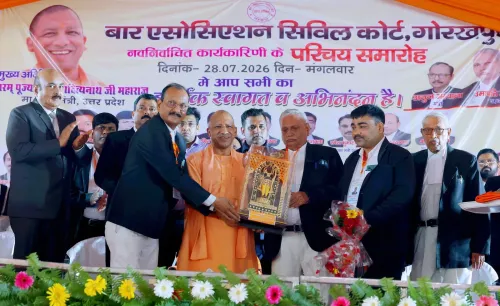
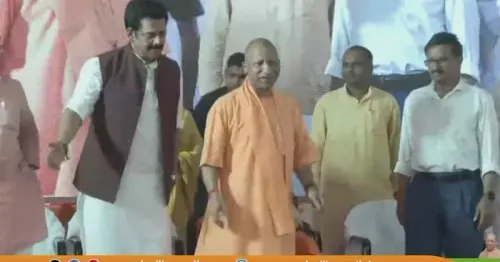
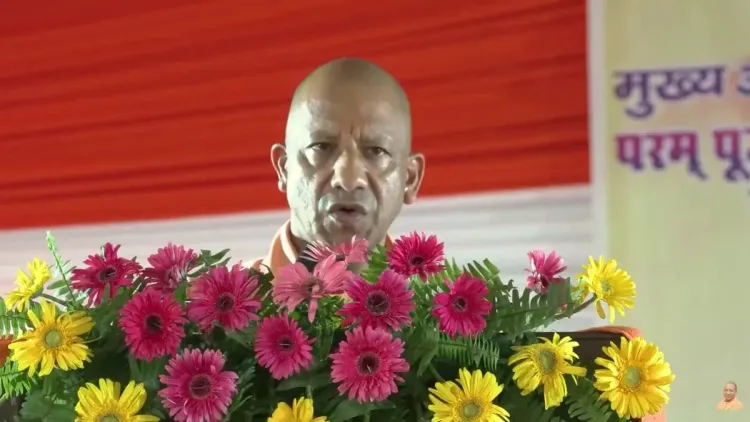
Long before it became a routine district court complex, the Gorakhpur Kachahari stood at the heart of one of India's most turbulent chapters — and Uttar Pradesh Chief Minister Yogi Adityanath wants that story told. On Tuesday, 28 July 2026, the Chief Minister took to X to remind followers that Gorakhpur's historic court premises carried significant weight during the country's independence movement.
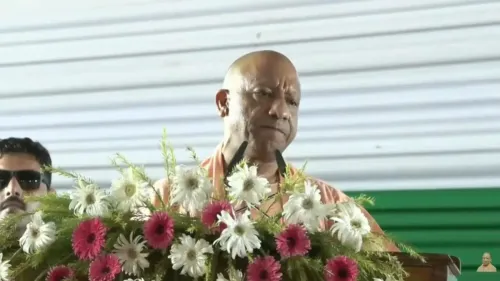
In his post, CM Yogi wrote: 'देश की आजादी के आंदोलन के दौरान भी गोरखपुर कचहरी की बड़ी भूमिका थी' — 'During the country's freedom movement too, the Gorakhpur Kachahari played a major role.' The brevity of the line carries weight: a single sentence anchoring a city's colonial-era resistance to its present-day identity.
Gorakhpur as a Freedom-Movement Flashpoint
Gorakhpur, the eastern Uttar Pradesh city that doubles as Yogi Adityanath's political and spiritual base, has a documented place in India's anti-colonial history. District court complexes — kachahris — across British India were not merely administrative buildings; they were arenas where colonial law met organised resistance, where nationalists were tried, sentenced, and, often, galvanised. The Gorakhpur Kachahari's specific historical episodes remain a subject of local historical record and civic memory.
Yogi Adityanath, as head of the Gorakhnath Math, occupies a role that blends religious custodianship with political leadership — and he has periodically invoked Gorakhpur's freedom-struggle credentials to reinforce that dual identity. Reminding constituents of a place's sacrificial history is a familiar move in Indian political culture, but it also reflects a genuine local pride that runs deep in the region.
Heritage, Memory, and What Comes Next
Posts of this nature from the Chief Minister often precede or accompany local commemorations, heritage-walk initiatives, or civic restoration projects tied to historically significant sites. Whether a formal initiative around the Gorakhpur Kachahari follows this public invocation remains to be watched — but the signal is clear: the site's independence-era legacy is being placed back in public conversation.
For a city increasingly promoted as a development and pilgrimage hub under the current state government, weaving its freedom-movement memory into the civic narrative adds another layer to Gorakhpur's reinvention story. History, here, is not just the past — it is active political currency.
Point of View
Blending the Gorakhnath Math's historical standing with the BJP's broader 'nationalist heritage' narrative. For a Chief Minister who governs from the same city he leads spiritually, reminding voters of local sacrifice is both culturally resonant and politically strategic. Such posts also set the stage for state-backed heritage projects, which have become a signature tool of the current UP government's soft-power outreach. The move underscores how regional history is being actively curated — not merely commemorated — in contemporary Indian politics.
NationPress
27 Oct 2026
Frequently Asked Questions
What is the Gorakhpur Kachahari and why is it historically significant?
The Gorakhpur Kachahari is the district court complex in Gorakhpur, Uttar Pradesh. It is considered historically significant because of its role during India's independence movement, when such colonial-era court premises served as sites of nationalist resistance and legal battles against British rule.
Why did CM Yogi Adityanath post about Gorakhpur Kachahari?
CM Yogi Adityanath posted on 28 July 2026 to highlight the Gorakhpur Kachahari's role in India's freedom struggle. As Chief Minister and head of the Gorakhnath Math in Gorakhpur, he periodically invokes the city's independence-era history to reinforce its cultural and political legacy.
What is Yogi Adityanath's connection to Gorakhpur?
Yogi Adityanath is the Chief Minister of Uttar Pradesh and the head of the Gorakhnath Math, a prominent religious institution based in Gorakhpur. The city serves as both his political and spiritual base.
Is the UP government planning any heritage projects at the Gorakhpur Kachahari?
No formal announcement has been made. However, CM Yogi's post is consistent with a broader pattern of the state government highlighting historically significant local sites, which has previously preceded commemorative events or heritage initiatives.
What was Gorakhpur's role in India's independence movement?
Gorakhpur and its Kachahari (district court) were involved in India's anti-colonial resistance. District court complexes across British India were key arenas where nationalists faced colonial law, and Gorakhpur's was no exception, according to local historical accounts.