CM Yogi Highlights UP's Road, Rail and Air Leap Since 2017

Synopsis
CM Yogi Adityanath says Uttar Pradesh has added 10 expressways, 17 airports and metro services in 7 cities since 2017, crediting PM Modi's 'double-engine' model for transforming the state's road, rail and air connectivity.
Key Takeaways
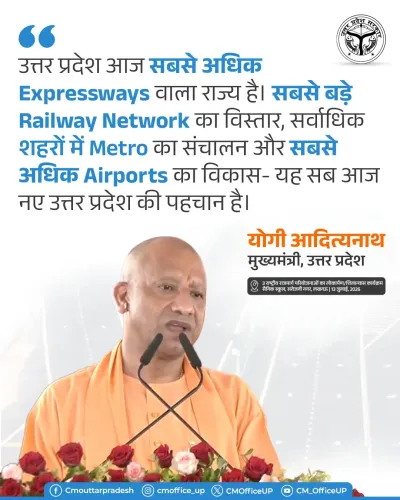
Expressways: CM Yogi claims UP had barely one and a half expressways before 2017; 10 are now operational.
Airports: Air connectivity has expanded to 12 domestic and 5 international airports, up from a handful of cities served pre-2017.
Metro rail: 7 UP cities now have metro networks; none existed in the state before the BJP government took office.
Policy backing: Growth aligns with central schemes including Bharatmala Pariyojana (2015) and the UDAN regional air connectivity scheme (2017).
Economic argument: CM Yogi links the infrastructure push to farmer market access, youth employment, tourism and household income growth. 'Double-engine' framing: The post is an explicit political case for state-centre BJP alignment as the driver of UP's infrastructure transformation.
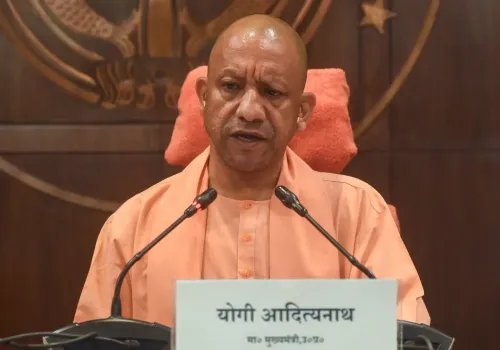
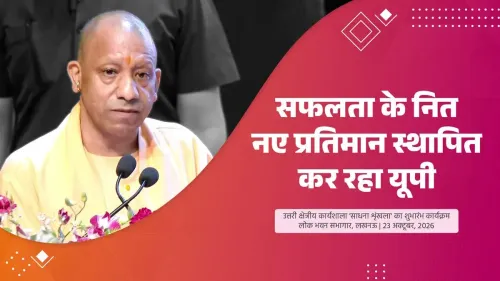
A state once described as connectivity-starved has, in under a decade, added expressways, airports and metro corridors at a pace that is now a central plank of Uttar Pradesh Chief Minister Yogi Adityanath's governance narrative. On Thursday, 29 October 2026, the Chief Minister took to X to lay out the infrastructure transformation his government credits to the BJP's 'double-engine' model — state and centre working in alignment under Prime Minister Narendra Modi.
From one-and-a-half expressways to ten: the road story
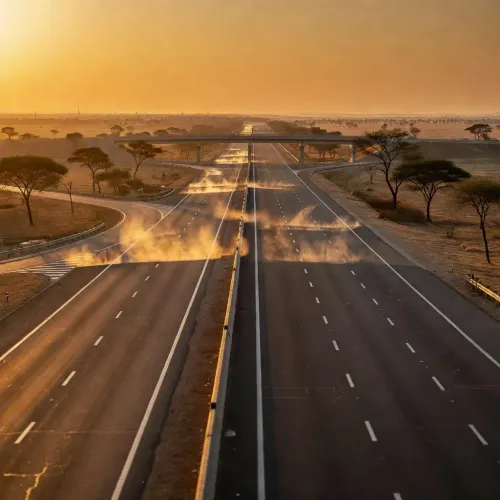
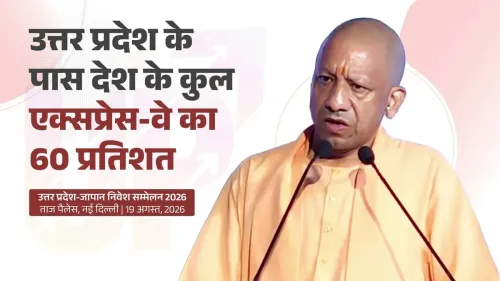
The most striking data point in CM Yogi's post is the expressway count. Before the BJP government took office in March 2017, he says, Uttar Pradesh — India's most populous state — had barely dhed expressway (one and a half expressways) to its name. Today, he claims, 10 expressways are operational across the state. The framing is deliberately stark: a state of nearly 240 million people was, in his telling, being shortchanged on the very infrastructure that moves goods, workers and ambitions.
The broader national context matters here. The Bharatmala Pariyojana, launched in 2015, set out to accelerate national highway and expressway construction across India, channelling central funds into state-level corridors. Uttar Pradesh, with its geographic size and dense population, became one of the primary beneficiaries once the state government aligned with that central push after 2017.
Twelve domestic, five international airports — and a UDAN-era shift
Aviation tells a parallel story. CM Yogi notes that air services before 2017 were confined to a handful of cities. Today, he says, 12 domestic and 5 international airports serve the state. That expansion tracks directly with the UDAN regional air connectivity scheme, launched in 2017, which was explicitly designed to push scheduled flights beyond the four or five metros that had historically monopolised Indian aviation. Smaller UP cities — many of them pilgrimage and heritage destinations — gained new runways and passenger terminals under that scheme.
For a state whose religious tourism circuit includes Varanasi, Ayodhya, Mathura and Agra, the multiplication of air access is not merely logistical — it has a direct economic multiplier for hospitality, retail and local crafts.
Seven metro cities — and what urban mobility unlocks
Perhaps the most vivid before-and-after is in urban transit. In 2017, not a single UP city had a running metro. CM Yogi says 7 cities now have metro networks in operation. That shift rewires daily commutes for lakhs of working people — reducing travel time, cutting private vehicle dependence and, crucially, lowering the cost of getting to work, school or market for middle- and lower-income households.
The Chief Minister connects this physical infrastructure directly to economic outcomes: farmers gaining access to larger markets for their produce, young people finding education and employment within easier reach, and the tourism sector drawing strength from improved access — each of these, he argues, feeds into household prosperity from village to small town to city.
The 'double-engine' political frame
The post is also, unmistakably, a political argument. The phrase 'double engine sarkar' — a government where the state BJP and the central BJP pull in the same direction — is the BJP's standard contrast drawn against opposition-ruled states that, the party claims, leave central infrastructure funds untapped or underutilised. CM Yogi invokes PM Modi's 'yashasvi margdarshan' (illustrious guidance) and the mantra of 'speed, scale and connectivity' as the formula that rewrote UP's infrastructure map.
The stakes of that argument are real. Uttar Pradesh sends the largest single bloc of members to the Lok Sabha, making it the ultimate electoral battleground. A credible infrastructure record — expressways you can drive on, airports you can fly from, metros you board every morning — is harder to argue against than a policy paper.
The next test will be whether the pipelines under construction — additional expressway stretches, new terminal expansions and metro corridors — land on time. When they do, expect this ledger to grow longer.
Point of View
Then let the numbers do the work. What makes the argument structurally interesting is that the central schemes — Bharatmala, UDAN — predate or coincide with the 2017 state transition, meaning the credit-claiming is partially legitimate and partially partisan framing. The real political question is whether the infrastructure dividends are reaching the last mile — the farmer whose produce still rots before reaching the expressway, the youth whose nearest metro station is still under construction — and that gap is where the opposition will plant its flag.
NationPress
29 Oct 2026
Frequently Asked Questions
How many expressways does Uttar Pradesh have in 2026?
According to CM Yogi Adityanath's post, 10 expressways are currently operational in Uttar Pradesh, compared to barely one and a half before the BJP government took office in 2017.
How many airports are there in Uttar Pradesh now?
CM Yogi states UP now has 12 domestic and 5 international airports , a major increase from the few cities that had air services before 2017.
Which cities in Uttar Pradesh have metro rail?
CM Yogi says 7 cities in Uttar Pradesh now have operational metro services. Before 2017, no UP city had a running metro network.
What is the 'double-engine government' model Yogi Adityanath refers to?
The 'double-engine government' ( double engine sarkar ) is the BJP's term for political alignment between a BJP state government and the BJP-led central government, which the party says enables faster approval and funding of infrastructure projects.
What central schemes supported UP's infrastructure growth?
Two key central schemes underpinned the expansion: the Bharatmala Pariyojana (launched 2015), which accelerated national highway and expressway development, and the UDAN regional air connectivity scheme (launched 2017), which brought scheduled flights to smaller cities across India including UP.