CM Yogi: UP now holds 60% of India's expressway network
Synopsis
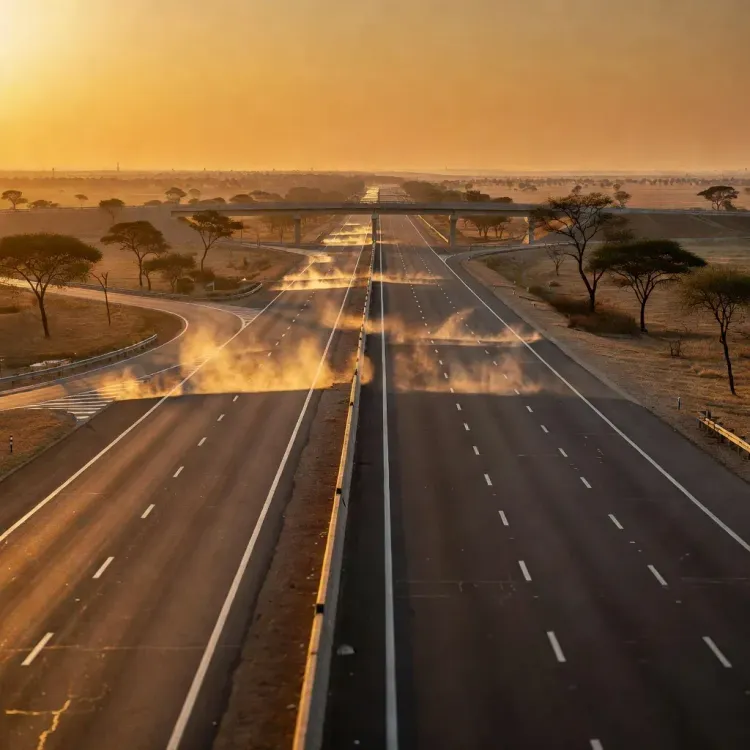
Chief Minister Yogi Adityanath's office says Uttar Pradesh has grown from just one-and-a-half expressways in 2017 to holding 60 per cent of India's total expressway network, also claiming the state now leads the country in road, rail, and air connectivity.
Key Takeaways
In 2017 , Uttar Pradesh had only one-and-a-half expressways , according to CM Yogi Adityanath.
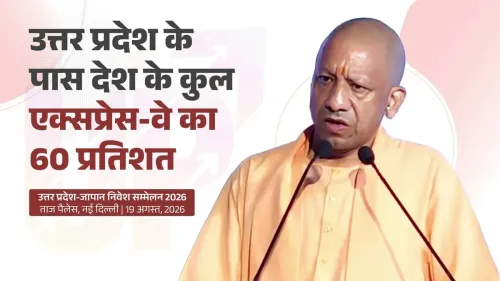
The state now claims 60 per cent of India's entire expressway network.
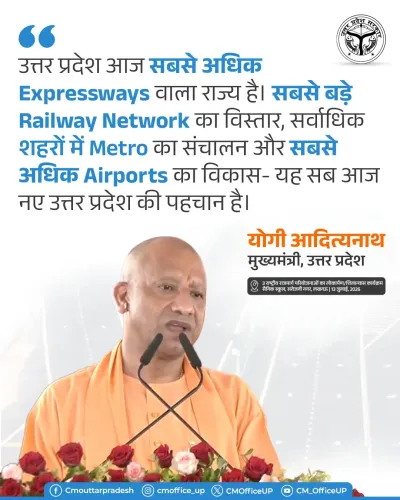
UP also claims India's largest combined road, rail, and air connectivity network.
The Agra-Lucknow Expressway (inaugurated November 2016) and the Purvanchal Expressway are key milestones in this expansion.
The growth aligns with the Central government's Bharatmala Pariyojana national highway programme.
The logistics sector and inter-state travellers are the primary beneficiaries of the expanded network.
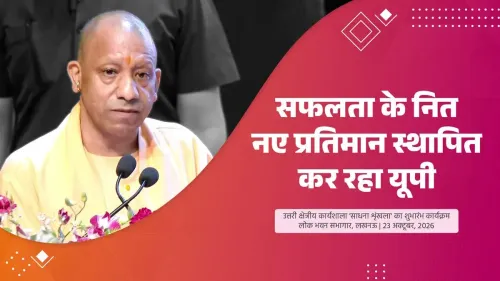
From barely one-and-a-half expressways in 2017 to commanding 60 per cent of the entire national expressway network — Uttar Pradesh has redrawn its infrastructure map in under a decade, and Chief Minister Yogi Adityanath's office drove that point home on Friday, 23 October 2026.
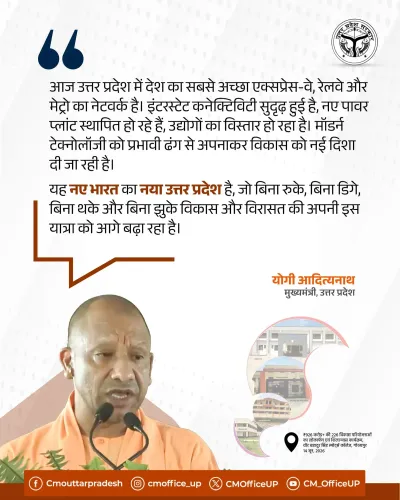
The Chief Minister's Office of Uttar Pradesh posted a direct quote from CM Yogi Adityanath: 'वर्ष 2017 में उत्तर प्रदेश के पास मात्र डेढ़ Expressway थे।' ('In 2017, Uttar Pradesh had only one-and-a-half expressways.') Today, the state claims not just road supremacy but India's largest combined road, rail, and air connectivity network.
From one-and-a-half to sixty per cent
The baseline the Chief Minister anchors to is specific: when his administration took charge after the March 2017 Uttar Pradesh assembly elections, the state's expressway footprint was negligible. The Agra-Lucknow Expressway, inaugurated in November 2016, was the most prominent asset — essentially the 'one-and-a-half' the CM references. Everything else that now defines UP's corridor network — including the Purvanchal Expressway — came after.
That construction sprint aligns with the Central government's Bharatmala Pariyojana, a national road development programme designed to build high-speed corridors across India. Uttar Pradesh, as the country's most populous state and a geographic trunk connecting the northern plains to the east, became one of the programme's highest-priority canvases. The result, the government claims, is a network share no other Indian state comes close to matching.
Road, rail, and air — the three-pillar claim
The CM's statement goes beyond expressways. The claim that UP now holds India's largest road, rail, and air connectivity network is a sweeping one. It points to a deliberate policy of layering infrastructure: new expressways are designed with provisions for multimodal integration — interchanges near rail freight corridors and proximity to the state's expanding airport footprint.
The logistics sector and millions of inter-state travellers are the direct beneficiaries. Faster freight movement lowers supply-chain costs; better air links accelerate investment inflows into a state that has historically been seen as connectivity-challenged. For Uttar Pradesh, which accounts for a substantial share of India's population and agricultural output, the infrastructure pitch is inseparable from the economic growth argument.
A political benchmark, a verifiable challenge
The 60 per cent figure is a striking claim that the government has now put firmly on record. It sets a benchmark that analysts, opposition parties, and future policy reviews will be expected to interrogate. The next visible pressure point: whether the integrated road-rail-air network translates into measurable per-capita income growth and industrial investment data for the state's most underserved districts.
Nine years ago, UP was a cautionary tale on connectivity. Today, its government is making the case that it is the national template. The numbers will either hold that story up — or become its most pointed counter-argument.
Point of View
The administration frames every subsequent kilometre of tarmac as a direct product of its governance. The 60 per cent expressway share claim — if it withstands scrutiny — represents a remarkable concentration of national infrastructure in a single state, raising questions about whether Bharatmala's allocation formula has been leveraged more aggressively by UP than by other large states. The three-pillar 'road, rail, air' framing signals an ambition to position UP not just as a construction story but as a logistics and investment hub ahead of the next election cycle. Whether improved connectivity indices translate into bottom-line economic outcomes for UP's rural majority remains the harder, unanswered measure of this infrastructure surge.
NationPress
23 Oct 2026
Frequently Asked Questions
How many expressways did Uttar Pradesh have in 2017?
According to Chief Minister Yogi Adityanath, Uttar Pradesh had only one-and-a-half expressways when his government took charge in 2017. The Agra-Lucknow Expressway, inaugurated in November 2016, was the primary one.
What percentage of India's expressway network is in Uttar Pradesh now?
The Chief Minister's Office of Uttar Pradesh claims the state now holds 60 per cent of India's total expressway network, as of October 2026.
What is the Purvanchal Expressway and why is it significant for UP?
The Purvanchal Expressway is a major high-speed corridor developed after 2017, connecting eastern Uttar Pradesh to the state's capital region. It is one of the flagship projects that contributed to UP's dramatic expansion of its expressway network under CM Yogi Adityanath's administration.
What is Bharatmala Pariyojana and how does it relate to UP's expressways?
Bharatmala Pariyojana is a Central government road development programme launched to build expressways and national highways across India. Uttar Pradesh has been one of its highest-priority states, and the programme has been a key enabler of UP's rapid expressway construction since 2017.
Does Uttar Pradesh really have India's largest road, rail, and air connectivity network?
The Chief Minister's Office of Uttar Pradesh made this claim on 23 October 2026. The exact figures, including the 60 per cent expressway share, are government assertions and have not been independently verified at this time.