Pakistan military may exploit security threats to expand influence: Report
Synopsis
A new report warns that Pakistan's military establishment is poised to exploit the country's overlapping crises — TTP attacks, Balochistan insurgency, and Afghanistan border deterioration — to expand institutional dominance and defence spending, repeating a decades-old pattern that has historically stunted democratic and economic development.
Key Takeaways
A report by the International Centre for Peace Studies warns that Pakistan's security establishment may exploit domestic instability to consolidate military dominance.
Surge in militant attacks in Khyber Pakhtunkhwa (KP) has created friction between the federal government and the provincial administration over counterterrorism strategy.
The ongoing Balochistan insurgency, including attacks on military convoys, is identified as a significant and escalating challenge.
Pakistan–Afghanistan border tensions worsened after the Taliban's return to power in 2021 , contrary to Islamabad's expectations.
Pakistan accuses the Taliban of sheltering the TTP ; the Taliban rejects the claim and holds Pakistan responsible for its own security failures.
The report warns the pattern could repeat a cycle where military entrenchment is justified by security threats, at the expense of democratic and economic progress.
A report by the International Centre for Peace Studies has warned that Pakistan's security establishment could once again exploit domestic instability and regional threats to consolidate institutional dominance — perpetuating a cycle in which short-term stabilisation comes at the cost of long-term democratic and economic development. The findings, released on 23 October, paint a sobering picture of a country navigating simultaneous economic, political, and security crises.
The Core Pattern: Military Influence Through Managed Crises
The report argues that Pakistan's current trajectory is not a departure but a continuation of entrenched historical behaviour. As the country faces mounting economic reform pressures, persistent political turmoil, and active insurgencies, the risk of history repeating itself remains significant, according to the study.
Crucially, the report highlights how Pakistani authorities have at various times received Western financial and military support while framing domestic and regional threats as justification for expanded defence spending. The study states: 'Such policies have, at various times, received Western financial and military support. The threat from Afghanistan could once again serve this purpose, potentially reinforcing a cycle in which a new militant group like the TTP emerges, creating new security challenges and providing further justification for military expenditure.'
KP Insurgency and Federal-Provincial Tensions
The surge in militant attacks in Khyber Pakhtunkhwa (KP) has deepened fault lines between the federal government in Islamabad and the provincial administration, the report noted. The provincial government has reportedly advocated counterterrorism strategies tailored to local complexities — a stance that has created friction with the centre. Critics argue this divergence undermines coordinated security responses and opens space for military institutions to position themselves as the only credible arbiter.
Balochistan Insurgency Remains a Flashpoint
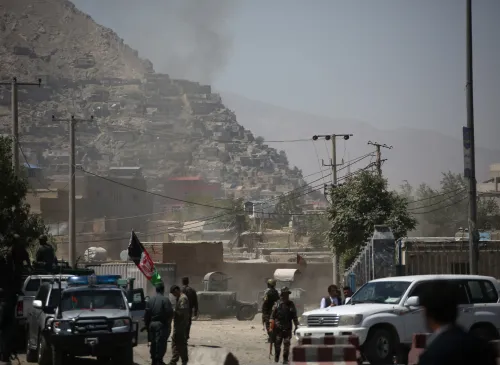
The report also flagged the ongoing insurgency in Balochistan, marked by a recent surge in attacks on military convoys, as a significant and worsening challenge. The province has long been a theatre for low-intensity conflict, and analysts warn that the uptick in violence could further entrench security-state logic in Islamabad's policymaking.
Pakistan-Afghanistan Border: A Deteriorating Relationship
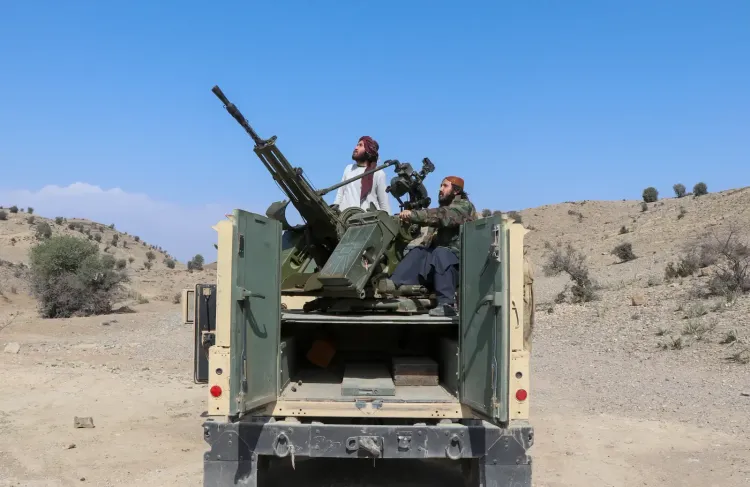
The report highlights how border tensions between Pakistan and Afghanistan escalated sharply after the Taliban's return to power in 2021 — contrary to Islamabad's initial expectations that the new Kabul regime would help secure the western frontier. Instead, clashes broke out along the Pakistan–Afghanistan border, and Pakistan has since experienced a marked surge in militant attacks.
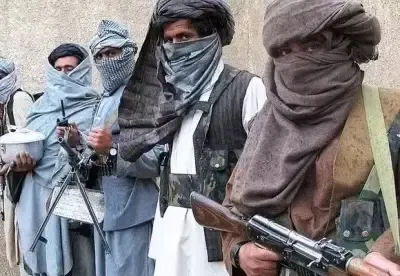
Islamabad has repeatedly accused the Taliban administration of providing safe havens to the Tehreek-e-Taliban Pakistan (TTP), which it holds responsible for many of the attacks. The Taliban, however, rejects these allegations and, according to the report, holds Pakistan responsible for its own security problems — leaving the bilateral relationship in a state of mutual recrimination with no resolution in sight.
What Comes Next
The report's broader concern is structural: unless Pakistan breaks the pattern of using security threats to justify military entrenchment, neither democratic consolidation nor sustainable economic reform is likely to take hold. As the country heads deeper into a complex web of internal and external pressures, observers will be watching whether civilian institutions can assert meaningful oversight — or whether the security establishment once again sets the national agenda.
Point of View
Not situational: Pakistan's security crises are not exceptional shocks but recurring inputs into a well-worn institutional machine. The convergence of the TTP threat, Balochistan unrest, and a hostile Afghanistan frontier gives the military establishment an almost textbook pretext for expanding its role — and Western financial backing has historically underwritten exactly that dynamic. What the report does not fully reckon with is whether any civilian government in Islamabad currently has the political capital or institutional leverage to break the cycle. Without that analysis, the warning, however accurate, risks being diagnostic without being prescriptive.
NationPress
23 Oct 2026
Frequently Asked Questions
What does the report say about Pakistan's military influence?
The International Centre for Peace Studies report warns that Pakistan's security establishment is likely to exploit the country's overlapping domestic and regional crises to expand military influence and justify increased defence spending. It describes this as a continuation of a long-standing historical pattern rather than a new development.
What is the TTP and why does it matter to Pakistan?
The Tehreek-e-Taliban Pakistan (TTP) is a militant group that Pakistan accuses the Afghan Taliban of sheltering, holding it responsible for a surge in attacks inside Pakistani territory. The Taliban administration rejects these allegations, leaving the Pakistan–Afghanistan relationship in a state of mutual blame.
How have Pakistan–Afghanistan relations deteriorated since 2021?
Contrary to Islamabad's expectations, the Taliban's return to power in 2021 did not secure Pakistan's western border — instead, border clashes broke out and militant attacks inside Pakistan surged. Pakistan has repeatedly accused the Taliban of providing safe havens to the TTP, accusations the Taliban denies.
What is the situation in Khyber Pakhtunkhwa and Balochistan?
A surge in militant attacks in Khyber Pakhtunkhwa has deepened tensions between the federal government and the provincial administration, which advocates localised counterterrorism strategies. In Balochistan, a separate insurgency marked by recent attacks on military convoys represents an ongoing and significant security challenge, according to the report.
Why has Western support been relevant to Pakistan's military expansion?
The report notes that Pakistani authorities have at various times received Western financial and military support while framing domestic and regional threats as justification for defence spending increases. It warns this dynamic could recur, with the Afghanistan threat again serving as a catalyst for military entrenchment backed by external funding.