Are Pakistani Terror Groups Targeting Chinese Investments in Afghanistan?
Synopsis
Pakistan's ties with militant groups may be strategically aimed at curbing Chinese investments in Afghanistan. Recent attacks raise significant security concerns, highlighting the ongoing tension. Will Afghanistan's economic future hinge on resolving these militant threats?
Key Takeaways
Pakistan's support for militants aims to undermine Chinese investments in Afghanistan.
Recent attacks by ISKP demonstrate ongoing security challenges .
The Taliban's governance impacts foreign investment in the region.
International community action is crucial for economic development .
Accusations of cross-border militancy against Pakistan persist.
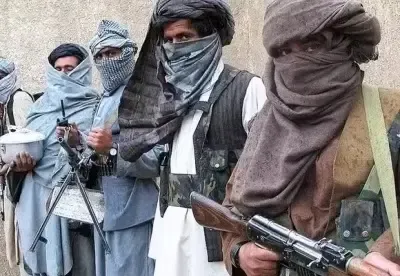
Kabul, Jan 26 (NationPress) Analysts assert that Pakistan’s involvement with militant organizations has strategic motives, notably undermining Chinese investments in Afghanistan to maintain its regional dominance and exert pressure on the Afghan Taliban regarding Tehrik-e-Taliban Pakistan (TTP) hideouts, as detailed in a report released on Monday.
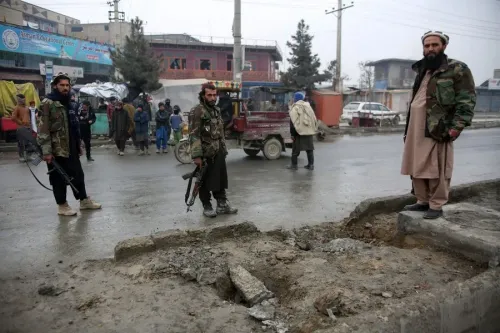
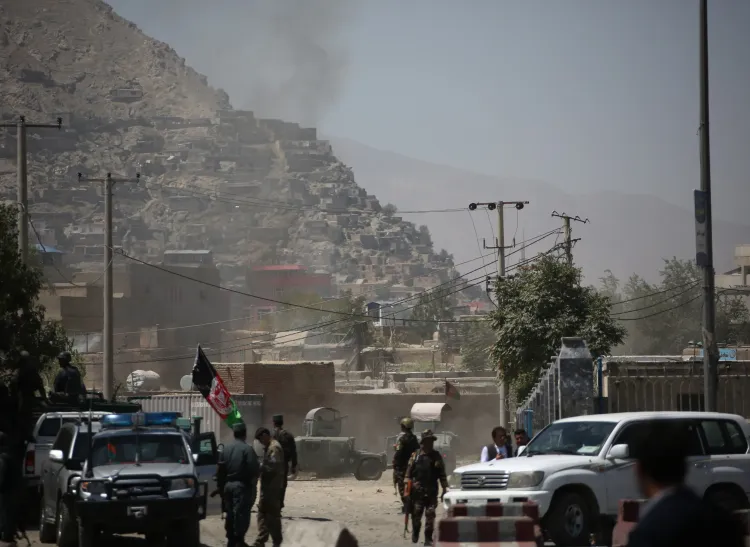
The report underscores the security complications that threaten foreign economic interests in Afghanistan, citing the January 2026 attack on a Kabul eatery by the Islamic State Khorasan Province (ISKP) as a prime example.
As reported by Khaama Press, Afghanistan's prominent news outlet, Pakistan refutes claims of cross-border insurgency, while Taliban officials and certain analysts suggest that networks supported by Pakistan enable ISKP activities in the area.
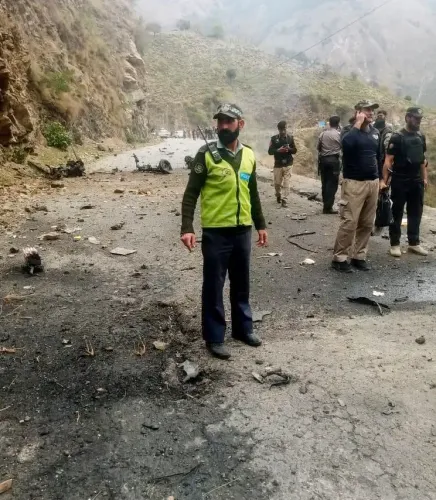
On January 19, 2026, a suicide bombing at a Chinese-operated restaurant in Kabul’s Shahr-e-Naw district resulted in multiple casualties, including Chinese citizens. The ISKP took responsibility, characterizing the attack as aimed at diminishing Chinese presence in Afghanistan. This incident exemplifies a troubling trend of violence directed at Chinese interests within the nation.
Since the Taliban regained authority in August 2021, Chinese involvement in Afghanistan has persisted despite ongoing ISKP assaults on Chinese entities. Significant events include a 2022 hotel attack in Kabul targeting Chinese individuals and subsequent attacks on Chinese laborers. Analysts continue to debate whether these incidents represent a coordinated assault or merely opportunistic violence.
Pakistan has long been accused of endorsing certain militant factions while combating others — a claim that Islamabad firmly denies.
Critics reference groups such as Lashkar-e-Taiba (LeT), which Pakistan officially banned post the 2008 Mumbai attacks, although the enforcement of this ban is often questioned by India and international observers.
According to Taliban spokesman Zabihullah Mujahid, Pakistan’s Inter-Services Intelligence (ISI) has facilitated the movement of ISKP operatives, particularly amid escalating border tensions from 2024-2025.
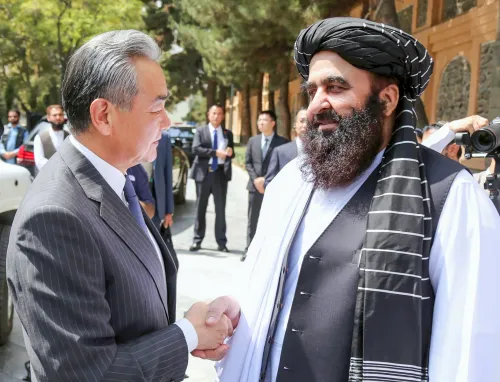
The report further elaborates that Chinese investments in Afghanistan, encompassing ventures like the Amu Darya oil development and the Mes Aynak copper mine, have progressed slowly due to various factors: security apprehensions, the Taliban’s administrative capabilities, international sanctions, and doubts about commercial viability.
Until the international community formulates strategies to address the fundamental sources of militant capacity in the region — whether due to state failure or deliberate policies — Afghanistan’s economic advancement will remain hampered by ongoing security threats.
Point of View
I acknowledge the complexities surrounding Pakistan's involvement with militant groups and their implications for regional stability. Our nation must remain vigilant and informed about these dynamics, as they significantly impact Afghanistan's economic viability and international relations.
NationPress
2 Oct 2026
Frequently Asked Questions
What is the primary goal of Pakistan's engagement with militant groups?
Analysts suggest that Pakistan aims to deter Chinese investments in Afghanistan and maintain its regional influence by supporting these groups.
What recent incident highlighted the security challenges in Afghanistan?
The suicide bombing at a Chinese-owned restaurant in Kabul on January 19, 2026, underscores the persistent security issues affecting foreign investments.
How has the Taliban's return to power influenced Chinese investments?
Since the Taliban regained power in August 2021, there have been ongoing ISKP attacks on Chinese targets, impacting the flow of Chinese investments.
What do critics say about Pakistan's support for militant groups?
Critics argue that Pakistan selectively supports certain militant organizations, while denying involvement in cross-border militancy.
What factors are hindering Chinese investments in Afghanistan?
Concerns about security, the Taliban's governance abilities, international sanctions, and questions about the commercial viability of projects are all contributing factors.