CM Yogi Hits Out at Pre-2017 UP Job Nepotism
Synopsis
Chief Minister Yogi Adityanath has alleged that before 2017, government jobs in Uttar Pradesh were a family monopoly and candidates were extorted by an 'uncle-nephew duo' — a pointed dig at the Samajwadi Party's record on public-sector recruitment.
Key Takeaways
CM Yogi Adityanath posted on 15 July 2026 alleging that before 2017 , Uttar Pradesh government jobs were controlled by a single political family.
He used the phrase 'chacha-bhaatija' (uncle-nephew) to allege that a corrupt duo extracted money from job aspirants whenever vacancies arose.
The remark is widely read as targeting the Samajwadi Party and its leaders Mulayam Singh Yadav and Akhilesh Yadav , who held power before March 2017 .
Since 2017 , the Yogi government has conducted large-scale online recruitment drives for police, teachers and subordinate services, citing transparency as a key reform.
Millions of young job aspirants in Uttar Pradesh form the core audience for this political messaging, making recruitment integrity a high-stakes electoral issue.
Upcoming UPPSC and subordinate services notifications will test whether the political rhetoric is matched by fresh hiring announcements.
Uttar Pradesh Chief Minister Yogi Adityanath on Wednesday, 15 July 2026, sharply criticised the recruitment practices that prevailed in the state before 2017, alleging that government jobs were treated as the exclusive preserve of a single political family and that corruption was endemic in the hiring process.
Posting in Hindi on X, CM Yogi wrote: 'वर्ष 2017 के पहले... सरकारी नौकरी पर एक खानदान का अधिकार था।' ['Before the year 2017... one family had a monopoly over government jobs.'] He further alleged that whenever a vacancy did emerge, an 'uncle-nephew duo' would surface to extract money from candidates — a pointed reference widely read as targeting the Samajwadi Party leadership.
Context
The statement is the latest in a long line of BJP attacks framing the Samajwadi Party's tenures under Mulayam Singh Yadav and his son Akhilesh Yadav as emblematic of dynastic, family-first governance. Mulayam Singh Yadav served multiple terms as Chief Minister of Uttar Pradesh, and Akhilesh Yadav held the post from 2012 to 2017. The phrase 'chacha-bhaatija' — uncle-nephew — has become a recurring shorthand in Uttar Pradesh political discourse to describe the Yadav family's inner circle.
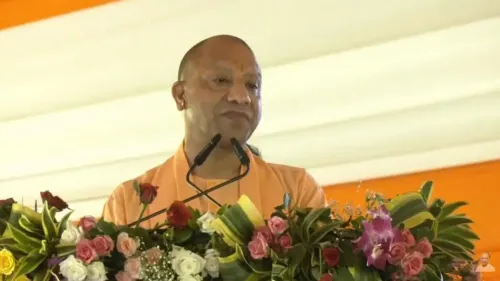
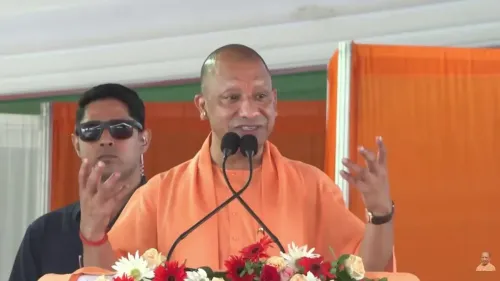
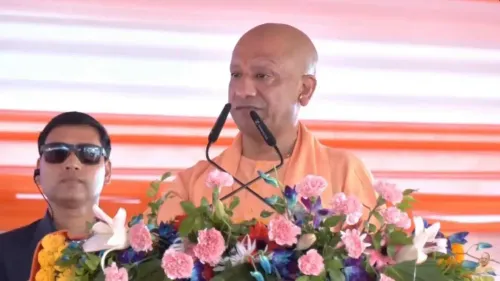
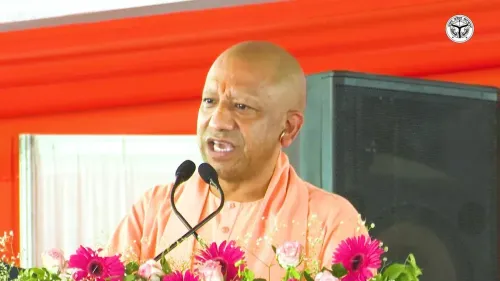
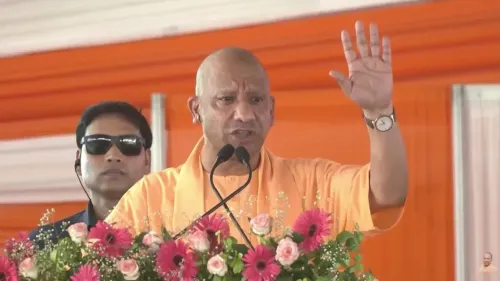
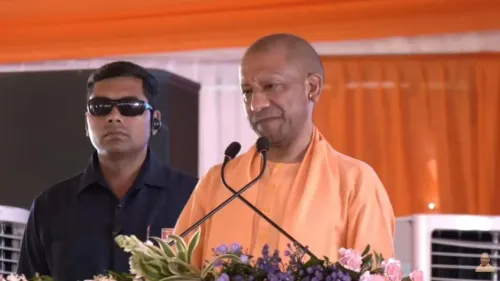
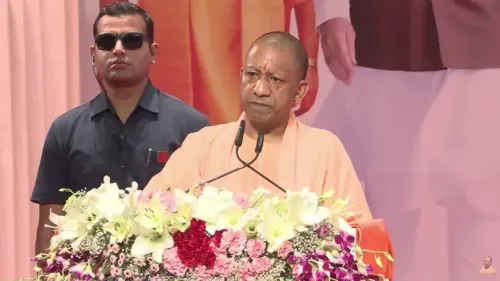
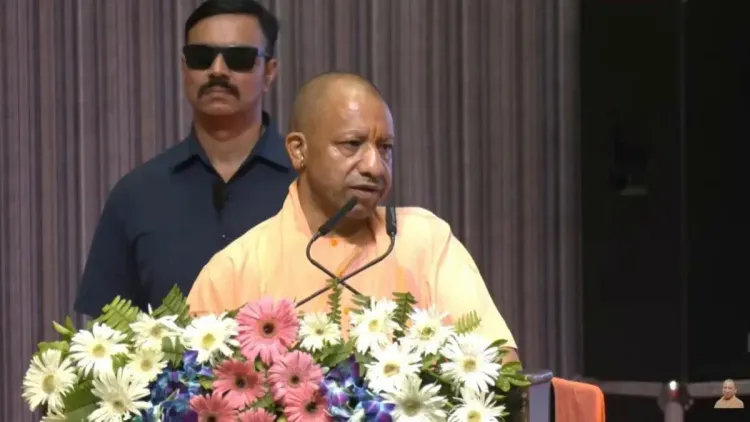
The post carries a video attachment, suggesting it may be a clip of CM Yogi addressing a public gathering or party event, though the specific occasion has not been independently confirmed.
Policy Backdrop
Since assuming office in March 2017, the Yogi Adityanath government has consistently positioned itself as a corrective to alleged irregularities in state recruitment. Large-scale drives for police constables, teachers under the Basic Shiksha Parishad, and subordinate services have been conducted through online platforms with centralised oversight, aimed at reducing scope for middlemen and cash-for-job arrangements.
The Uttar Pradesh Public Service Commission (UPPSC) and subordinate services boards have periodically issued recruitment notifications covering hundreds of thousands of posts, with the administration publicising transparent examination schedules as a governance benchmark. Critics, however, have pointed to paper-leak controversies and delays in some recruitment cycles as ongoing challenges.
Stakeholders and Impact
Uttar Pradesh has one of the largest pools of government-job aspirants in the country, with millions of young people appearing for state-level competitive examinations each year. Allegations of nepotism and bribery in recruitment directly affect this constituency, making the issue politically potent for both the ruling party and the opposition.
For the Samajwadi Party, led today by Akhilesh Yadav, such attacks present a recurring reputational challenge. The party has denied corruption charges and countered that the current administration has its own pending recruitment backlogs and examination irregularities.
What's Next
Upcoming notifications from the UPPSC and state subordinate services boards will be closely watched to see whether the government pairs this political messaging with fresh recruitment announcements. Any parliamentary or assembly questions on pending vacancies and examination timelines are likely to sharpen the debate between the BJP and Samajwadi Party ahead of future electoral cycles in Uttar Pradesh.
Point of View
Sustaining a contrast narrative that has served the BJP well in Uttar Pradesh since 2017. The timing — mid-term in what appears to be an active political year — suggests the party is shoring up its core constituency of aspirational youth ahead of recruitment cycles. Whether the messaging converts into credible new hiring announcements will determine how much political mileage it ultimately yields.
NationPress
15 Jul 2026
Frequently Asked Questions
What did CM Yogi Adityanath say about government jobs before 2017 in UP?
CM Yogi Adityanath alleged that before 2017 , government jobs in Uttar Pradesh were monopolised by one political family, and that an 'uncle-nephew duo' extorted money from candidates whenever vacancies appeared.
Who is the 'chacha-bhaatija' (uncle-nephew) CM Yogi referred to in his post?
While CM Yogi did not name individuals explicitly, the phrase 'chacha-bhaatija' is widely understood in Uttar Pradesh political discourse as a reference to Mulayam Singh Yadav and Akhilesh Yadav of the Samajwadi Party , who held power before 2017 .
How has recruitment in Uttar Pradesh changed after 2017?
After 2017 , the Yogi Adityanath government introduced large-scale online recruitment drives for police, teachers and other departments, with centralised oversight mechanisms aimed at reducing corruption and middlemen in the hiring process.
Why is government job recruitment politically important in Uttar Pradesh?
Uttar Pradesh has one of India's largest pools of competitive-examination aspirants, making recruitment integrity a high-stakes issue that directly influences voter sentiment, particularly among youth.
What is the Samajwadi Party's response to corruption allegations on recruitment?
The Samajwadi Party has denied corruption charges related to recruitment during its tenure and has countered that the current administration faces its own challenges, including paper-leak controversies and delays in some examination cycles.