CM Yogi Honours Kakori Train Action Martyrs at 101st Anniversary
Synopsis
On the 101st anniversary of the Kakori Train Action, UP Chief Minister Yogi Adityanath attended a commemoration in Lucknow, released two historical booklets, and honoured families of freedom fighters and soldiers, keeping the memory of the 1925 anti-colonial heist alive for a new generation.
Key Takeaways
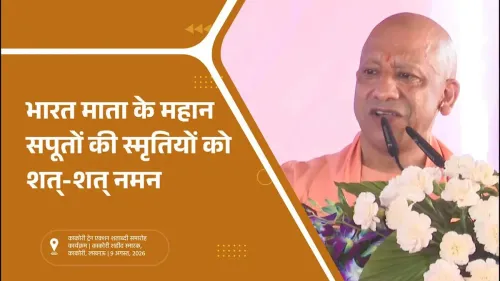
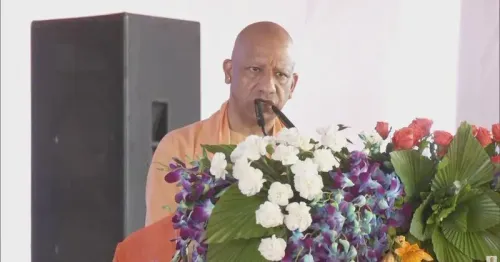
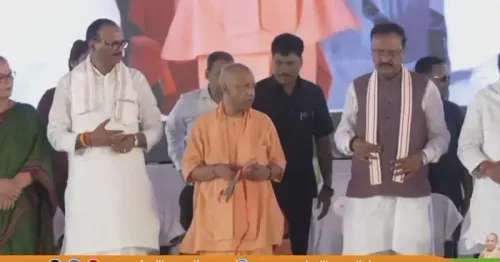
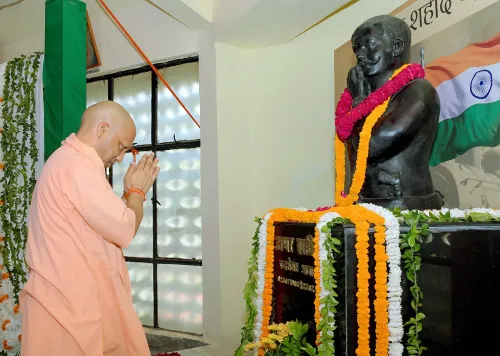
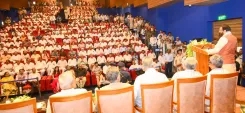
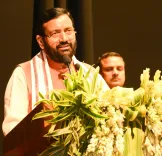
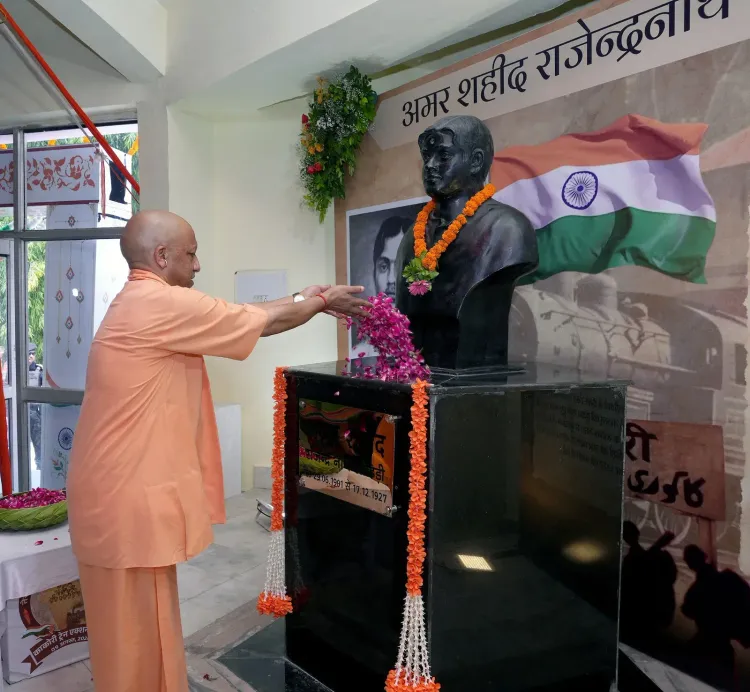
CM Yogi Adityanath attended the 101st anniversary commemoration of the Kakori Train Action in Lucknow on August 9, 2026 .
Two booklets were released: 'Vande Mataram' based on children's paintings and 'Kakori Train Action' based on martyrs' records and official documents.
Families of Kakori revolutionaries and of soldiers who died in service were formally honoured at the event.
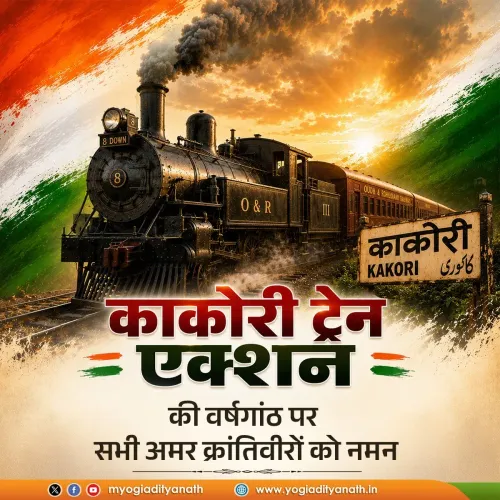
The Kakori Train Action of August 9, 1925 , was carried out by the Hindustan Republican Association to fund armed resistance against British colonial rule.
The event continues a broader Uttar Pradesh government pattern of pairing state-led revolutionary commemoration with educational outreach and publications.
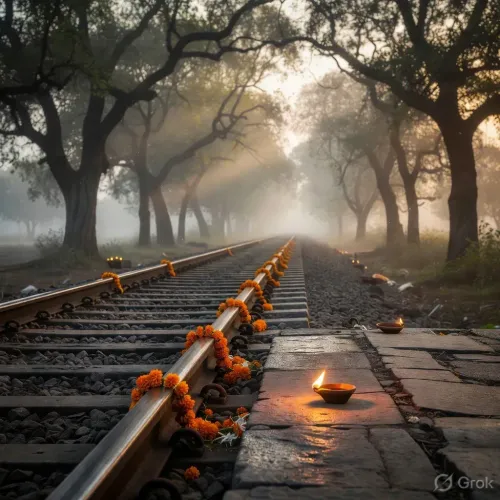
One hundred and one years after a handful of revolutionaries stopped a British train near a small town in Awadh and changed the course of India's freedom struggle, Uttar Pradesh Chief Minister Yogi Adityanath stood in Lucknow on Sunday, August 9, 2026, to salute their memory — and to ensure a new generation carries it forward.
Attending the centenary commemoration of the Kakori Train Action — which he called a 'golden chapter of valour, self-respect, and love for the nation' — CM Yogi paid tribute to the revolutionaries of the Hindustan Republican Association who executed the daring heist on August 9, 1925. The date is not incidental: it is also the anniversary of the Quit India Movement of 1942, making it one of the most charged dates on India's revolutionary calendar.
Two Booklets, One Mission: Keeping the Memory Alive
The occasion saw the release of two publications. The first, titled 'Vande Mataram', is built around paintings by children — a deliberate choice to root the memory of 1925 in the imagination of the youngest citizens. The second, 'Kakori Train Action', draws on records related to the martyrs and official government documents, giving the event a historical-archival weight beyond ceremonial tribute.
Together, the booklets represent a pattern that has become familiar in Uttar Pradesh: state-led commemoration that pairs solemn remembrance with educational outreach, embedding revolutionary history into the public consciousness through schools, art, and published record.
Families of Martyrs and Soldiers Honoured
The ceremony went beyond remembrance. Families of the Kakori revolutionaries and families of soldiers who gave their lives in the defence of independent India were formally honoured at the event — a gesture that draws a deliberate line of continuity between the sacrifice of 1925 and the sacrifices of the armed forces today. It is the kind of symbolic bridge that state commemorations rarely make explicit, and it gave the Lucknow gathering a resonance that stretched well past the history books.
What the Kakori Train Action Was
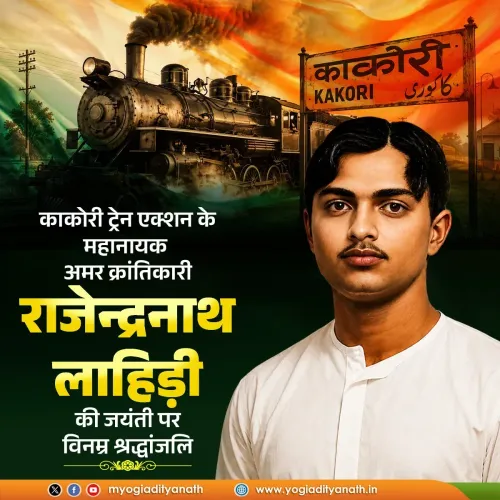
On August 9, 1925, members of the Hindustan Republican Association — among them Ram Prasad Bismil, Ashfaqullah Khan, Roshan Singh, and Rajendra Lahiri — looted the British Indian Railways train at Kakori, near Lucknow, to fund their armed resistance against colonial rule. The British response was swift and severe: mass arrests, trials, and executions followed. Four revolutionaries were hanged; many others were transported to the Andaman Islands. The action became a defining episode of militant nationalism in northern India, and its leaders became icons of the independence movement.
A century later, the state that was once the theatre of that resistance is now the custodian of its memory. The 101st anniversary marks the first year after the centennial, but the scale of Sunday's event suggests the commemoration has acquired a momentum of its own — one unlikely to stop at a round number.
Point of View
The event constructs a seamless narrative of sacrifice that spans colonial and post-colonial India. The release of educational booklets — especially one anchored in children's art — signals an intent to embed this historical framing into the next generation's civic identity. Politically, such high-profile tributes to pre-Independence revolutionaries allow the BJP-led government to claim a broad nationalist legacy that cuts across ideological lines.
NationPress
9 Aug 2026
Frequently Asked Questions
What was the Kakori Train Action?
The Kakori Train Action took place on August 9, 1925 , when members of the Hindustan Republican Association , including Ram Prasad Bismil and Ashfaqullah Khan , looted a British Indian Railways train near Kakori in present-day Uttar Pradesh to fund armed resistance against British colonial rule.
Why is August 9 significant for India's freedom struggle?
August 9 marks both the Kakori Train Action of 1925 and the launch of the Quit India Movement in 1942 , making it one of the most important dates in India's anti-colonial history.
What did CM Yogi Adityanath do at the Kakori commemoration in 2026?
CM Yogi Adityanath attended the 101st anniversary event in Lucknow , released two booklets titled 'Vande Mataram' and 'Kakori Train Action' , and honoured families of the Kakori martyrs and soldiers who died defending India.
Who were the main revolutionaries involved in the Kakori Train Action?
The key figures included Ram Prasad Bismil , Ashfaqullah Khan , Roshan Singh , and Rajendra Lahiri , all members of the Hindustan Republican Association . Four revolutionaries were hanged by the British following trials after the action.
What booklets were released at the Kakori centenary event in Lucknow?
Two booklets were released: 'Vande Mataram' , featuring paintings by children, and 'Kakori Train Action' , based on records related to the martyrs and official government documents.