CM Yogi pays tribute to Rashtrakavi Maithili Sharan Gupt on Jayanti
Synopsis
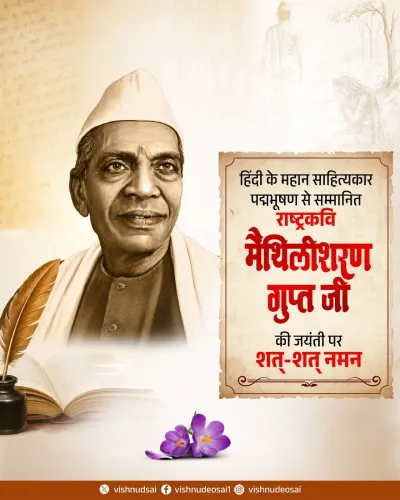
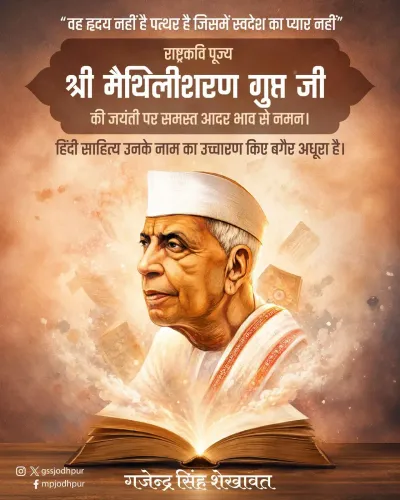
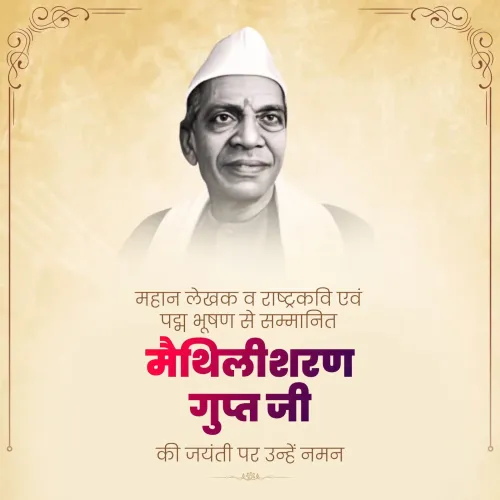
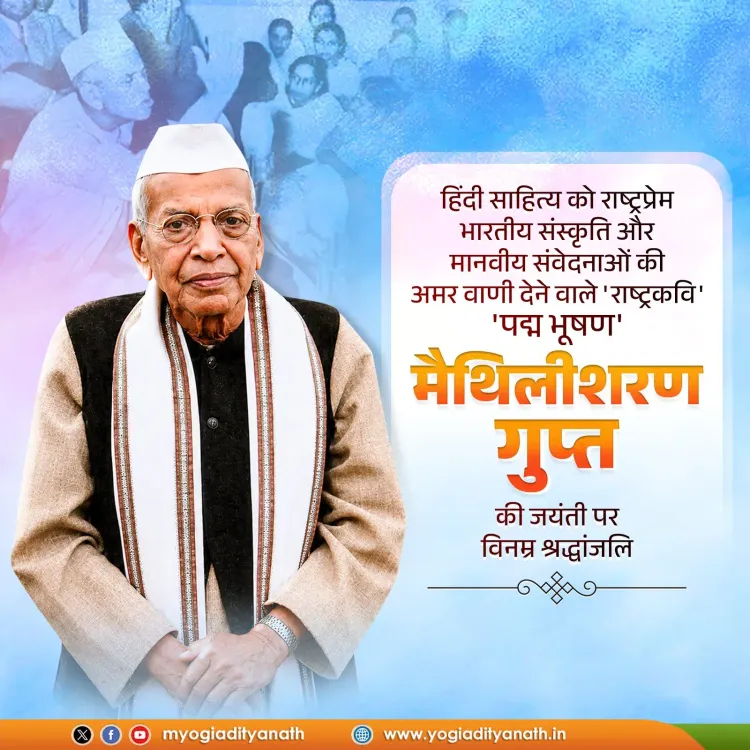
Uttar Pradesh Chief Minister Yogi Adityanath marked the Jayanti of Rashtrakavi and Padma Bhushan awardee Maithili Sharan Gupt on 3 August, quoting the poet's Gita-inspired verse and calling his words an enduring inspiration for truth, sacrifice, and dignity across generations.
Key Takeaways
CM Yogi Adityanath paid tribute to Maithili Sharan Gupt on his birth anniversary on 3 August .
Gupt ( 1886–1964 ) held the titles Rashtrakavi (National Poet) and Padma Bhushan awardee.
CM Yogi quoted a couplet linking the Gita's teaching to victory in the 'battle of life.' Gupt's poetry centred on nationalism, Indian culture, and human values during and after the independence era.
The tribute aligns with a broader BJP state-government practice of marking Hindi literary anniversaries tied to cultural nationalism.
Gupt's native place, Chirgaon , falls in Jhansi district, Uttar Pradesh .
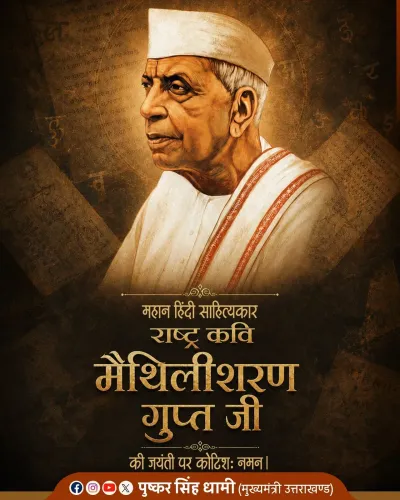
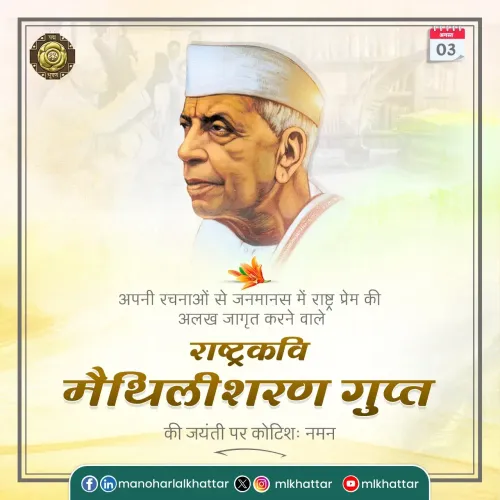
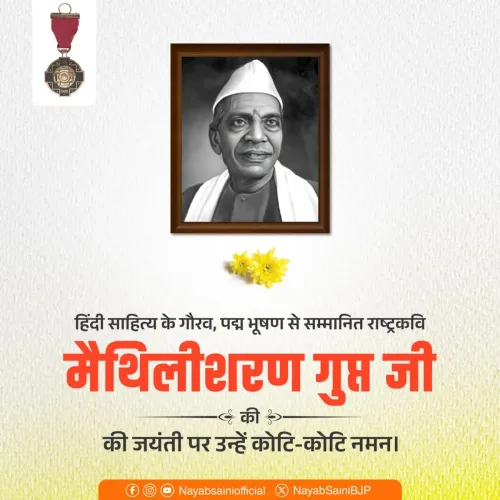
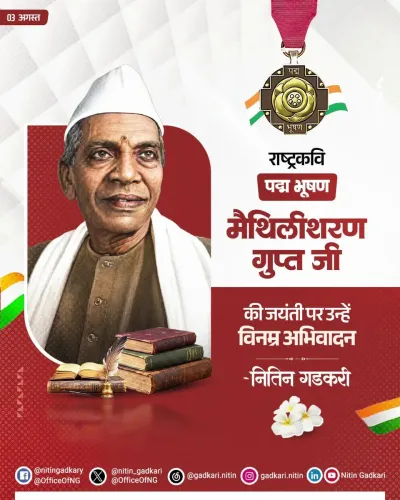
Words written over a century ago to rouse a nation still echo in classrooms, on stages, and in the hearts of Hindi readers across India. On the birth anniversary of Maithili Sharan Gupt, Uttar Pradesh Chief Minister Yogi Adityanath offered a tribute to the poet on Monday, 3 August, honouring a literary voice that shaped how modern India understood patriotism, sacrifice, and dignity.
Quoting one of Gupt's celebrated couplets — 'उपदेश गीता का हमारा युद्ध का ही गीत है, जीवन-समर में भी जनों को जो दिलाता जीत है' ('The teaching of the Gita is our song of war; it is that which leads people to victory even in the battle of life') — CM Yogi called his words an 'immortal voice of patriotism, Indian culture, and human sensibilities' for Hindi literature.
The poet who became a nation's voice
Maithili Sharan Gupt (1886–1964) earned the title Rashtrakavi — National Poet — not by proclamation alone but by the weight of his verse. Writing through the independence movement and into the republic's early decades, Gupt anchored his poetry in the twin pillars of rashtra (nation) and sanskriti (culture), drawing on the Ramayana, the Mahabharata, and the Gita to frame contemporary struggles in the language of dharma and sacrifice. The Government of India recognised his contribution with the Padma Bhushan, one of the country's highest civilian honours. His most celebrated works — including Bharat-Bharati and Saket — did not merely celebrate India; they argued for it, mourning colonial subjugation and insisting on the civilisational worth of a people and their traditions. That argument still resonates, which is why his Jayanti continues to draw public acknowledgment from leaders across the political spectrum.BJP's consistent literary calendar
The tribute fits a visible pattern: state governments led by the Bharatiya Janata Party, and particularly Uttar Pradesh under CM Yogi, have made a point of marking the birth and death anniversaries of pre- and post-independence Hindi poets associated with cultural nationalism. For a state that is both the heartland of Hindi literature and home to Gupt's native Chirgaon in Jhansi district, the observance carries local pride alongside ideological continuity. CM Yogi's post closed with a forward-looking note — that Gupt's words 'will continue to inspire generations to walk the path of truth, sacrifice, and dignity' — framing a literary anniversary as a living civic lesson, not a museum exhibit. In a country where the boundary between cultural memory and political identity is perpetually contested, a Rashtrakavi's Jayanti is never just a date on the calendar.Point of View
Using literary anniversaries to reinforce a narrative that links classical Indian values with contemporary governance. For Uttar Pradesh specifically, honouring a poet born in Jhansi district doubles as regional pride and ideological signalling. The choice of Gupt's Gita couplet — framing life itself as a battle requiring righteous action — is not incidental; it reflects a recurring rhetorical move that connects pre-independence patriotic literature to present-day political identity. Analysts watching cultural nationalism in India's Hindi belt will note how such observances steadily build a symbolic ecosystem around the ruling dispensation.
NationPress
17 Sept 2026
Frequently Asked Questions
Who was Maithili Sharan Gupt?
Maithili Sharan Gupt (1886–1964) was a pioneering Hindi poet awarded the title Rashtrakavi (National Poet) and the Padma Bhushan. His works, including 'Bharat-Bharati' and 'Saket', focused on Indian nationalism, culture, and human values.
Why is Maithili Sharan Gupt called Rashtrakavi?
Gupt earned the title Rashtrakavi because his poetry powerfully articulated the spirit of Indian nationalism and cultural pride during the independence movement, making him a defining voice of patriotic Hindi literature.
When is Maithili Sharan Gupt Jayanti celebrated?
Maithili Sharan Gupt's Jayanti is observed on 3 August each year, marking the birth anniversary of the poet who was born in 1886.
What did CM Yogi say about Maithili Sharan Gupt?
CM Yogi Adityanath called Gupt the 'immortal voice of patriotism, Indian culture, and human sensibilities' for Hindi literature, quoting a couplet about the Gita's teaching and stating that his words will inspire generations to walk the path of truth, sacrifice, and dignity.
Where was Maithili Sharan Gupt from?
Maithili Sharan Gupt was from Chirgaon in Jhansi district, Uttar Pradesh, which is why the state holds a particular connection to his literary legacy.