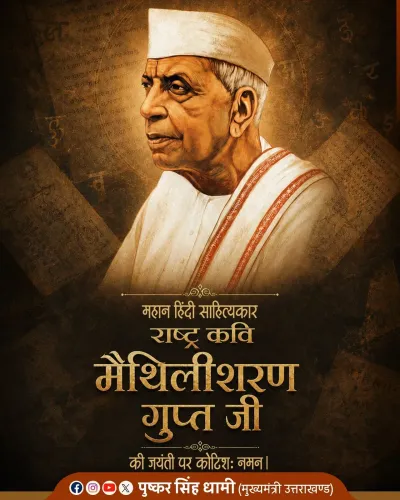
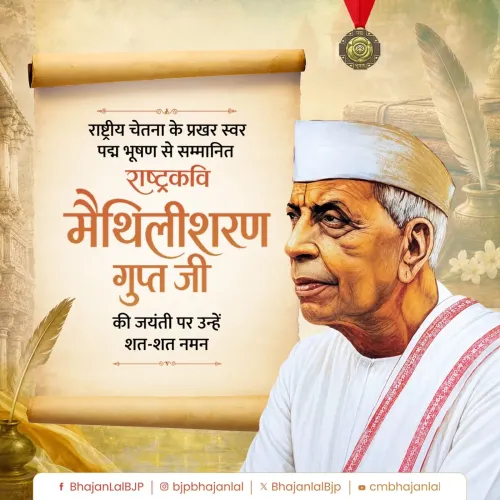
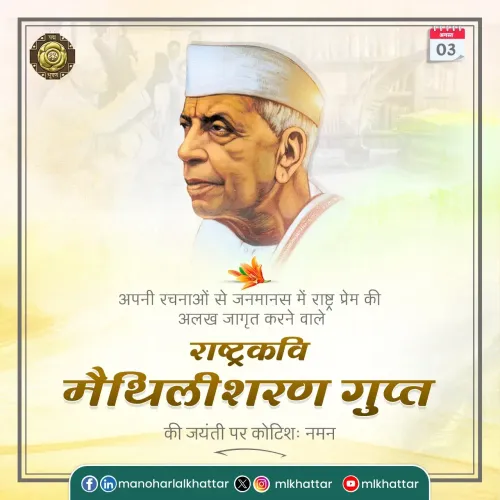
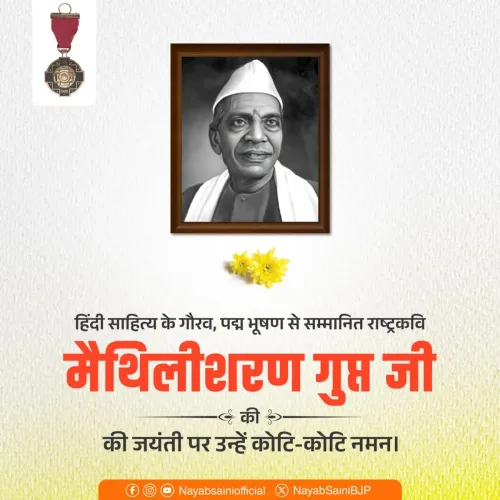
Rajnath Singh pays tribute to Rashtrakavi Maithili Sharan Gupt
Synopsis
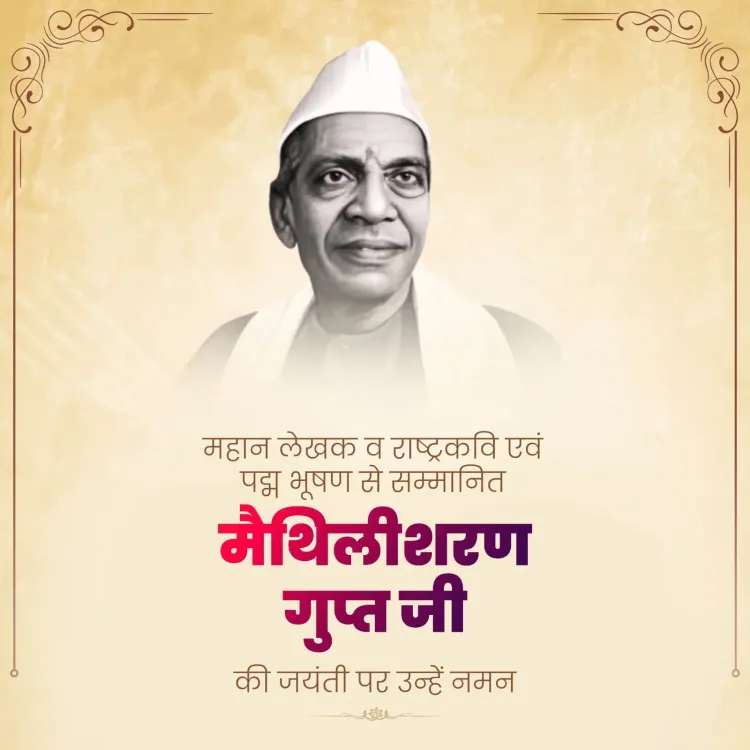
Union Defence Minister Rajnath Singh marked the birth anniversary of Rashtrakavi Maithili Sharan Gupt on 3 August 2026, honouring the Hindi poet's role as architect of modern Hindi poetry and a defining voice of India's national and cultural renaissance.
Key Takeaways
Rajnath Singh paid tribute to Rashtrakavi Maithili Sharan Gupt on his birth anniversary on 3 August 2026 .
Gupt ( 1886–1964 ) was titled Rashtrakavi — National Poet — for his foundational role in modern Hindi literature.
His landmark work Bharat Bharati ( 1912 ) became a defining text of India's nationalist and cultural awakening.
Singh described Gupt as the 'architect of modern Hindi poetry' and a voice of national-cultural renaissance.
The tribute aligns with a broader pattern of senior Indian leaders commemorating pre-independence literary icons linked to Hindi and nationalist traditions.
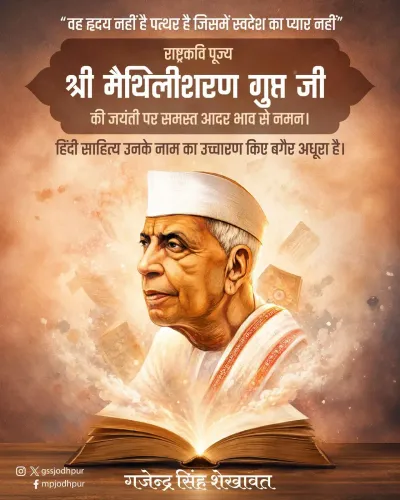
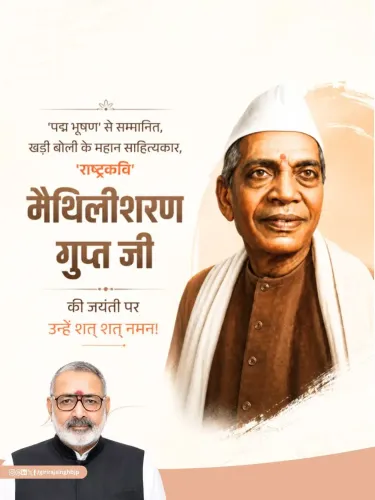
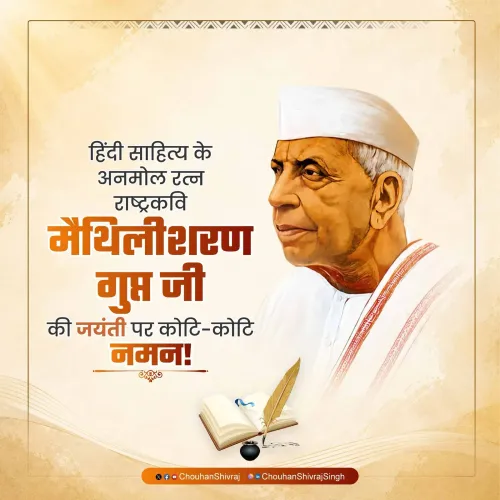
On the birth anniversary of one of modern Hindi literature's most enduring voices, Union Defence Minister Rajnath Singh offered a heartfelt tribute to Rashtrakavi Maithili Sharan Gupt on Monday, 3 August 2026 — honouring a poet whose words once gave the freedom struggle its literary soul.
In his post, Singh wrote: 'राष्ट्रकवि मैथिलीशरण गुप्त जी की जयंती पर उन्हें विनम्र श्रद्धांजलि' — 'Humble tribute to Rashtrakavi Maithili Sharan Gupt ji on his birth anniversary.' He described Gupt as the architect of modern Hindi poetry and a fierce voice of national and cultural renaissance, one who gave fresh expression to patriotism, cultural consciousness, and Indian life-values through his powerful pen.
The poet who gave nationalism a language
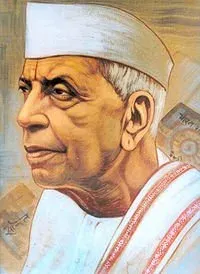
Maithili Sharan Gupt (1886–1964) was conferred the title Rashtrakavi — National Poet — a distinction that few writers in any language earn. Born in Chirgaon, Uttar Pradesh, Gupt came of age at a moment when India was searching for a cultural vocabulary to match its political awakening. He provided one. His landmark work Bharat Bharati (1912) was a clarion call — a meditation on India's past glory, present subjugation, and future promise that resonated deeply with the independence movement.
His verse did not merely decorate the era; it helped define it. Drawing from the Ramayana, the Mahabharata, and Buddhist traditions, Gupt wove a tapestry of rashtrabhakti (national devotion) and kartavyanishtha (dedication to duty) that Singh specifically invoked in his tribute. These are not archaic sentiments — they remain live touchstones in India's ongoing conversation about identity and heritage.
A routine tribute with a consistent political grammar
Singh's tribute follows a well-established pattern in Indian public life: senior leaders marking the birth anniversaries of pre-independence literary and cultural icons, particularly those associated with Hindi and nationalist traditions. For the BJP, such commemorations carry an added resonance — they connect the party's cultural nationalism to a lineage of poets and thinkers who articulated Indianness long before Independence.
Gupt's immortal works, as Singh noted, continue to inspire reverence for Indian culture and a sense of civic duty. That message, delivered on a weekday morning, lands quietly but deliberately.
Point of View
Honouring figures like Gupt on their birth anniversaries is part of a consistent grammar of governance. The choice to invoke Gupt's themes of rashtrabhakti and kartavyanishtha is not incidental — these are precisely the values the ruling dispensation seeks to keep in public circulation. Such tributes, while ceremonial, serve as soft reinforcement of a cultural-nationalist narrative.
NationPress
17 Sept 2026
Frequently Asked Questions
Who is Maithili Sharan Gupt?
Maithili Sharan Gupt (1886–1964) was a Hindi poet from Chirgaon, Uttar Pradesh , conferred the title Rashtrakavi — National Poet. His work Bharat Bharati (1912) is considered a foundational text of Hindi literary nationalism and the Indian independence movement.
Why is Maithili Sharan Gupt called Rashtrakavi?
Gupt earned the title Rashtrakavi — meaning National Poet — for his prolific body of work that championed patriotism, cultural revival, and Indian values at a time when the country was mobilising for independence. His verse gave the nationalist movement a powerful literary voice.
What did Rajnath Singh say about Maithili Sharan Gupt?
Rajnath Singh described Gupt as the architect of modern Hindi poetry and a fierce voice of national and cultural renaissance, crediting him with giving fresh expression to patriotism, cultural consciousness, and Indian life-values through his writing.
What is Bharat Bharati by Maithili Sharan Gupt?
Bharat Bharati , published in 1912 , is Maithili Sharan Gupt's most celebrated work — a long poem reflecting on India's past glory, colonial present, and aspirational future. It became widely popular during the freedom movement and is considered a landmark of Hindi nationalist literature.
When is Maithili Sharan Gupt's birth anniversary?
Maithili Sharan Gupt was born on 3 August 1886 . His birth anniversary is observed on 3 August each year, and is marked by tributes from literary organisations, cultural bodies, and political leaders across India.