CM Yogi joins 'Save Democracy' padyatra in Ghaziabad
Synopsis
Uttar Pradesh CM Yogi Adityanath joins a 'Save Democracy, Remove Anarchy' padyatra in Ghaziabad, accusing Congress and the INDIA bloc of destabilising India's democratic institutions and reaffirming BJP's commitment to constitutional values under PM Modi.
Key Takeaways
CM Yogi Adityanath announced participation in the 'Loktatantra Bachao, Anarchata Hatao' padyatra in Ghaziabad on 5 November 2026 .
He accused Congress and the INDIA alliance of attempting to push India's democracy into 'anarchy, instability, and disorder.' The march is framed around protecting constitutional dignity and the supremacy of electoral mandates.
PM Narendra Modi 's leadership was explicitly invoked as the anchor of BJP's democratic commitment.
The event follows BJP 's consistent post- 2014 strategy of positioning itself as the defender of constitutional order against opposition disruption.
Ghaziabad 's location in the Delhi-NCR corridor gives the padyatra significant national visibility.
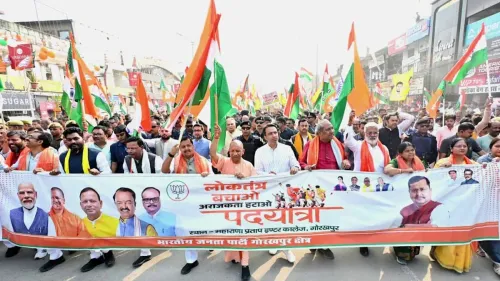
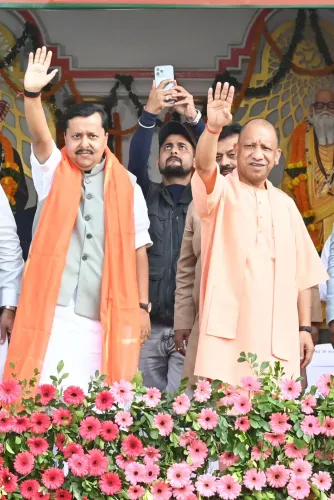
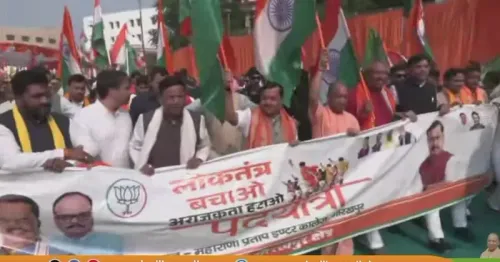
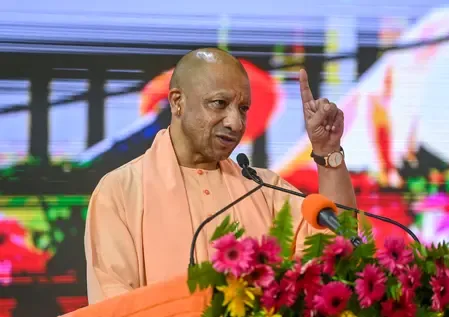
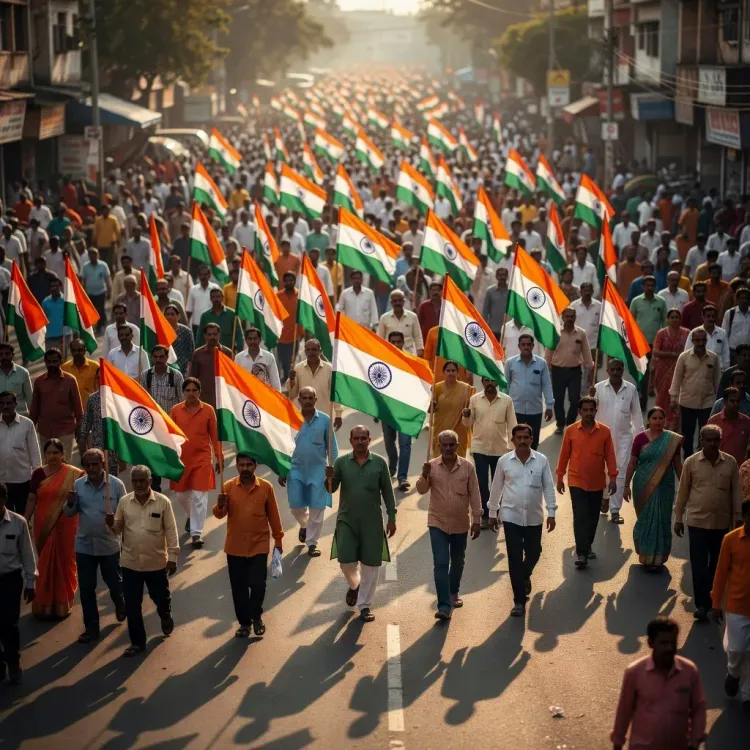
A padyatra bearing the charge of constitutional values rolled into Ghaziabad on Thursday, 5 November 2026, as Uttar Pradesh Chief Minister Yogi Adityanath announced his participation in the 'Loktatantra Bachao, Anarchata Hatao' ('Save Democracy, Remove Anarchy') march — framing it as a direct counter to what the BJP describes as a sustained campaign of political destabilisation by the opposition.
The charge levelled at Congress and the INDIA bloc
CM Yogi did not hold back in his post. He wrote that democracy is 'the national strength built on public trust, constitutional limits, and respect for the electoral mandate' — and that Congress and the INDIA alliance, 'continuously rejected by the people', are attempting to 'throw India's great democracy into the fire of anarchy, instability, and disorder.' The language is blunt and deliberate: by invoking constitutional dignity and the sanctity of electoral mandates, the BJP frames itself not as one party among many, but as the custodian of democratic order itself.
The INDIA coalition — the multi-party opposition grouping assembled in 2023 to mount a united challenge to BJP nationally — has been a recurring target in BJP communications. The ruling party has consistently argued that opposition-led disruptions in legislatures and street protests undermine governance rather than strengthen accountability.
Ghaziabad as the stage, Modi as the anchor
Ghaziabad, an urban district on Uttar Pradesh's western edge and among the state's most politically active constituencies, provides a symbolically charged venue. The city sits in the Delhi-NCR corridor and commands significant media visibility, ensuring the march's message travels well beyond its physical route.
CM Yogi explicitly anchored the event in Prime Minister Narendra Modi's leadership, stating that every BJP worker is committed under Modi's 'distinguished leadership' to protecting democratic values and strengthening India's democracy. The shout-out reinforces the party's internal hierarchy while simultaneously elevating the padyatra from a state-level event to a nationally resonant one.
A pattern bigger than one march
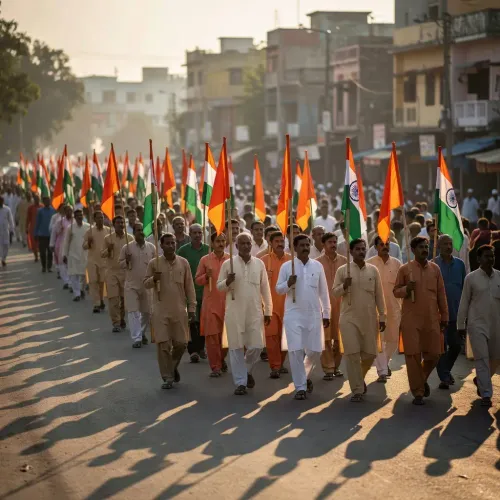
This padyatra fits neatly into BJP's long-running political playbook since its landmark 2014 national victory: occupy the terrain of constitutional legitimacy, cast the opposition as disruptors, and mobilise cadres through street-level demonstrations that double as messaging exercises. The 'save democracy' framing is not new — but deploying it through a padyatra, the most visible form of mass political outreach in Indian politics, signals the party wants the argument felt on the ground, not just heard online.
Reactions from Congress and INDIA bloc partners are awaited. The coming days will show whether the opposition chooses to contest the framing head-on or pivot to governance critiques of its own.
The streets of Ghaziabad today are, in effect, a billboard — and both sides of Indian politics are watching what it says.
Point of View
Forcing the opposition to defend its methods rather than prosecute its agenda. By deploying a padyatra rather than a press conference, CM Yogi grounds the message in the vernacular of mass mobilisation that has historically favoured the BJP's grassroots machinery. The explicit invocation of PM Modi signals that Lucknow and Delhi are singing from the same hymn sheet ahead of what could be a contentious political season. For the INDIA bloc, the challenge is to rebut the framing without appearing to validate it.
NationPress
5 Nov 2026
Frequently Asked Questions
What is the 'Loktatantra Bachao, Anarchata Hatao' padyatra?
It is a BJP-organised foot march held in Ghaziabad on 5 November 2026, aimed at asserting the party's commitment to democratic values and constitutional order while criticising the Congress-led INDIA alliance for alleged political destabilisation.
Why did CM Yogi Adityanath join the Ghaziabad padyatra?
CM Yogi joined to reinforce the BJP's message that India's democratic institutions and electoral mandates must be protected from what the party characterises as anarchy and instability promoted by opposition coalitions.
What is the INDIA alliance and why is BJP targeting it?
The INDIA alliance is a multi-party opposition coalition formed in 2023 to collectively challenge the BJP nationally. The BJP has consistently framed the alliance's protest actions and legislative disruptions as threats to constitutional governance.
What did CM Yogi say about PM Narendra Modi in his post?
CM Yogi stated that every BJP worker is committed, under PM Modi's 'distinguished leadership,' to protecting democratic values and strengthening India's democracy.
Where is the padyatra being held and why is Ghaziabad significant?
The padyatra is in Ghaziabad, an urban district in western Uttar Pradesh within the Delhi-NCR corridor. Its proximity to the national capital gives the event amplified media and political visibility.