CM Yogi Launches ₹342 Crore Projects in Agra
Synopsis
Chief Minister Yogi Adityanath on 25 July 2026 launched 53 development projects worth over ₹342 crore across three Agra assembly constituencies, distributing welfare scheme benefits and framing the city as a Smart, Safe and Future-Ready destination under the double-engine government model.
Key Takeaways
53 development projects worth over ₹342 crore were inaugurated and foundation-stoned in Agra on 25 July 2026 .
Projects span the North, South, and Rural assembly constituencies of Agra district.
Beneficiaries of public welfare schemes received approval letters and certificates at the event.
CM Yogi Adityanath described the push as building a 'Naya Agra' — a Smart, Safe and Future-Ready City.
The event invoked the legacy of Maharaja Surajmal , linking historic identity to contemporary urban goals.
Agra is among the cities selected under the central government's Smart Cities Mission launched in 2015 .
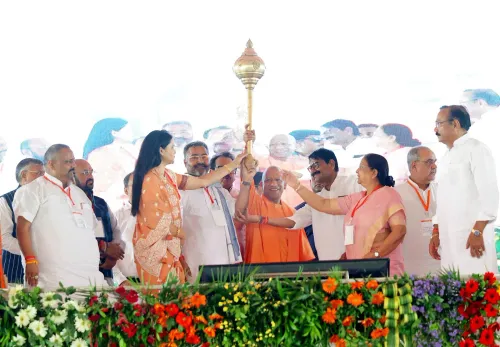
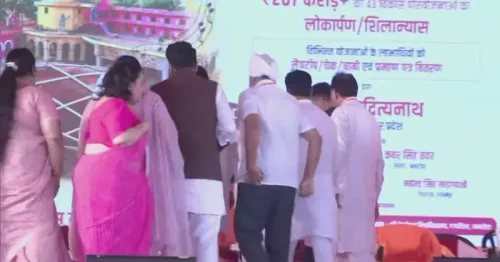
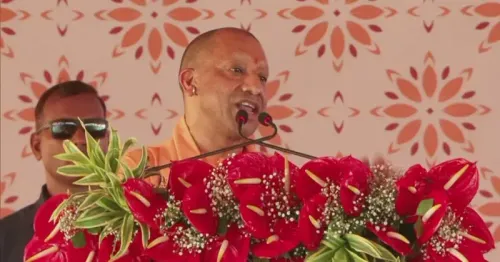
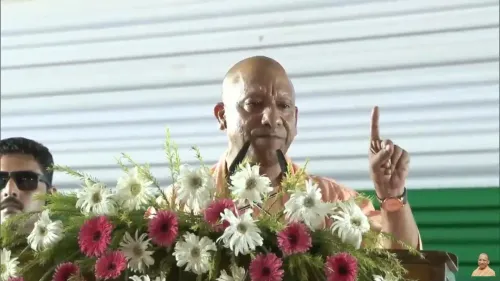
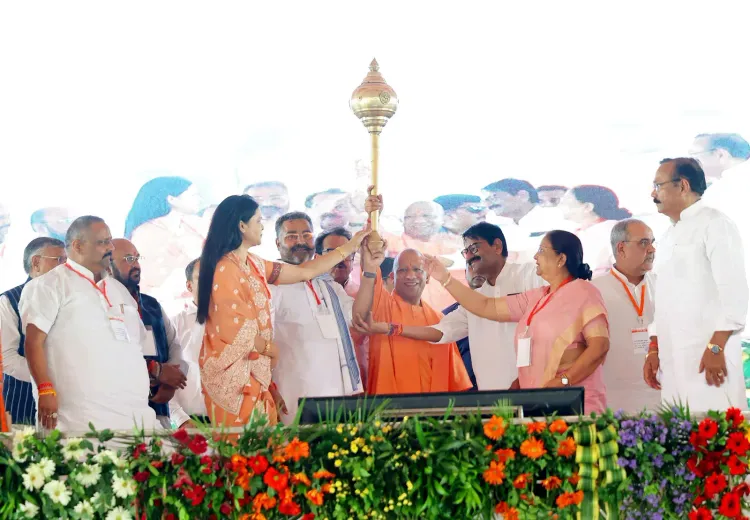
Uttar Pradesh Chief Minister Yogi Adityanath on Saturday, 25 July 2026, inaugurated and laid the foundation stones of 53 development projects worth over ₹342 crore across the North, South, and Rural assembly constituencies of Agra, accelerating the district's ongoing infrastructure push. Beneficiaries of several public welfare schemes were also handed approval letters and certificates at the event.
Context
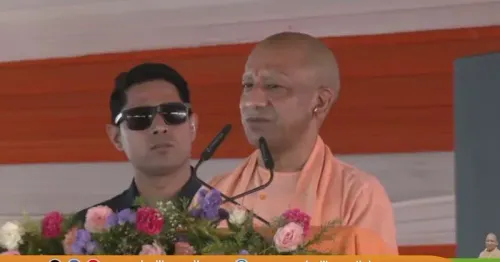
Invoking the legacy of Maharaja Surajmal — the 18th-century Jat ruler venerated for his valour — CM Yogi described Agra as a 'shaurya bhoomi' (land of bravery) and framed today's investments as a continuation of that proud heritage. The Chief Minister stated that under the double-engine government, a 'Naya Agra' (New Agra) is taking shape as a 'Smart, Safe and Future-Ready City'. He extended congratulations to all beneficiaries who received scheme documents at the event.
The phrase 'double-engine government' refers to the alignment of the Bharatiya Janata Party governments at both the state and central levels, a formulation the party has consistently used to highlight coordinated policy delivery in BJP-ruled states.
Policy Backdrop
Agra was selected under the Smart Cities Mission, the 2015 central government initiative that identified 100 cities across India for technology-driven urban upgrades, covering mobility, civic infrastructure, and digital services. The city's inclusion made it eligible for targeted funding for roads, drainage, public spaces, and connected governance systems.
Since 2017, when Yogi Adityanath assumed office, the Uttar Pradesh government has held multiple rounds of project inaugurations in Agra, positioning the historic city — home to the Taj Mahal — as a priority destination for both tourism infrastructure and residential civic amenities. Today's event, spanning three assembly segments, signals an effort to distribute development gains beyond the city centre into rural pockets of the district.
Stakeholders and Impact
Residents across the North, South, and Rural assembly constituencies of Agra are the primary beneficiaries of the 53 projects announced. The simultaneous distribution of scheme approval letters and certificates suggests the event also served as a direct-benefit outreach, connecting individual households to welfare programmes administered by the state government.
For the broader Agra economy — which depends heavily on tourism, small-scale industry, and agriculture in its rural belt — sustained infrastructure investment can improve connectivity, reduce logistical costs, and enhance the quality of urban services that support the district's large visitor footfall.
What's Next
The key measure of impact will be the pace of project execution and fund utilisation, details of which are typically reviewed during Uttar Pradesh state budget sessions and district-level administrative meetings. Civic groups and opposition parties in Agra are likely to track whether the 53 projects are completed within stated timelines and whether the Smart City vision translates into measurable improvements in daily urban services.
With Agra remaining a flagship showcase for Uttar Pradesh's urban renewal ambitions, the rollout of these projects will serve as an early indicator of the state's capacity to deliver on its 'Future-Ready City' promise ahead of upcoming political and administrative milestones.
Point of View
Maximising political visibility in a single outing. By invoking Maharaja Surajmal's legacy, CM Yogi is doing more than historical colour — he is signalling an effort to consolidate support among the Jat community in western Uttar Pradesh, a constituency that has historically oscillated between parties. The 'double-engine government' framing continues to serve as the ideological glue tying state and central spending together in BJP communication. Whether the ₹342 crore translates into tangible urban improvement or remains a headline figure will determine the long-term political dividend of such events.
NationPress
25 Jul 2026
Frequently Asked Questions
What projects did CM Yogi Adityanath launch in Agra on 25 July 2026?
CM Yogi Adityanath inaugurated and laid the foundation stones of 53 development projects worth over ₹342 crore across the North, South, and Rural assembly constituencies of Agra on 25 July 2026.
What is the 'double-engine government' referred to by CM Yogi?
'Double-engine government' is a BJP term describing the advantage of having the same party in power at both the state and central levels, enabling coordinated policy and fund delivery — in this case, between the Yogi Adityanath government in Uttar Pradesh and the central government.
Is Agra part of the Smart Cities Mission?
Yes, Agra was selected under the Smart Cities Mission, the 2015 central government initiative that identified 100 cities across India for technology-driven upgrades in mobility, civic infrastructure, and digital governance.
Who was Maharaja Surajmal and why was he mentioned?
Maharaja Surajmal was an 18th-century Jat ruler celebrated for his military valour and statecraft. CM Yogi invoked his legacy to describe Agra as a 'shaurya bhoomi' (land of bravery), linking the region's historic identity to its contemporary development push.
Who benefits from the Agra development projects announced by CM Yogi?
Residents of Agra's North, South, and Rural assembly constituencies are the primary beneficiaries, along with individuals who received approval letters and certificates for state welfare schemes at the event.