CM Yogi Launches Cashless Health Scheme for UP Teachers in Agra
Synopsis
Chief Minister Yogi Adityanath launched the Mukhyamantri Shikshak Cashless Chikitsa Yojana in Agra on 26 July 2026, extending cashless health coverage to over 7.50 lakh higher-education teachers and their dependents in Uttar Pradesh, backed by an MoU with Punjab National Bank.
Key Takeaways
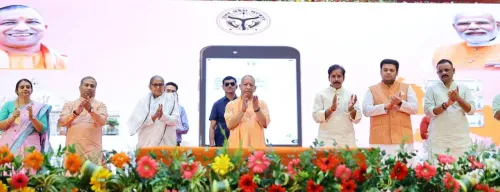
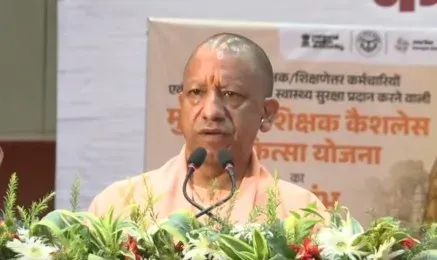
CM Yogi Adityanath attended the formal launch of the Mukhyamantri Shikshak Cashless Chikitsa Yojana in Agra on 26 July 2026 .
The scheme provides cashless medical treatment to more than 7.50 lakh teachers and their dependents under the UP Higher Education Department .
A Memorandum of Understanding was signed between the UP Higher Education Department and Punjab National Bank to implement the cashless benefit infrastructure.
The initiative extends a pattern of department-specific social security programmes the Uttar Pradesh government has rolled out for public-sector employees.
The state adopted the National Education Policy 2020 in 2021 , with teacher welfare as an explicit pillar — the new scheme operationalises that commitment.
Future watch points include district-level enrolment timelines and possible extension of coverage to secondary school teachers or integration with Ayushman Bharat .
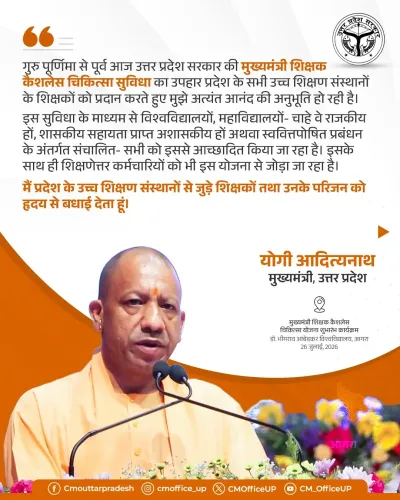
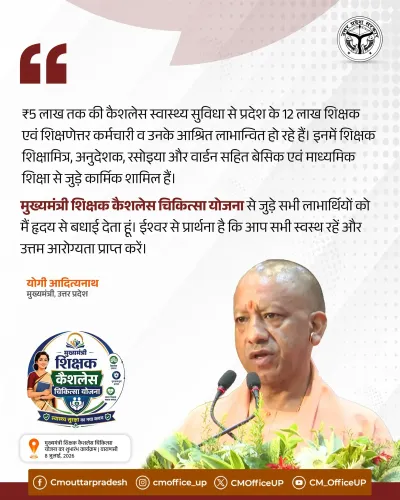
The Chief Minister's Office of Uttar Pradesh announced on Sunday, 26 July 2026, that Chief Minister Yogi Adityanath attended the launch of the Mukhyamantri Shikshak Cashless Chikitsa Yojana in Agra, a health security scheme extending cashless medical coverage to more than 7.50 lakh teachers and their dependents under the state's Higher Education Department.
Context
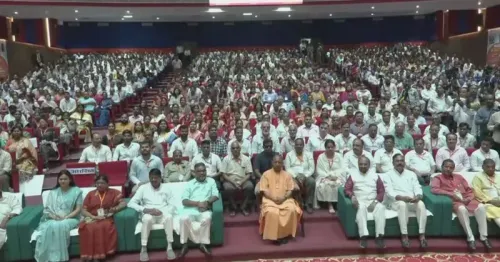
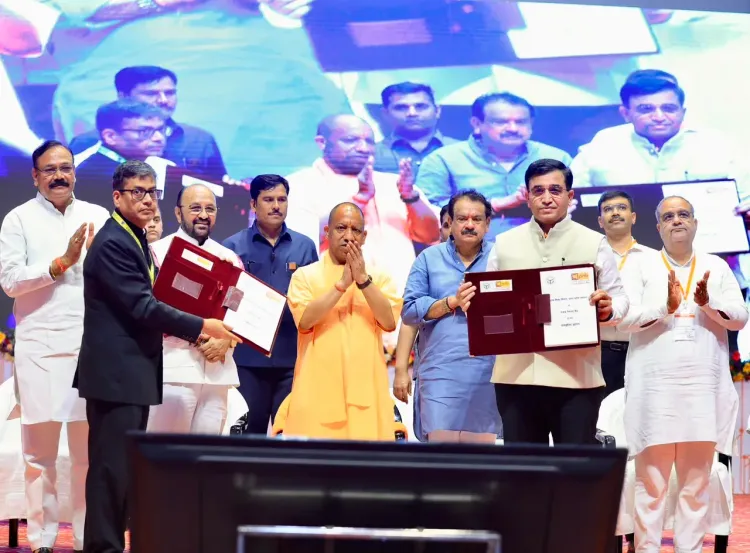
The scheme, whose name translates as the 'Chief Minister's Teacher Cashless Medical Scheme,' was formally inaugurated at an event in Agra where CM Yogi Adityanath was the principal guest. The occasion also saw the signing of a Memorandum of Understanding between the Uttar Pradesh Higher Education Department and Punjab National Bank (PNB), the public-sector lender designated to operationalise cashless benefit delivery for enrolled teachers and their families.
The Chief Minister's Office described the initiative with the phrase 'सुरक्षित शिक्षक, सशक्त शिक्षा व्यवस्था' ('Secure teachers, empowered education system'), framing the health cover as central to building a stronger quality-education framework in the state.
Policy Backdrop
The launch fits within a broader pattern of targeted social security expansion for Uttar Pradesh's public-sector workforce. The state government has previously rolled out department-specific health and welfare programmes for police personnel and other government employees, typically pairing them with banking partnerships to enable cashless access at empanelled hospitals.
Uttar Pradesh adopted the National Education Policy 2020 in 2021, which included explicit provisions for teacher welfare, training, and professional security. The current scheme builds on that policy commitment by addressing a gap in health coverage for higher-education faculty, a category not uniformly covered under existing central health programmes. The state also conducted phased recruitment of more than 1.5 lakh teachers between 2018 and 2023, significantly expanding the pool of state-employed educators whose welfare now falls under government purview.
Stakeholders and Impact
The primary beneficiaries are teachers employed under the Uttar Pradesh Higher Education Department and their immediate dependents — a combined beneficiary base the government places at over 7.50 lakh individuals. For these families, cashless hospitalisation removes the need for upfront payment at empanelled facilities, reducing financial stress during medical emergencies.
Punjab National Bank's role under the MoU is to provide the financial infrastructure — including cashless transaction processing at networked hospitals — that makes the scheme operational. The partnership follows a model increasingly used in state welfare delivery, where a public-sector bank acts as the implementation backbone for government insurance or health-benefit programmes.
What's Next
Attention will now turn to the district-wise rollout timeline and the pace of teacher enrolment across Uttar Pradesh's higher-education institutions. Observers will also watch whether the state extends similar cashless coverage to secondary school teachers, or seeks convergence with the Ayushman Bharat framework at the national level. The government's framing of 'Naya Uttar Pradesh' ('New Uttar Pradesh') as committed to teacher honour, security, and welfare suggests further welfare announcements in the education sector are likely ahead of the state's next budget cycle.
Point of View
Signalling the Yogi government's preference for department-specific, banked-backed delivery models. Pairing the scheme with a PNB MoU at a high-profile Agra event gives it both administrative structure and political visibility ahead of what is likely to be an active welfare-announcement calendar. The 7.50 lakh beneficiary figure, if enrolment proceeds smoothly, would represent one of the larger state-level teacher health-cover programmes in northern India. The scheme's success will ultimately hinge on hospital empanelment depth and claim-settlement speed — metrics that rarely feature in launch-day narratives but define whether such programmes deliver on their promise.
NationPress
26 Jul 2026
Frequently Asked Questions
What is the Mukhyamantri Shikshak Cashless Chikitsa Yojana?
It is a Uttar Pradesh government health scheme launched on 26 July 2026 that provides cashless medical treatment to higher-education teachers employed under the UP Higher Education Department and their dependents, covering a beneficiary base of over 7.50 lakh individuals.
Who launched the UP teacher cashless health scheme?
Chief Minister Yogi Adityanath launched the scheme at an event in Agra on 26 July 2026.
What is the role of Punjab National Bank in this scheme?
Punjab National Bank signed an MoU with the UP Higher Education Department to provide the financial and cashless transaction infrastructure needed to deliver medical benefits to enrolled teachers at empanelled hospitals.
How many teachers will benefit from the Mukhyamantri Shikshak Cashless Chikitsa Yojana?
The scheme is designed to cover more than 7.50 lakh teachers and their dependents under the Uttar Pradesh Higher Education Department.
Will the UP teacher health scheme be extended to secondary school teachers?
No official announcement has been made on extending coverage to secondary school teachers; observers are watching whether the state broadens eligibility or integrates the scheme with the national Ayushman Bharat programme in future phases.