Pralhad Joshi Takes Charge as Union Education Minister
Synopsis
Senior BJP leader Pralhad Joshi assumed charge as Union Education Minister on 26 July 2026, shifting from Consumer Affairs and Renewable Energy portfolios. He thanked PM Modi for the trust and pledged to serve with humility, taking over a ministry mid-way through implementing the National Education Policy 2020.
Key Takeaways
Pralhad Joshi assumed charge as Union Minister for Education on 26 July 2026 .
Joshi previously held the portfolios of Consumer Affairs, Food and Public Distribution and New and Renewable Energy .
He expressed gratitude to Prime Minister Narendra Modi for placing trust in him, accepting the role 'with humility and a deep sense of duty.' The post was shared in both English and Kannada , reflecting Joshi's Karnataka roots.
The ministry is currently overseeing the rollout of the National Education Policy 2020 , a flagship reform covering school and higher education.
Key stakeholders include students, teachers, and state education departments coordinating with the Centre on curriculum and funding.
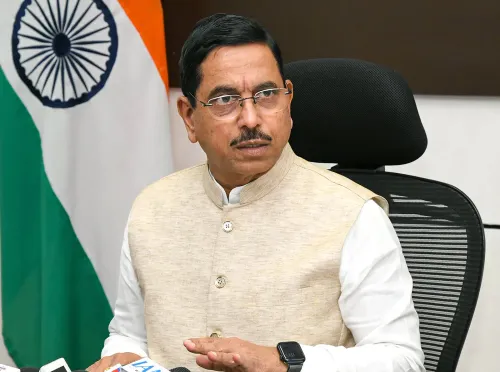
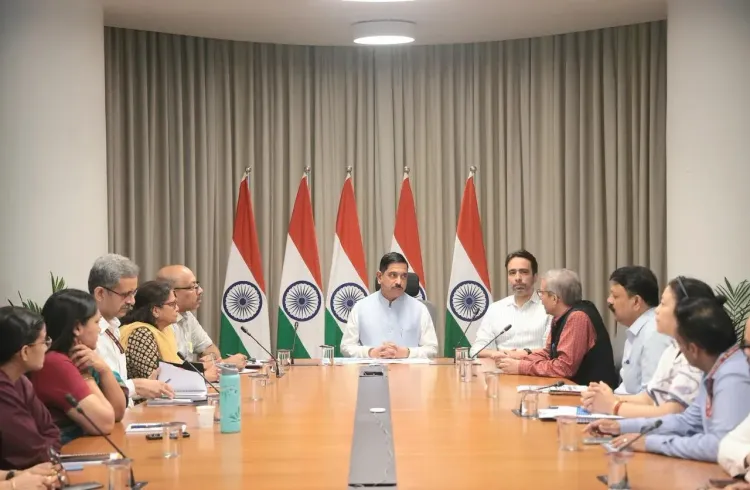
Union Minister Pralhad Joshi assumed charge as the Union Minister for Education on Sunday, 26 July 2026, marking a significant portfolio shift for the senior BJP leader from Karnataka. Joshi expressed gratitude to Prime Minister Narendra Modi for placing his trust in him, saying he accepts the responsibility 'with humility and a deep sense of duty.'
Posting in both English and Kannada, Joshi wrote: 'ಇಂದು ಭಾರತ ಸರ್ಕಾರದ ಕೇಂದ್ರ ಶಿಕ್ಷಣ ಸಚಿವನಾಗಿ ಅಧಿಕಾರ ವಹಿಸಿಕೊಂಡೆನು' ['Today I assumed charge as the Union Education Minister of the Government of India'], adding that he accepts this 'weighty responsibility' with heartfelt gratitude to the Prime Minister.
Context
Pralhad Joshi previously held the portfolios of Consumer Affairs, Food and Public Distribution and New and Renewable Energy — roles in which he oversaw commodity price management and the country's clean energy transition. His move to Education represents a shift to one of the most consequential social-sector ministries in the Modi cabinet, which directly shapes policy for hundreds of millions of students and teachers across India.
Successive Modi governments since 2014 have periodically realigned senior ministers across social-sector portfolios, a practice seen as maintaining administrative momentum on flagship schemes without disrupting institutional continuity.
Policy Backdrop
The Ministry of Education is currently mid-stream in implementing the landmark National Education Policy (NEP) 2020, which was approved to overhaul both school and higher education with an emphasis on multidisciplinary learning, mother-tongue instruction in early years, and expanded vocational training. Key components — including new curriculum frameworks and revised institutional structures — are at various stages of rollout across states.
The ministry also oversees major schemes touching higher education funding, mid-day meals, and digital learning infrastructure, all of which will now fall under Joshi's stewardship.
Stakeholders and Impact
The portfolio change is immediately relevant to students, teachers, and state education departments that coordinate with the Centre on curriculum reform, examination structures, and funding allocations. Karnataka, Joshi's home state, has had its own debates around NEP implementation, lending an additional layer of political significance to his appointment.
Higher education institutions, universities, and skill-development bodies linked to the education ecosystem will also be watching the new minister's early priorities and any signals he sends on pending regulatory or legislative proposals.
What's Next
Attention will now turn to Joshi's first official engagements as Education Minister — including any statements on the pace of NEP 2020 implementation, upcoming parliamentary sessions where education budgets and bills may come up, and his approach to coordinating with state governments that hold concurrent jurisdiction over education.
With Parliament's monsoon session typically active in July–August, Joshi may face early legislative scrutiny, making his initial positioning on key education debates a closely watched signal of the ministry's direction under his leadership.
Point of View
While important, do not carry the same political and social breadth as a ministry that touches every Indian family. The Modi government's pattern of deploying experienced, electorally seasoned ministers to social-sector roles suggests Education is being treated as a priority delivery front ahead of the next electoral cycle. For Joshi, it is also an opportunity to build a national profile beyond Karnataka, though the complexity of NEP 2020 implementation — with states holding concurrent jurisdiction — means early wins will require careful federal negotiation rather than unilateral action.
NationPress
26 Jul 2026
Frequently Asked Questions
Who is the new Union Education Minister of India?
Pralhad Joshi , a senior BJP leader from Karnataka, assumed charge as the Union Minister for Education on 26 July 2026 , as announced by him on X.
What portfolios did Pralhad Joshi hold before becoming Education Minister?
Before taking charge of Education, Joshi held the portfolios of Consumer Affairs, Food and Public Distribution and New and Renewable Energy in the Union Cabinet.
What is the National Education Policy 2020 and how does it affect the new minister's role?
The National Education Policy (NEP) 2020 is a landmark reform approved to restructure India's school and higher education systems, emphasising multidisciplinary learning and vocational training. Joshi takes charge mid-implementation, making its rollout a key responsibility.
Why did PM Modi assign Pralhad Joshi to the Education Ministry?
No official reason has been stated publicly. The Modi government has a pattern of reassigning experienced ministers across social-sector portfolios to maintain momentum on flagship schemes, and Education has been a priority area since 2014.
What will Pralhad Joshi focus on as Education Minister?
Key areas to watch include the continued rollout of NEP 2020 components such as new curriculum frameworks, coordination with state governments, and any education-related proposals in Parliament's upcoming sessions.