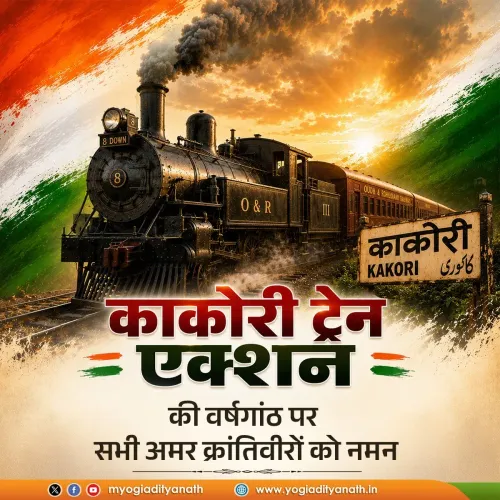
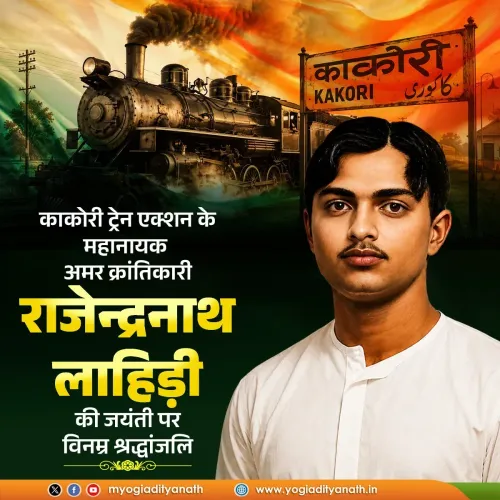
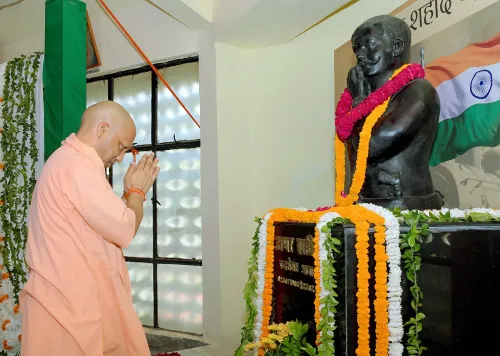
CM Yogi marks 101st Kakori Train Action anniversary in Lucknow
Synopsis
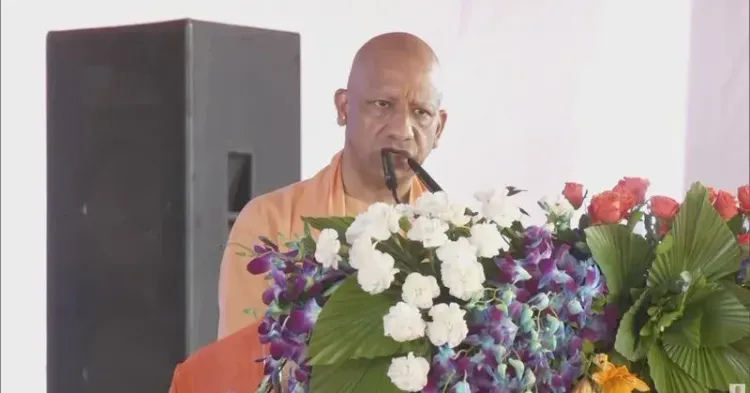
Chief Minister Yogi Adityanath attended the inaugural of the Kakori Train Action Centenary Celebration in Lucknow on August 9, 2026, marking 101 years since the Hindustan Republican Association's 1925 armed strike against British colonial rule.
Key Takeaways
CM Yogi Adityanath attended the 'Kakori Train Action Centenary Celebration' inaugural on August 9, 2026 .
The event marks the 101st anniversary of the August 9, 1925 Kakori Train Action.
The 1925 action was carried out by the Hindustan Republican Association to seize British treasury funds for the anti-colonial movement.
Kakori is located in Lucknow district, Uttar Pradesh — the state that has hosted periodic commemorations since independence.
The centenary framework signals a shift from single-day observances to a structured, extended programme of remembrance.
August 9 also marks the anniversary of the Quit India Movement of 1942 , amplifying the date's symbolic weight.
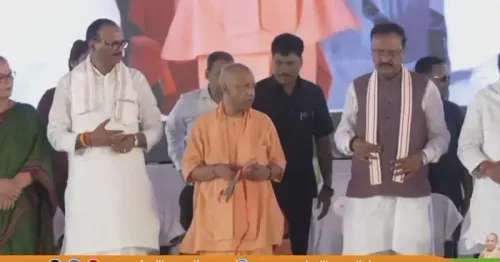
A century and one year after a band of revolutionaries stopped a train near Kakori and seized British treasury funds in a act of armed defiance, Uttar Pradesh Chief Minister Yogi Adityanath joined the 'Kakori Train Action Centenary Celebration' inaugural programme on Sunday, August 9, 2026 — marking the 101st anniversary of one of India's most audacious anti-colonial strikes.
The action that shook colonial India
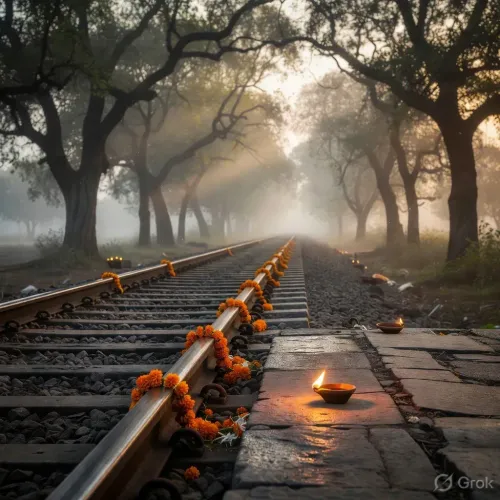
On August 9, 1925, members of the Hindustan Republican Association pulled the emergency chain of a train near Kakori, a town in Lucknow district, and looted British government cash being transported by rail. The operation was designed to fund the revolutionary movement against colonial rule — and it worked, briefly. The British response was swift and brutal: mass arrests, prolonged trials, and executions that turned the participants into enduring martyrs of India's independence struggle.
The date carries particular resonance: August 9 is also the anniversary of the Quit India Movement of 1942, making it one of the most symbolically loaded days in India's revolutionary calendar.
A centenary programme, one year in
The Kakori Train Action Centenary — Kakori Train Action Shatabdi Samaroh — was formally launched at the inaugural event attended by CM Yogi Adityanath. The centenary framework marks a shift from periodic single-day observances to a structured, extended commemoration. Uttar Pradesh governments have held tributes to the Kakori revolutionaries since independence, but the centenary scale signals a broader public engagement — drawing in students, historians, and residents across the state.
What comes next matters: subsequent phases of the centenary programme, and any new memorials or curriculum additions linked to the Kakori revolutionaries, will reveal how deep the state's commemorative commitment runs beyond the inaugural ceremony.
Why Kakori still resonates in UP's political memory
The Kakori episode sits at the intersection of armed nationalism and pre-Gandhian revolutionary politics — a tradition that Uttar Pradesh, as the state where the action took place and where many of its heroes were tried and hanged, has a particular claim to honour. For the Yogi Adityanath administration, these tributes form part of a consistent pattern of state-level remembrance of 1920s revolutionary episodes, anchoring UP's identity in the bolder, combative strand of the independence movement.
The revolutionaries did not live to see freedom. The state they helped inspire is now marking their centenary — and counting.
Point of View
Kakori is not just history but a local claim: the action happened here, the trials happened here, and the martyrs came from here. Watching whether the centenary produces lasting institutional outputs — new memorials, curriculum changes, dedicated museums — will reveal whether this is a one-cycle commemoration or a genuine policy investment in revolutionary memory.
NationPress
9 Aug 2026
Frequently Asked Questions
What was the Kakori Train Action?
The Kakori Train Action took place on August 9, 1925 , when members of the Hindustan Republican Association stopped a train near Kakori in present-day Lucknow district and looted British government cash to fund their anti-colonial revolutionary activities.
Why is the Kakori Train Action anniversary celebrated on August 9?
The original action occurred on August 9, 1925 . The date also coincides with the anniversary of the Quit India Movement of 1942 , making it one of the most symbolically significant days in India's independence calendar.
What is the Kakori Train Action Centenary Celebration?
The Kakori Train Action Centenary Celebration ( Kakori Train Action Shatabdi Samaroh ) is a structured commemoration launched by the Uttar Pradesh government to mark 100 years since the 1925 action, with CM Yogi Adityanath attending the inaugural event on August 9, 2026.
Who were the revolutionaries involved in the Kakori Train Action?
The action was carried out by members of the Hindustan Republican Association , a pre-Gandhian armed nationalist organisation. Many participants were subsequently arrested, tried, and executed by British colonial authorities.
Where is Kakori located?
Kakori is a town in Lucknow district, Uttar Pradesh , and is the site of the 1925 train action and the associated colonial-era trials.