CM Yogi marks 12 years of Make in India, hails Modi's vision
Synopsis
On the twelfth anniversary of Make in India, Uttar Pradesh CM Yogi Adityanath praised PM Modi's vision of turning Indian manufacturing 'Local to Global,' linking the programme's legacy to the Atmanirbhar Bharat mission and the goal of a Viksit Bharat.
Key Takeaways
Make in India was launched by PM Narendra Modi on 25 September 2014 and completed 12 years on 25 September 2026.
CM Yogi Adityanath congratulated citizens and credited the programme with connecting indigenous products to global markets.
The post explicitly links Make in India to Atmanirbhar Bharat (launched May 2020) and the long-term vision of a Viksit Bharat .
CM Yogi highlighted the mantra Make in India — Make for the World as a driver of India's growing industrial confidence.
Uttar Pradesh has aligned its state-level investment and industrial policy closely with the central government's manufacturing push since 2014.
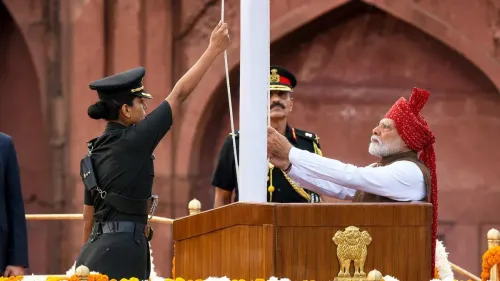
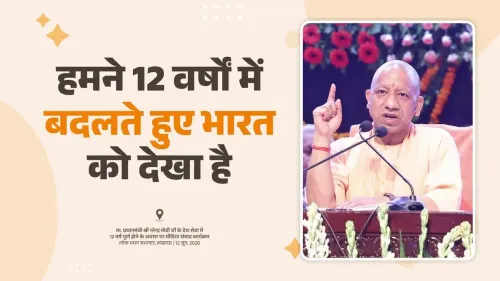
Twelve years after Prime Minister Narendra Modi planted the lion-emblem flag of Make in India on the global stage, Uttar Pradesh Chief Minister Yogi Adityanath has marked the anniversary with a salute to what he calls a 'transformative journey' — one that he says has moved Indian manufacturing from the margins to the mainstream of the world economy.
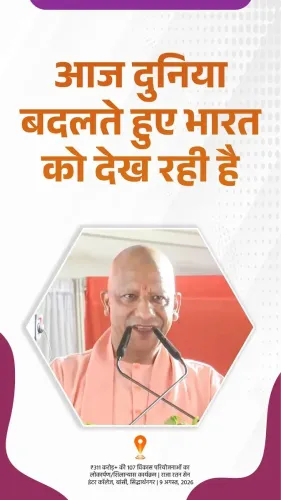
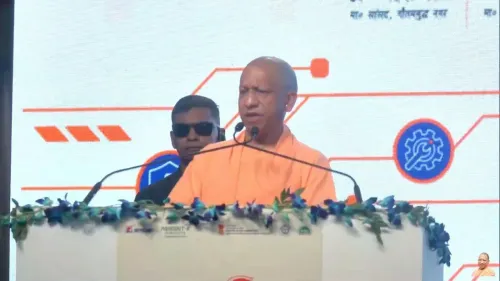
Posting on 25 September 2026 — the programme's twelfth anniversary — CM Yogi wrote in Hindi that under Modi's 'glorious leadership,' Make in India has given 'innovation an opportunity, investment a trust, and manufacturing a new strength.' He used the phrase Local to Global and the mantra Make in India — Make for the World to describe how homegrown products have been plugged into international markets, lifting what he called India's 'industrial self-confidence to a new height.'
A programme born on 25 September 2014
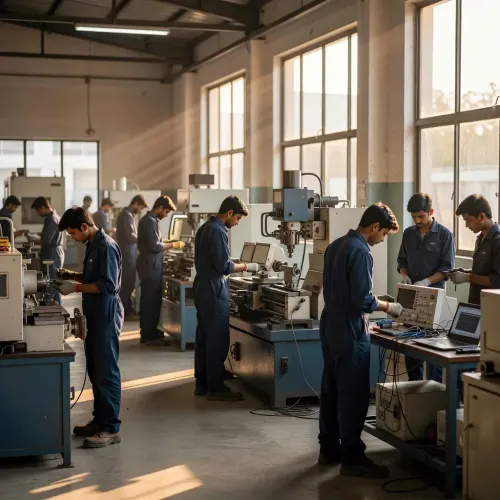
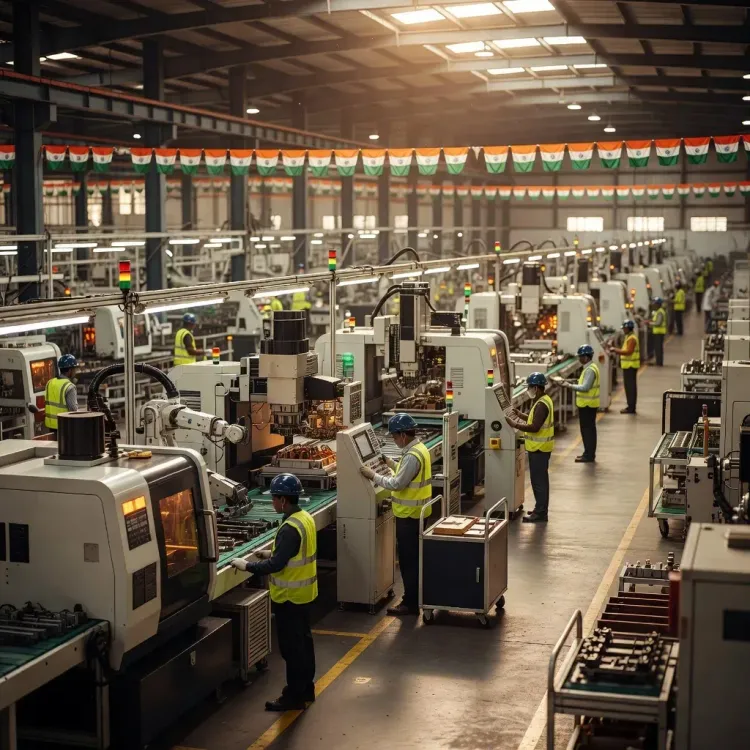
Make in India was launched by Prime Minister Modi on 25 September 2014 with a single, concrete ambition: raise manufacturing's share of India's GDP and attract both domestic and foreign capital into production. The programme targeted over two dozen sectors — from defence and aerospace to textiles and food processing — and set up a single-window investment facilitation system to cut through bureaucratic friction. The lion made of interlocking cogs became one of modern India's most recognisable policy symbols.
In May 2020, the framework was reinforced by the Atmanirbhar Bharat Abhiyan (Self-Reliant India Mission), announced in the wake of pandemic-era supply-chain shocks. That campaign deepened the Make in India logic — less reliance on imports, stronger indigenous production, faster integration into global value chains. CM Yogi's post explicitly ties the two, describing Atmanirbhar Bharat's strength as the engine carrying India toward the goal of Viksit Bharat — a Developed India.
UP's alignment with the national manufacturing push
For Uttar Pradesh — India's most populous state and one of its largest economies — the Make in India decade has coincided with an aggressive state-level push for industrial investment. Under CM Yogi, the state has hosted back-to-back investors' summits and positioned itself as a preferred destination for manufacturing, logistics, and defence-corridor projects. The ideological alignment between Lucknow and New Delhi on industrial policy has been consistent and deliberate.
The broader pattern is unmistakable: since 2014, Indian economic policy has steadily repositioned the country from a predominantly services-led economy toward one where manufacturing, exports, and global value-chain participation are front and centre. Make in India sits at the heart of that repositioning, with Atmanirbhar Bharat adding the self-reliance dimension after the pandemic exposed the risks of import dependency.
Twelve years in, the anniversary is less a finish line than a staging post. The real test — whether India's manufacturing GDP share and FDI inflows have shifted structurally — will show up in the data that follows. But on the political calendar, 25 September is now firmly a day when the ruling establishment renews its manufacturing vow in public. CM Yogi's post is the loudest such renewal from a state capital today.
Point of View
It is being actively folded into newer narratives like Atmanirbhar Bharat and Viksit Bharat, keeping the manufacturing ambition politically salient. For Uttar Pradesh specifically, the endorsement underlines how Lucknow continues to position itself as the model state for Modi's economic agenda. The real question the anniversary raises — whether manufacturing's structural share of GDP has measurably shifted — is one the political message studiously leaves for the economists to answer.
NationPress
25 Sept 2026
Frequently Asked Questions
When was Make in India launched?
Make in India was launched by Prime Minister Narendra Modi on 25 September 2014 , completing twelve years on 25 September 2026.
What did CM Yogi Adityanath say about Make in India's anniversary?
CM Yogi congratulated all Indians, saying the programme gave 'innovation an opportunity, investment a trust, and manufacturing a new strength,' and praised PM Modi's leadership in connecting Indian products to global markets.
What is the connection between Make in India and Atmanirbhar Bharat?
Atmanirbhar Bharat Abhiyan, announced in May 2020 , built on Make in India by emphasising indigenous production and supply-chain self-reliance, especially after pandemic-era disruptions exposed import dependency.
What does 'Make in India — Make for the World' mean?
It is the guiding mantra of Make in India's export-oriented phase, signalling that Indian manufacturers should not just serve the domestic market but compete and supply globally.
How has Uttar Pradesh aligned with Make in India?
Under CM Yogi Adityanath, Uttar Pradesh has hosted major investors' summits and developed defence and manufacturing corridors, closely mirroring the central government's industrial promotion framework.