CM Yogi Meets Indian Navy Chief in Lucknow
Synopsis
Uttar Pradesh Chief Minister Yogi Adityanath hosted Indian Navy Chief Admiral Krishna Swaminathan at his official Lucknow residence on 6 July 2026 for a courtesy meeting. The engagement reflects India's ongoing civil-military coordination framework, with landlocked UP playing a key role in naval recruitment and veterans' welfare.
Key Takeaways
Uttar Pradesh Chief Minister Yogi Adityanath met Indian Navy Chief Admiral Krishna Swaminathan at his official residence in Lucknow on 6 July 2026 .
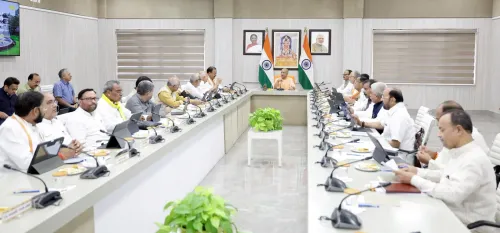
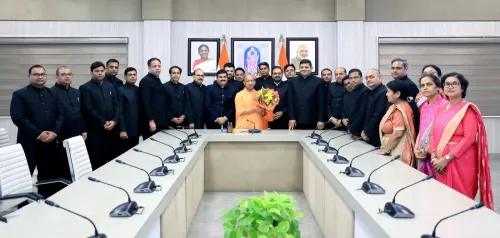
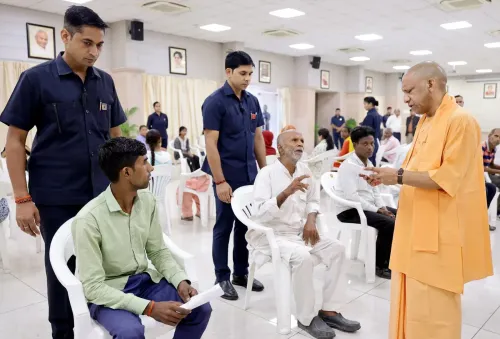
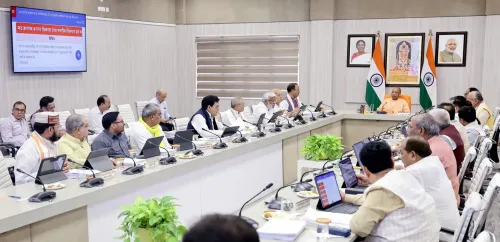
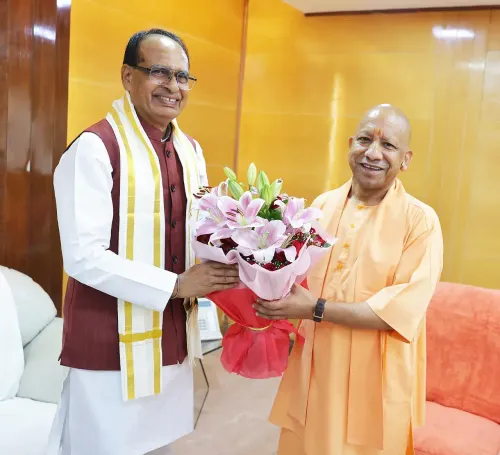
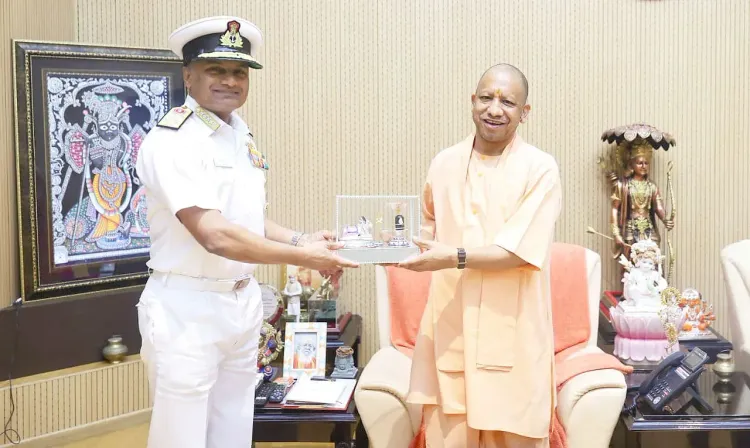
The meeting was described as a courtesy call ( shishṭāchār bheṇṭ ) and was accompanied by two official photographs shared on X.
Civil-military courtesy meetings between service chiefs and state chief ministers are a regular feature of India's unified security framework since 1947 .
Uttar Pradesh , though landlocked, is a major contributor of personnel to the Indian Armed Forces and is an important state for naval recruitment and veterans' welfare.
The meeting was formally acknowledged by tagging the @indiannavy official handle, underscoring its institutional character.
Uttar Pradesh Chief Minister Yogi Adityanath received Indian Navy Chief Admiral Krishna Swaminathan at his official residence in Lucknow on Monday, 6 July 2026, for a courtesy call. The meeting marks a formal interaction between the state's top executive and the head of India's maritime defence force.
Context
Chief Minister Yogi Adityanath took to X to share news of the meeting, writing in Hindi: 'भारतीय नौसेना प्रमुख एडमिरल श्री कृष्णा स्वामीनाथन जी से आज लखनऊ स्थित सरकारी आवास पर शिष्टाचार भेंट हुई।' [Translation: 'Had a courtesy meeting today with Indian Navy Chief Admiral Krishna Swaminathan at the official residence in Lucknow.'] The post, accompanied by two photographs from the meeting, was tagged to the official @indiannavy handle, signalling the formal nature of the engagement.
Policy Backdrop
Courtesy calls by armed forces service chiefs to state capitals are a long-standing feature of India's civil-military coordination framework, dating back to independence in 1947. Such meetings serve as a channel for information sharing, administrative alignment, and goodwill between the central defence establishment and state governments. While Uttar Pradesh is a landlocked state with no coastline, it holds significant relevance for the Indian Navy in areas such as recruitment, veterans' welfare, and logistical support for defence activities.
Uttar Pradesh is among the largest contributors to the Indian Armed Forces in terms of personnel, making engagement with its state government strategically important for all three services. Discussions in such meetings typically cover topics ranging from ex-servicemen welfare schemes to support for recruitment drives and infrastructure coordination.
Stakeholders and Impact
The primary stakeholders in this interaction are the Indian Navy, the Government of Uttar Pradesh, and the large community of naval veterans and serving personnel from the state. Any commitments emerging from the meeting — whether on welfare, recruitment, or administrative support — would directly affect this constituency. State governments play a crucial enabling role in implementing central welfare schemes for ex-servicemen, making such meetings substantively significant beyond their ceremonial character.
The meeting also reflects the broader pattern of armed forces chiefs maintaining active dialogue with state administrations across India, reinforcing the unified security framework that underpins national defence planning.
What's Next
Observers will watch for any formal announcements from the Uttar Pradesh government regarding state-level support for naval recruitment drives, veterans' welfare initiatives, or infrastructure cooperation. Visits by other service chiefs — the Army Chief and Air Chief — to Lucknow in the coming months would indicate a sustained round of centre-state security consultations. Any joint programmes or memoranda of understanding announced in the aftermath of this courtesy call would give it policy weight beyond a routine diplomatic gesture.
Point of View
Such meetings carry practical weight: the state's large pool of serving and retired naval personnel makes it a key partner for the Navy on recruitment and welfare delivery. The public visibility of the meeting — amplified by the Chief Minister's social media post tagging the Navy's official handle — also signals deliberate image-building around national security credentials, a theme that has gained prominence in BJP-governed states. Analysts will track whether this meeting translates into concrete announcements on ex-servicemen welfare or recruitment infrastructure in the state.
NationPress
5 Oct 2026
Frequently Asked Questions
Why did the Indian Navy Chief visit Uttar Pradesh CM Yogi Adityanath?
The Indian Navy Chief visited CM Yogi Adityanath in Lucknow for a courtesy call, a routine form of civil-military engagement in India's unified security framework. Such meetings facilitate coordination on recruitment, veterans' welfare, and administrative support.
Does Uttar Pradesh have a role in Indian Navy affairs despite being landlocked?
Yes. Uttar Pradesh is one of the largest contributors of personnel to the Indian Armed Forces, including the Navy. The state government plays an important role in implementing welfare schemes for ex-servicemen and supporting recruitment drives.
What is a 'shishṭāchār bheṇṭ' in the context of Indian politics?
'Shishṭāchār bheṇṭ' is a Hindi phrase meaning a courtesy call or goodwill visit. It refers to a formal meeting held out of protocol and mutual respect, without a fixed agenda, though substantive discussions often take place.
How often do Indian armed forces chiefs visit state capitals?
Service chiefs make courtesy visits to state capitals as part of regular civil-military coordination. The practice has continued across governments since independence in 1947 and involves all three service chiefs — Army, Navy, and Air Force.
What could be the outcomes of CM Yogi's meeting with the Navy Chief?
Potential outcomes include announcements on state support for naval recruitment drives, enhanced welfare measures for naval veterans in Uttar Pradesh, or administrative cooperation on defence logistics. No formal announcements have been made public as yet.