CM Yogi on Governance: Vision Needs Bureaucracy to Execute

Synopsis
Uttar Pradesh Chief Minister Yogi Adityanath on 3 July 2026 publicly stated that while political leadership provides vision, the power to implement it rests entirely with administrative machinery — a pointed signal to UP's vast bureaucratic apparatus.
Key Takeaways
CM Yogi Adityanath posted on 3 July 2026 that political leadership can set a vision but implementation power lies with administrative machinery.
The remark reflects his consistent emphasis since 2017 on aligning UP's IAS and PCS cadre with government priorities.
Uttar Pradesh , India's most populous state with 75 districts , presents one of the country's most complex administrative delivery challenges.
The statement signals expectations of accountability from state bureaucrats responsible for welfare scheme delivery and law-and-order.
Such public remarks from chief ministers in India have historically preceded administrative reviews or officer transfers.
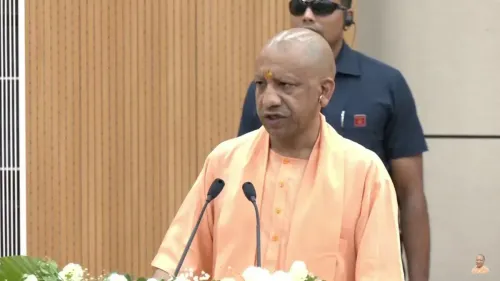
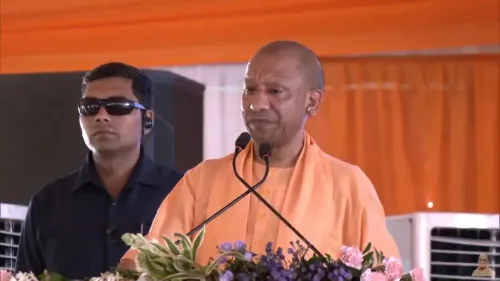
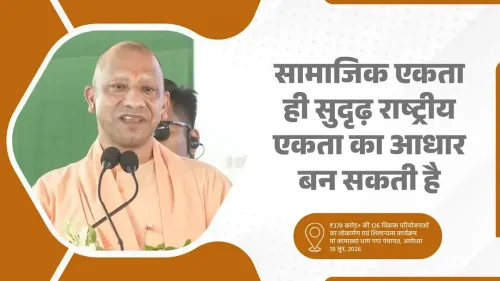
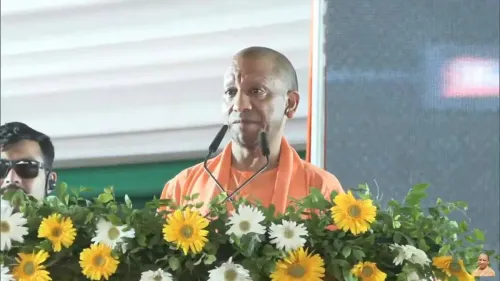
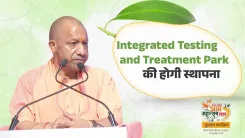
Uttar Pradesh Chief Minister Yogi Adityanath on Friday, 3 July 2026, underscored the indispensable role of administrative machinery in translating political vision into ground-level outcomes, sharing his views in a post on X. The Chief Minister's remarks drew a clear line between the role of elected leadership and the permanent bureaucracy in delivering governance.
In his post, CM Yogi wrote: 'पॉलिटिकल लीडरशिप एक विजन दे सकती है, लेकिन उसको इंप्लीमेंट कराने की ताकत प्रशासनिक मशीनरी के पास ही होती है...' — translated: 'Political leadership can provide a vision, but the power to implement it lies with the administrative machinery.'
Context
Yogi Adityanath has served as Chief Minister of Uttar Pradesh since 2017, heading the most populous state in India. His tenure has been marked by repeated emphasis on aligning the state's bureaucratic apparatus — drawn from the Indian Administrative Service (IAS) and the Provincial Civil Service (PCS) — with the government's policy priorities. The remark reflects a broader philosophy he has articulated across his time in office: that electoral mandates are only as effective as the administrative capacity that carries them out.
Policy Backdrop
Since 2017, the Uttar Pradesh government has undertaken sustained measures to tighten district-level administration, reduce leakage in welfare delivery, and strengthen law-and-order oversight. These reforms required close coordination between the political executive and career bureaucrats. The Chief Minister's statement echoes a long-standing tension in Indian public administration — the balance between political direction and bureaucratic autonomy — which has been debated since the post-independence era.
Successive state governments across India have grappled with the same challenge: translating ambitious policy frameworks into measurable outcomes at the block and district level. In Uttar Pradesh, this has been particularly acute given the state's size, administrative complexity, and the scale of welfare schemes covering hundreds of millions of beneficiaries.
Stakeholders and Impact
The statement carries direct relevance for IAS and PCS officers posted across Uttar Pradesh's 75 districts, who function as the primary instruments of policy delivery. For state bureaucrats, a public articulation by the Chief Minister of their centrality to governance can signal expectations around accountability and performance. Political observers note that such statements from chief ministers often precede or accompany administrative reviews, transfers, or restructuring exercises.
For citizens and welfare beneficiaries — particularly in rural Uttar Pradesh — the effectiveness of the administrative machinery directly determines access to schemes related to housing, food security, health, and law enforcement. The Chief Minister's framing places responsibility squarely on the delivery chain, not merely on policy design.
What's Next
Analysts and state government watchers will look for concrete follow-through in the form of administrative reviews, district-level performance audits, or officer transfers that may accompany this public statement. CM Yogi's track record suggests that rhetorical emphasis on bureaucratic accountability has historically been followed by structural measures. As Uttar Pradesh continues to position itself as a model of governance reform within India's federal structure, the alignment between political vision and administrative execution will remain the central test of the government's second term ambitions.
Point of View
Career bureaucrats determine outcomes. By saying this openly, he is not just philosophising; he is signalling to his administrative cadre that performance and accountability are under scrutiny. The remark fits a broader pattern in his governance style, which has consistently sought to narrow the gap between political intent and bureaucratic delivery through oversight and consequence. In a state as vast and complex as Uttar Pradesh, where governance failures are politically costly, this kind of public framing serves as both motivation and warning to the permanent machinery.
NationPress
3 Jul 2026
Frequently Asked Questions
What did CM Yogi Adityanath say about bureaucracy on 3 July 2026?
CM Yogi Adityanath stated that political leadership can provide a vision, but the power to implement it lies with the administrative machinery — highlighting the critical role of bureaucrats in converting policy into outcomes.
Why is CM Yogi's statement about administrative machinery significant?
The statement is significant because it publicly places accountability for policy delivery on Uttar Pradesh's bureaucratic cadre, and such remarks from chief ministers often precede administrative reviews or structural changes.
What administrative reforms has Yogi Adityanath carried out in Uttar Pradesh?
Since taking office in 2017 , CM Yogi has tightened district administration oversight, worked to reduce leakage in welfare delivery, and aligned IAS and PCS officers more closely with the government's priorities on law-and-order and public services.
What is the role of the IAS in implementing government policy in UP?
The Indian Administrative Service officers posted across Uttar Pradesh's 75 districts serve as the primary instruments for delivering state and central government schemes, from food security to housing and law enforcement.
Does CM Yogi Adityanath head the Gorakhnath Math?
Yes, Yogi Adityanath is the head of the Gorakhnath Math in Gorakhpur, a prominent religious institution, in addition to serving as Chief Minister of Uttar Pradesh and as a senior BJP leader.