CM Yogi inaugurates UP disaster management HQ built at ₹200 cr

Synopsis
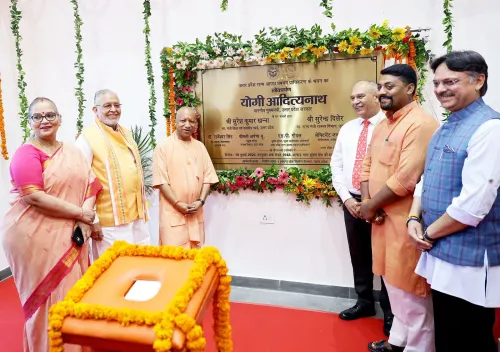
Uttar Pradesh Chief Minister Yogi Adityanath on 19 July 2026 inaugurated the new UPSDA headquarters, built at over ₹200 crore. The facility aims to modernise disaster response with advanced technology and coordination, advancing the government's 'Surakshit Uttar Pradesh' vision ahead of peak monsoon season.
Key Takeaways
Chief Minister Yogi Adityanath inaugurated the new Uttar Pradesh State Disaster Management Authority (UPSDA) headquarters on 19 July 2026 .
The facility was constructed at a cost of more than ₹200 crore .
The new headquarters is designed to deliver modern technology, improved inter-agency coordination, and faster disaster response.
The inauguration advances the Yogi government's stated vision of a 'Surakshit Uttar Pradesh' (Safe Uttar Pradesh).
Uttar Pradesh faces recurrent flood risks across the Ganga-Yamuna belt, making robust disaster infrastructure a priority.
The facility's first major operational test will be the ongoing 2026 monsoon season .
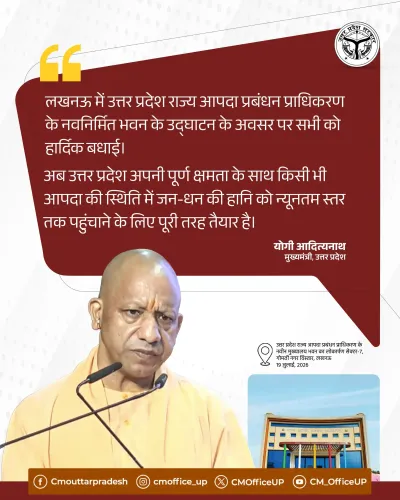
Uttar Pradesh Chief Minister Yogi Adityanath on Sunday, 19 July 2026, announced the inauguration of the new headquarters of the Uttar Pradesh State Disaster Management Authority (UPSDA), a facility constructed at a cost of more than ₹200 crore. The chief minister said the new building would give fresh momentum and direction to the state's disaster management apparatus, equipping it with modern technology, better coordination, and faster response capabilities.
Context
Posting in Hindi on X (formerly Twitter), CM Yogi described the inauguration as a milestone for what he called the vision of a 'Surakshit Uttar Pradesh' — a 'Safe Uttar Pradesh'. He wrote that the new headquarters, built at a cost of more than ₹200 crore, would provide new strength to the state's disaster management system through modern infrastructure and effective coordination. The post signals the formal opening of a purpose-built administrative facility for a body that has long operated without a dedicated, modern home.
Policy Backdrop
The Uttar Pradesh State Disaster Management Authority was established under the Disaster Management Act, 2005, which mandated every state to create such a body for preparedness, mitigation, and response coordination. The authority functions under the overall guidance of the National Disaster Management Authority, the apex body at the central level. Uttar Pradesh, with its vast population and exposure to recurrent floods along the Ganga-Yamuna belt, faces some of the country's most complex disaster-response challenges.
Since 2017, the Yogi Adityanath government has pursued a broad programme of administrative modernisation and physical infrastructure upgrades across departments. Disaster management has received renewed attention in this period, driven by climate-linked risks including annual monsoon flooding that affects millions of residents across the state's eastern and central districts.
Stakeholders and Impact
The primary beneficiaries of an upgraded UPSDA headquarters are the 25 crore-plus residents of Uttar Pradesh, particularly those in flood-prone and disaster-vulnerable districts. Emergency responders — including State Disaster Response Force (SDRF) units, district administration officials, and civil defence volunteers — stand to gain from improved command-and-control infrastructure. The new facility is intended to serve as a nerve centre linking state-level decision-making with district control rooms across Uttar Pradesh's 75 districts.
Better coordination infrastructure can reduce critical response times during emergencies, which has historically been a challenge given the state's geographic size and population density. The investment also reflects a wider national trend of states professionalising their disaster management institutions ahead of increasingly unpredictable monsoon seasons.
What's Next
The operational test for the new headquarters will come during the ongoing 2026 monsoon season, when flood alerts, rescue coordination, and inter-agency communication demands peak across the state. Observers will watch whether the facility enables measurably faster integration between the state authority and district-level control rooms. The government's stated goal of a 'Surakshit Uttar Pradesh' will be measured against on-ground response outcomes in the months ahead.
Point of View
High-cost disaster management headquarters is a visible signal that the Yogi Adityanath government is treating administrative infrastructure as a political deliverable, not merely a bureaucratic necessity. Coming during the monsoon season, the timing is deliberate — it allows the government to frame institutional investment as direct public safety action. The move fits a broader pattern since 2017 of using physical infrastructure launches to reinforce a governance narrative in India's most populous state. Whether the new facility translates into measurably better disaster outcomes will determine its long-term political and policy value.
NationPress
18 Oct 2026
Frequently Asked Questions
What is the new UPSDA headquarters that CM Yogi inaugurated?
The new headquarters is a purpose-built facility for the Uttar Pradesh State Disaster Management Authority (UPSDA), constructed at a cost of over ₹200 crore. It is designed to serve as the central command hub for disaster preparedness, coordination, and response across Uttar Pradesh.
How much did the new UP disaster management headquarters cost?
The new UPSDA headquarters was built at a cost of more than ₹200 crore, as stated by Chief Minister Yogi Adityanath in his post on 19 July 2026.
What is 'Surakshit Uttar Pradesh' that CM Yogi mentioned?
'Surakshit Uttar Pradesh' translates to 'Safe Uttar Pradesh' and is the Yogi Adityanath government's stated vision for building a safer, disaster-resilient state through modern infrastructure and effective emergency response systems.
Why does Uttar Pradesh need a new disaster management headquarters?
Uttar Pradesh faces recurrent natural disasters, particularly floods in the Ganga-Yamuna belt, affecting millions of residents each monsoon season. A modern, dedicated headquarters for UPSDA is intended to improve coordination between state authorities and district control rooms, enabling faster emergency response.
What law governs the Uttar Pradesh State Disaster Management Authority?
The UPSDA was established under the Disaster Management Act, 2005, which mandated every Indian state to set up such an authority for disaster preparedness, mitigation, and response, under the overall guidance of the National Disaster Management Authority.